
While parked at a campground on the shores of the Arkansas River, it was not evident to us that its water’s journey began in the Colorado Rockies, then dropped 11,400 feet while flowing 1460 miles through Oklahoma and Arkansas, and eventually would enter the Mississippi. Like the Arkansas River, we meandered south from the Rockies through Oklahoma until we reached our campground near Little Rock on the final leg of our 9700-mile journey. We were officially in the South.

Our travels up to this time were filled with high energy anticipation beginning with three great desert regions followed by the Sierras and Cascades and eventually the Canadian Rockies. From the desert to the mountains, we visited 11 National Parks and several more notable places along the way, never stopping long enough to take a breath, so it seemed.

At last we had no specific itinerary, no need to access a park before sunrise, no crowds to beat. Instead, we could fill our days with casual sight-seeing – but only if the mood struck us. As we travel toward Florida through the southern portion of the United States as we do each year in the fall, we’ve learned to slow down while surrounded by the humming sounds of the heated air amidst water hyacinths and gentle sloping grassy banks. In a way, it’s a slow release from our mountain high.

Rainy weather gave us more time to rest, reflect, catch up, edit photos, read. After the clouds disappeared, there was enough time remaining to visit Arkansas’s state capitol building and enjoy some art at the newly renovated Arkansas Museum of Fine Arts.


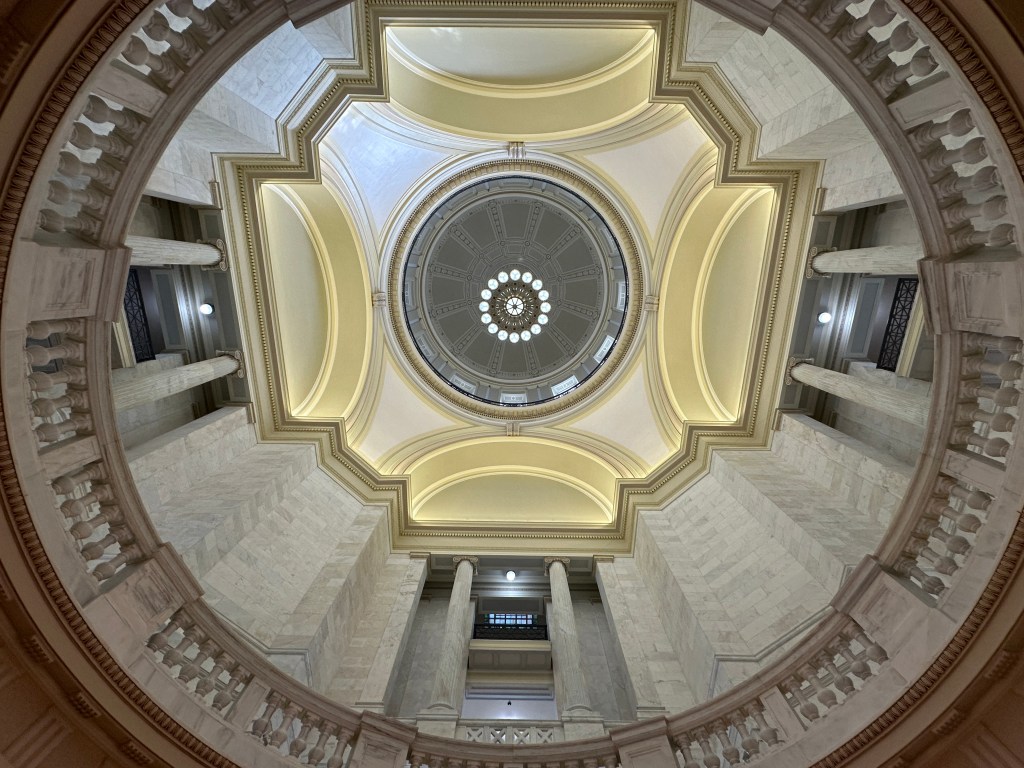
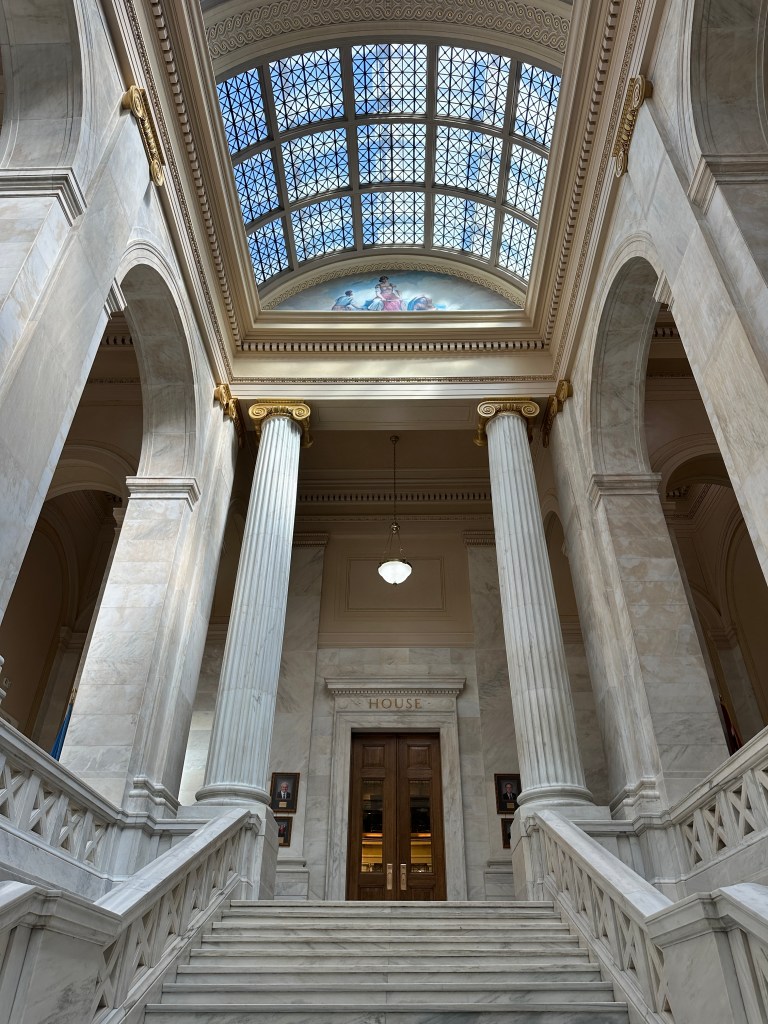
Compared to Oklahoma and Wyoming’s newly renovated capitol buildings which we had recently visited, Arkansas’s has a not-so-colorful traditional elegance. Where its interior lacks bold stained glass and artwork, its history makes up for it with the building’s colorful past. It begins in 1899 when it was decided the site for the new capitol would be where an old state penitentiary stood. The laborers for the construction were – no surprise – the inmates who lived on the site as late as 1910.

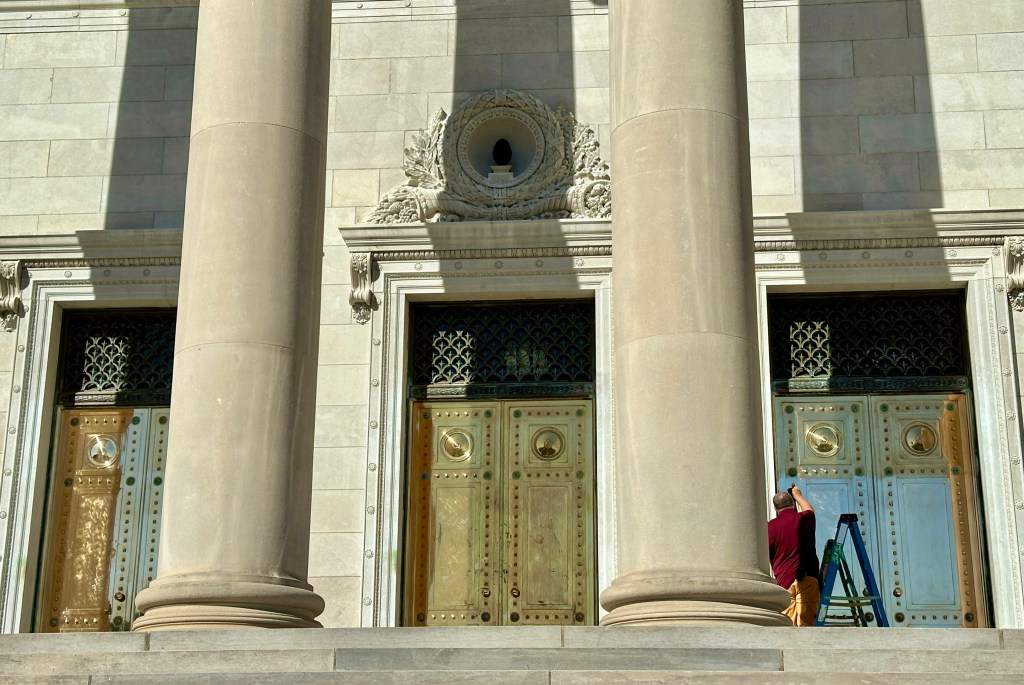
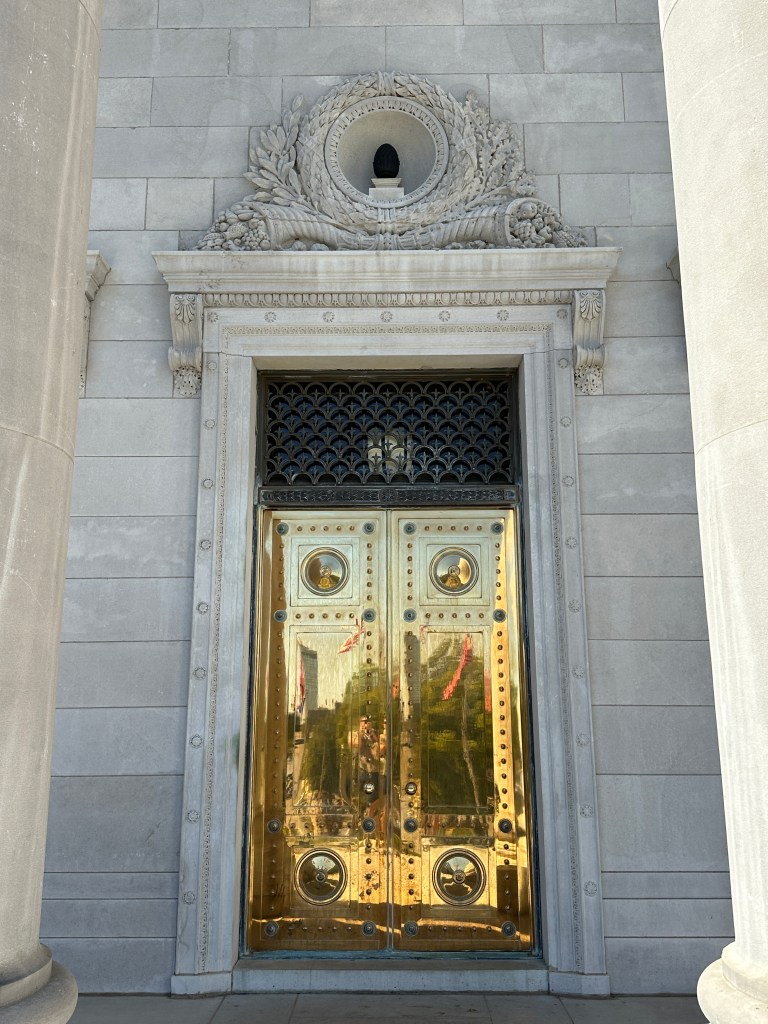
The state capitol building had two architects, the first replaced for good reasons, – slow progress, budget shortfalls, and bribery charges. The second architect, Cass Gilbert was familiar with state capitols having designed Minnesota’s and not to mention, New York’s landmark Woolworth building. Consequently, he removed substandard materials and revised the interior with a neo-classical design. Noteworthy are the 6-ft bronze doors on the east side of the rotunda that served as the public entrance until Sep 11, 2001. Also designed by Gilbert, the doors were made in New York’s Tiffany Studios and each weigh 1300 lbs. Every week, the doors are polished by hand.


Of the eleven capital buildings Vivian and I have visited, two of them are southern. A few years ago we visited Alabama’s state capitol and similar to Arkansas, a stark contrast appears in how it’s state history is presented and honored from the time of the Civil War to the present. In Alabama, we stood on the entrance steps of the state capitol building in Montgomery where Martin Luther King, Jr delivered a speech on March 25, 1965 in front of a crowd of 25,000 after leading them on a 5-day, 54-mile march from Selma, AL. Where King stood to give his speech is where Jefferson Davis stood when inaugurated as the President of the Confederacy on February 18, 1861.


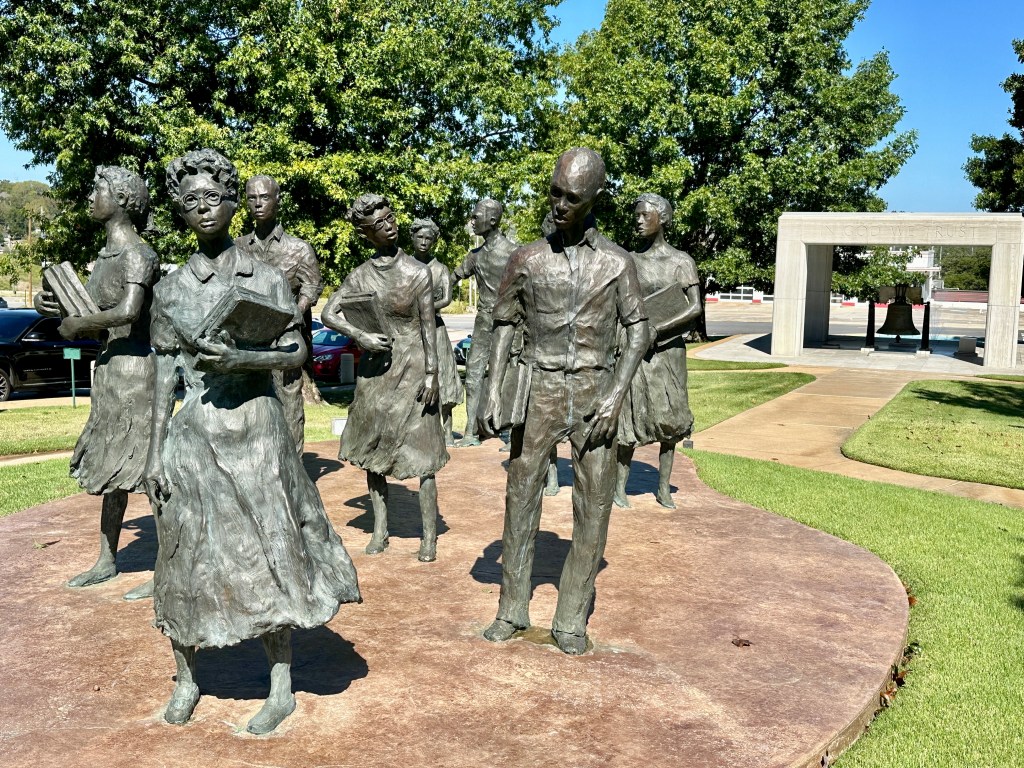
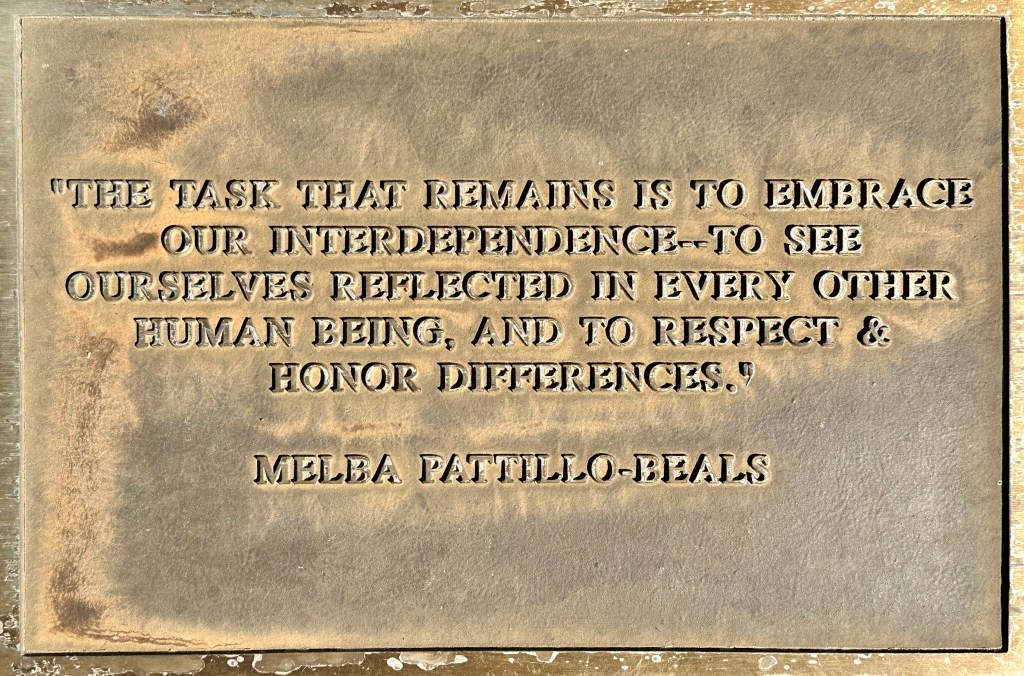
In Arkansas, while a monument to the Little Rock Nine stands on the northside grounds of its capital building, so does a Monument to Confederate Women on the east side. Each one bears a powerful symbolism of southern history. Arkansas is proud of its confederate past, but it’s also proud of its Civil Rights history. But that’s the South for you – full of contradictions and one reminder after another of the tug-of-war between the past and the future. And that’s what makes traveling through the south more interesting than most places.

 Changing Views From Our RV
I have to agree with you when you say: “Arkansas is proud of its confederate past, but it’s also proud of its Civil Rights history. But that’s the South for you – full of contradictions and one reminder after another of the tug-of-war between the past and the future.” The South was nothing like what I expected. But the contrast between its harsh past and brighter future, gives it a unique and unexpected flare.
LikeLiked by 1 person