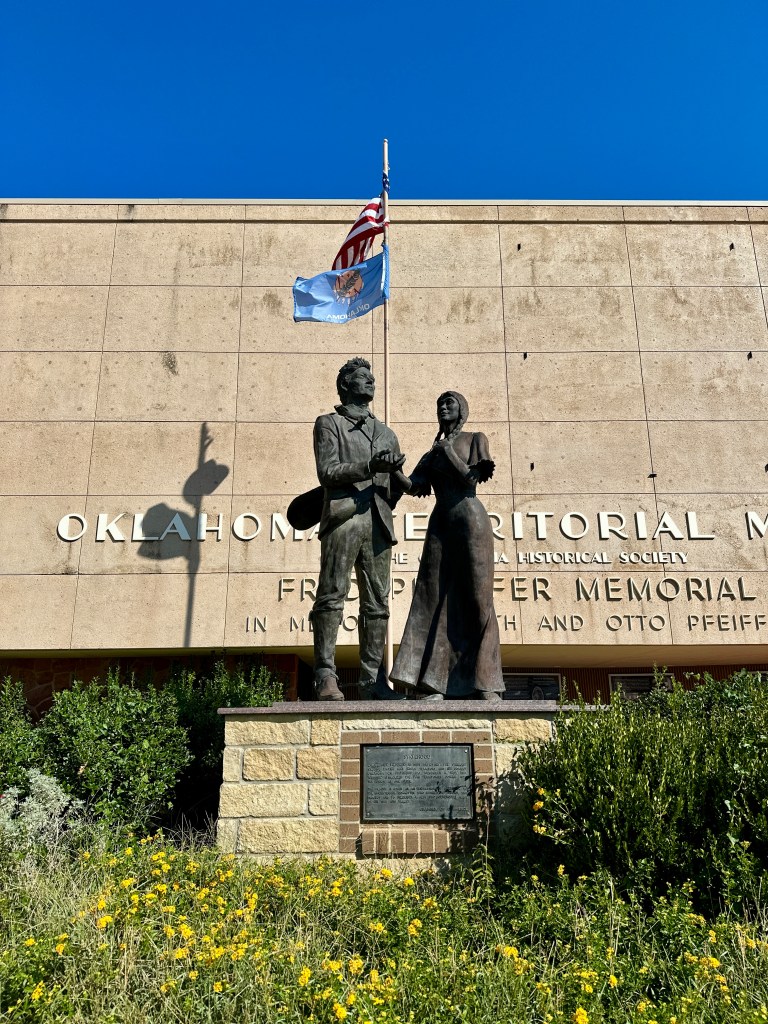
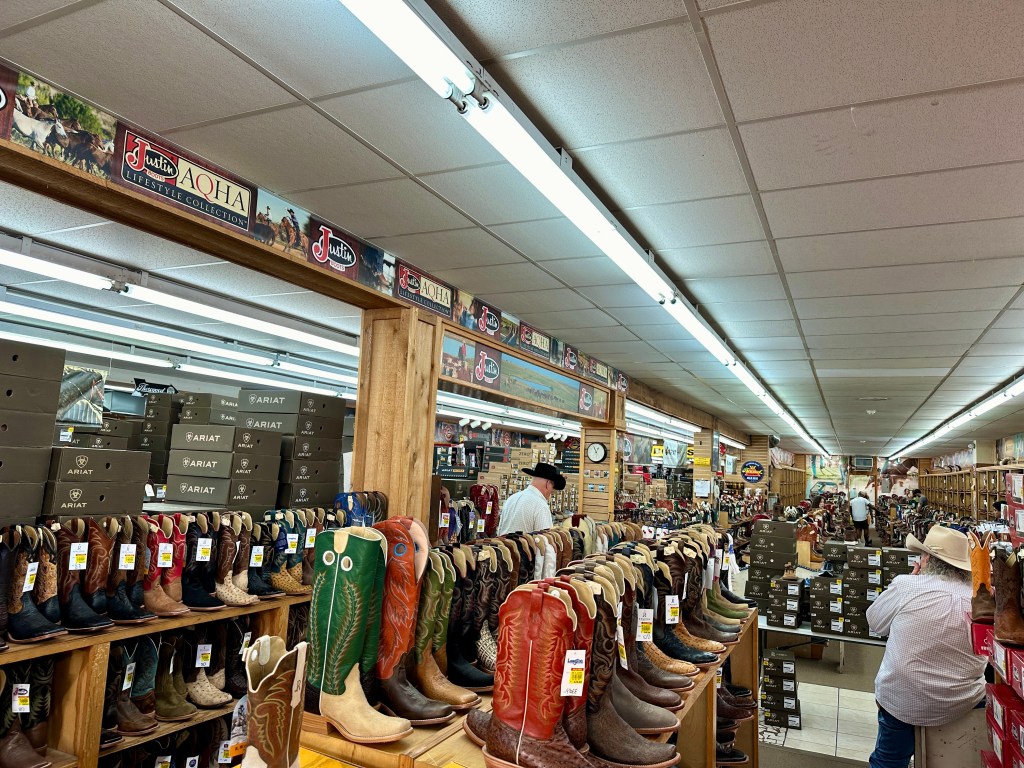
New York has its Big Apple, Louisiana its Big Easy and Oklahoma its Big Friendly. Does Oklahoma City live up to its big nickname? Having spent a couple days in and around the city, I would say yes – the campground host, the Uber drivers, the security guards at the capitol building, the park ranger at National Memorial, the waitress at Cattlemen’s Café, and the cowboy gentlemen at the Western Wear Outlet. All friendly.
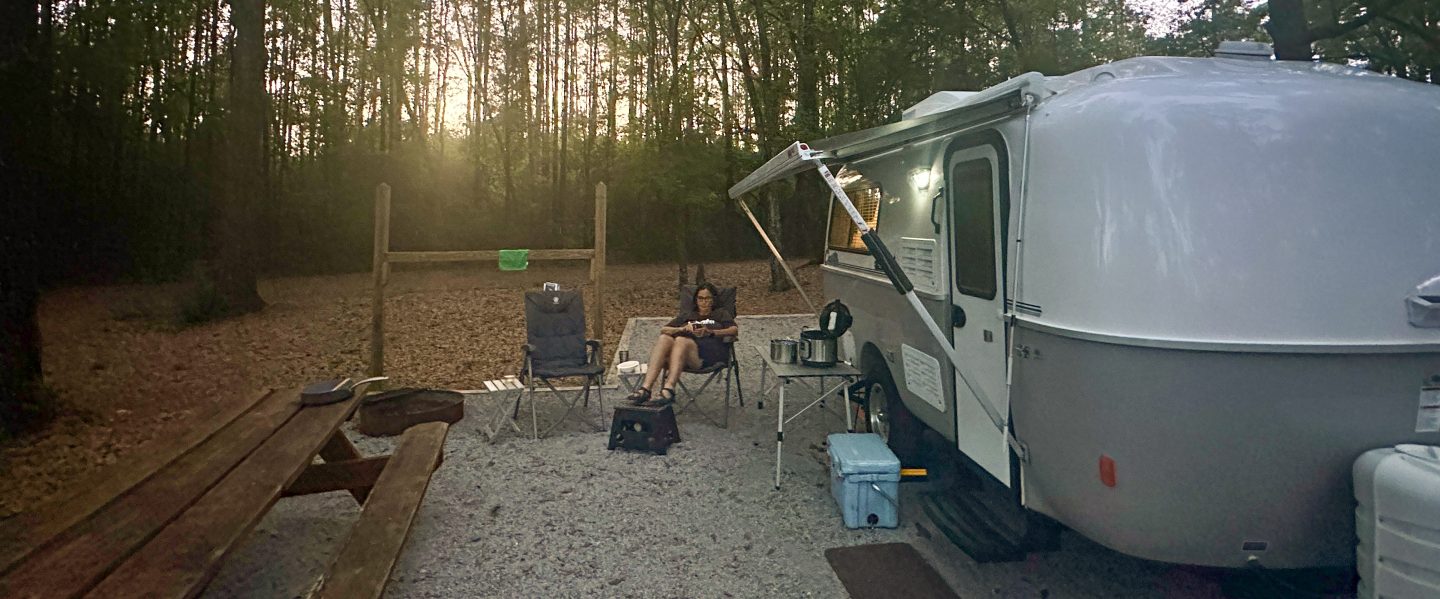
Our campground was located north of the capital city near the historic little town of Guthrie. So, before heading into the Big Friendly, we checked out what was once Oklahoma’s state capital.

There’s quite a history associated with Guthrie and interestingly, Oklahoma and its ‘Sooner’ nickname kind of began here not long after the Civil War. About that time, there was a lot of unassigned public land in the United States; that is after Indian Tribes were removed from much of it. The Homestead Act of 1862 allowed settlers to claim up to 160 acres if they lived on the land and improved it. Consequently, Oklahoma City and the smaller town of Guthrie sprang out of the prairie dust when Congress opened the Oklahoma Territory to settlers in the Land Rush of 1889.
Congress enacted a legal time of entry, which was high noon on April 22, 1889. It was estimated 50,000 people, men and women, and blacks and whites were lined up at the start, ready to grab a piece of available two million acres. Those that got in ahead of the legal time of entry and hid somewhere in the territory waiting to ‘legally’ stake a claim were referred to as ‘Sooners’. Now you know!
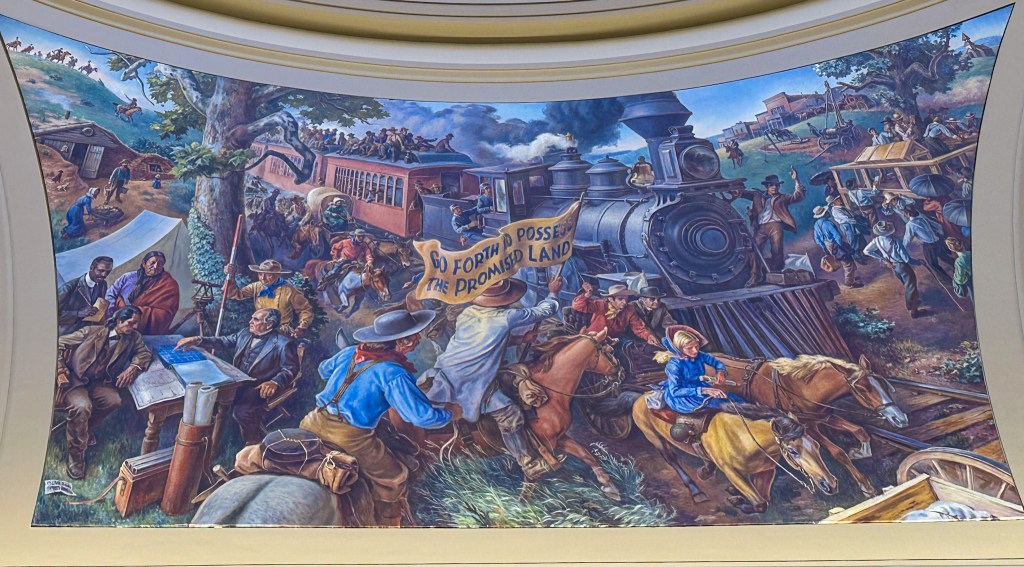
Meanwhile, the town of Guthrie, established in 1887 gained approximately 10,000 settlers during the first six hours of the Land Run, which is likely how it became the territorial capital and then the first state capital of Oklahoma in 1907.
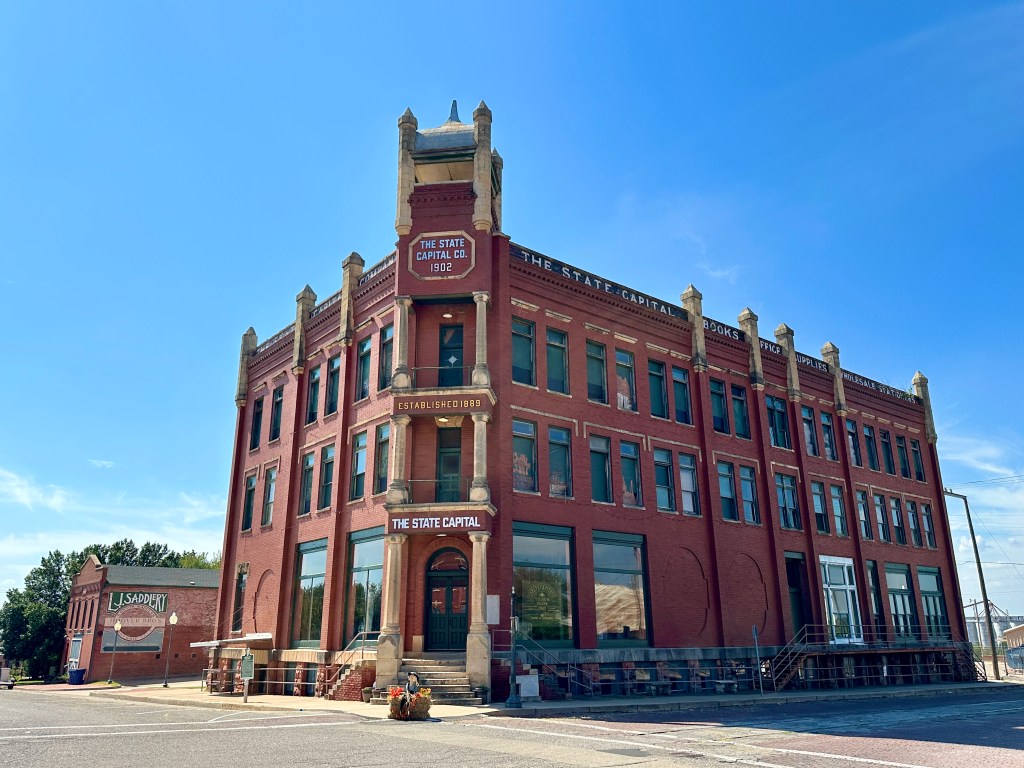
Within months, Guthrie became the “Queen of the Prairie” with its modern brick and stone, city water, electricity, transit system and underground parking garages for horses and carriages. Because of this prestigious distinction, city founders had constructed eclectic, picturesque Italianate and Romanesque buildings throughout the little city.
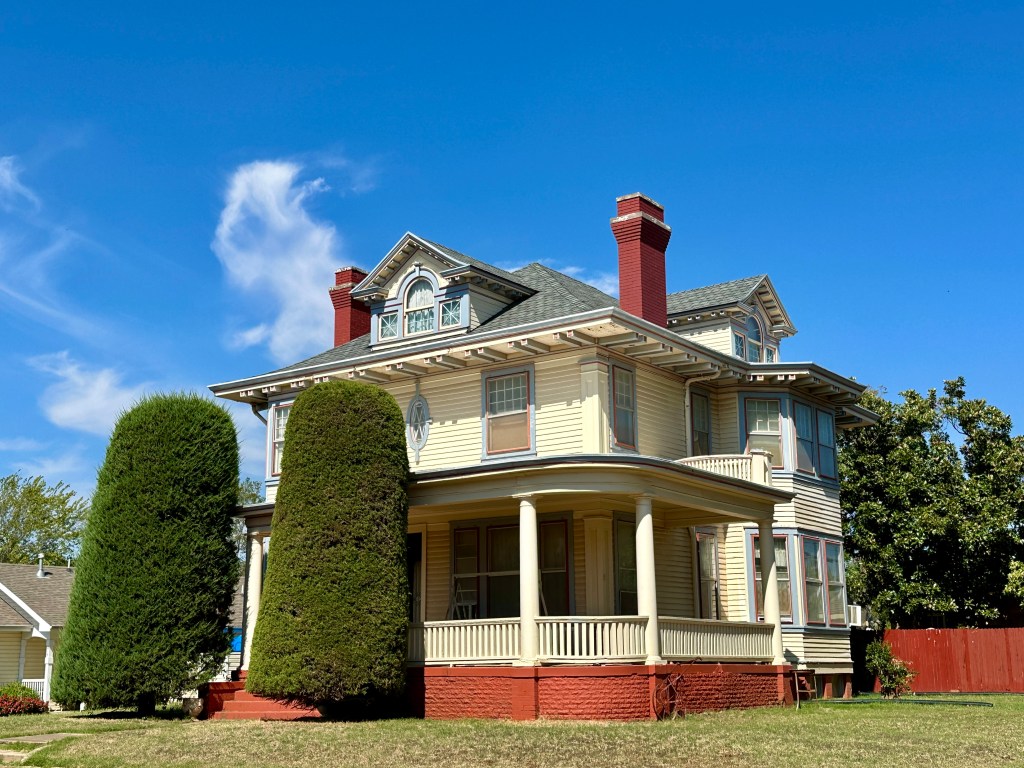
But then in 1910 and just as quickly as one can claim a plot, Oklahoma City snatched the title of state capital from Guthrie. Consequently, the Queen of the Prairie went into a deep sleep all while preserving her Victorian architectural legacy. It’s that legacy that made us come to Guthrie and walk around its downtown. And it is worth it because Guthrie can brag that it has the largest contiguous district on the National Register of Historic Places with 2,169 buildings.

After Guthrie, we had a big day planned in Oklahoma City. On a Saturday morning, we drove into the city and parked the truck at the empty state capitol public parking lot. The capitol building is open to the public on Saturdays, so we began our Big Friendly tour there. If you follow our blog, you know that Vivian and I love visiting state capitols, not only for the architecture and art on display but for the state’s history that when we are lucky, comes alive with a led tour.

Like Wyoming’s capitol building which we visited several weeks earlier, Oklahoma’s had just undergone a multi-year restoration. Following that, the Oklahoma Arts Council reinstalled hundreds of artworks and 21 newly acquired artworks throughout the building to enhance visitor experience to the capital. Enjoy the slideshow of one of the most beautiful state capitol buildings we have seen.
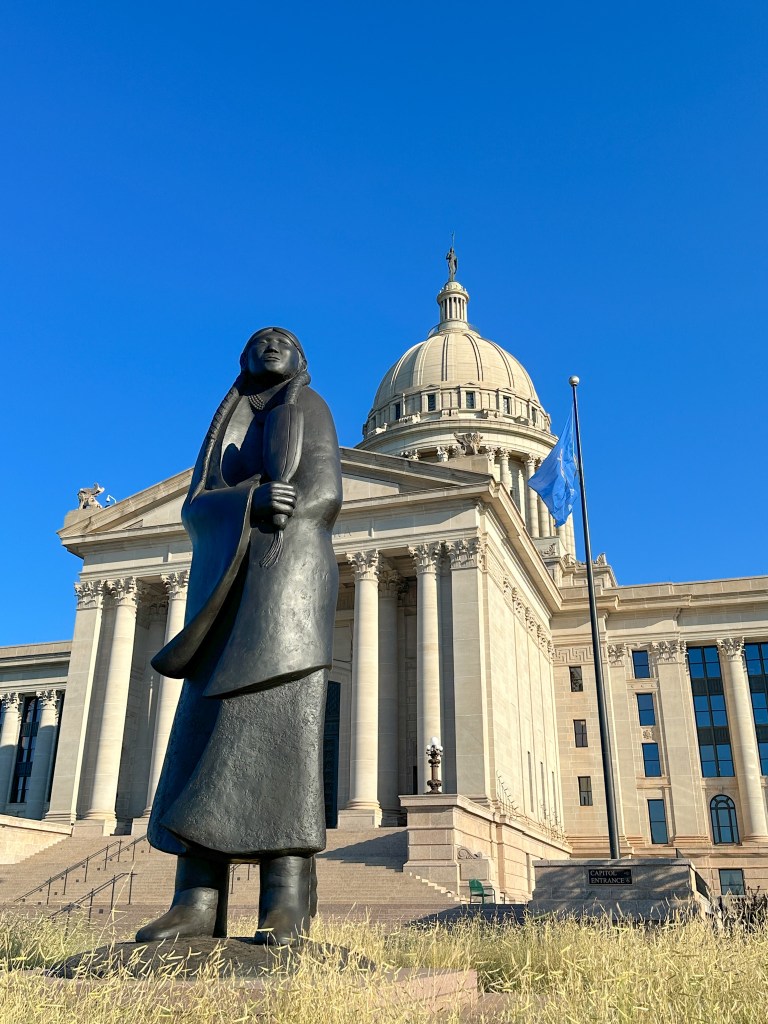

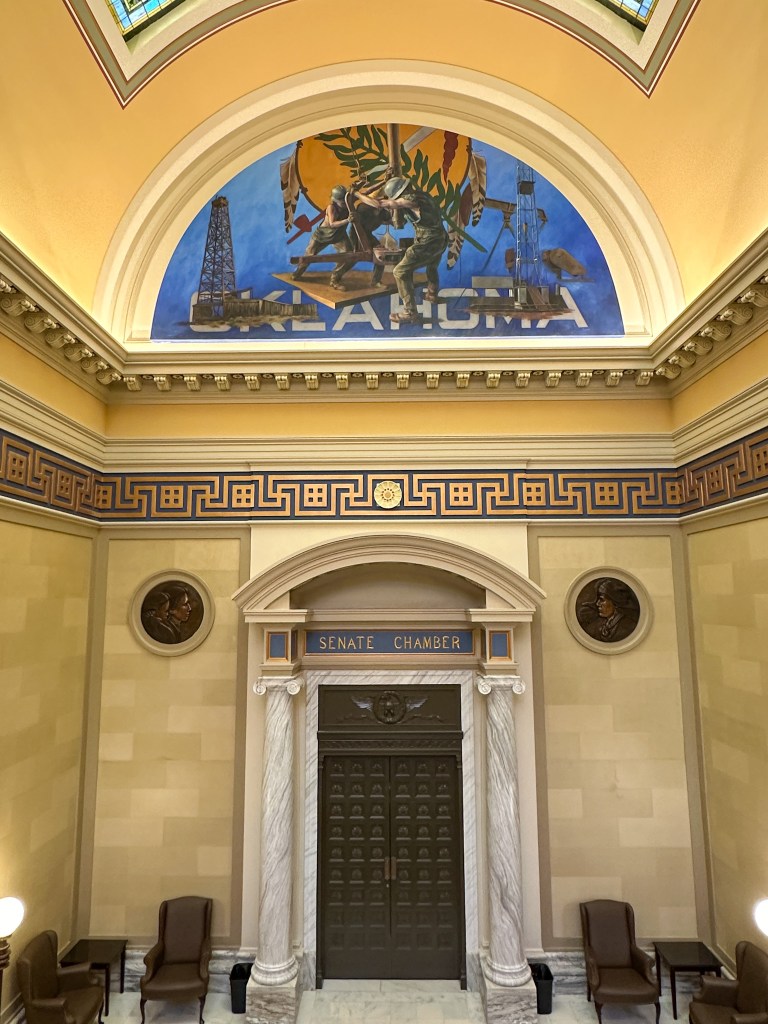
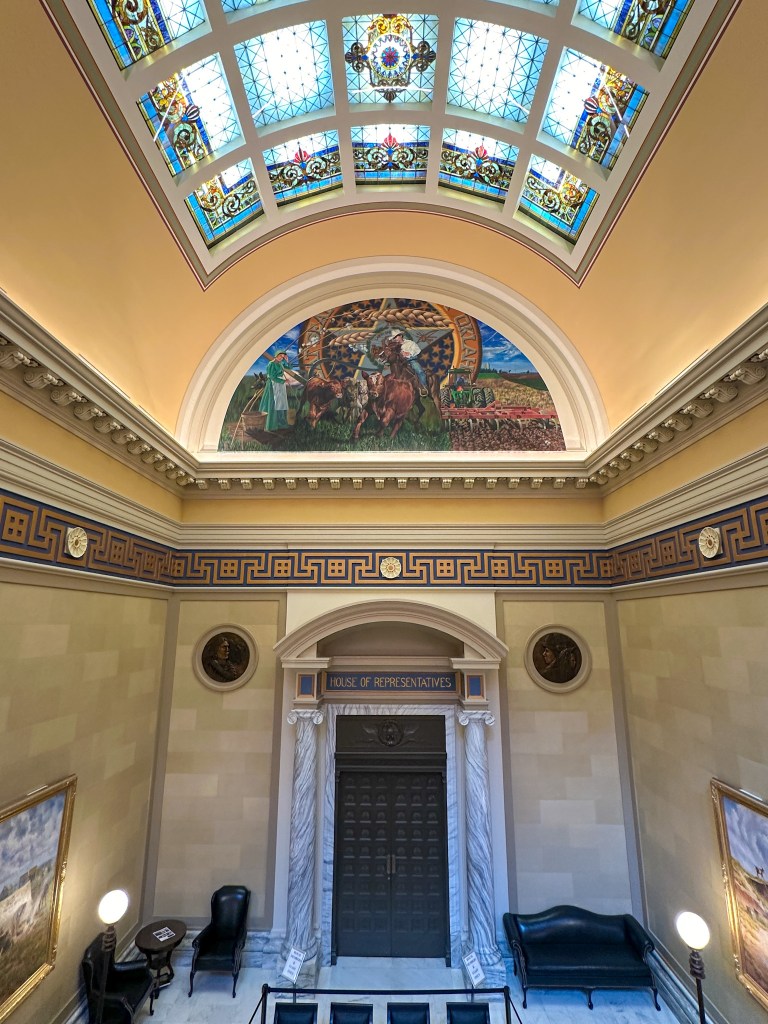
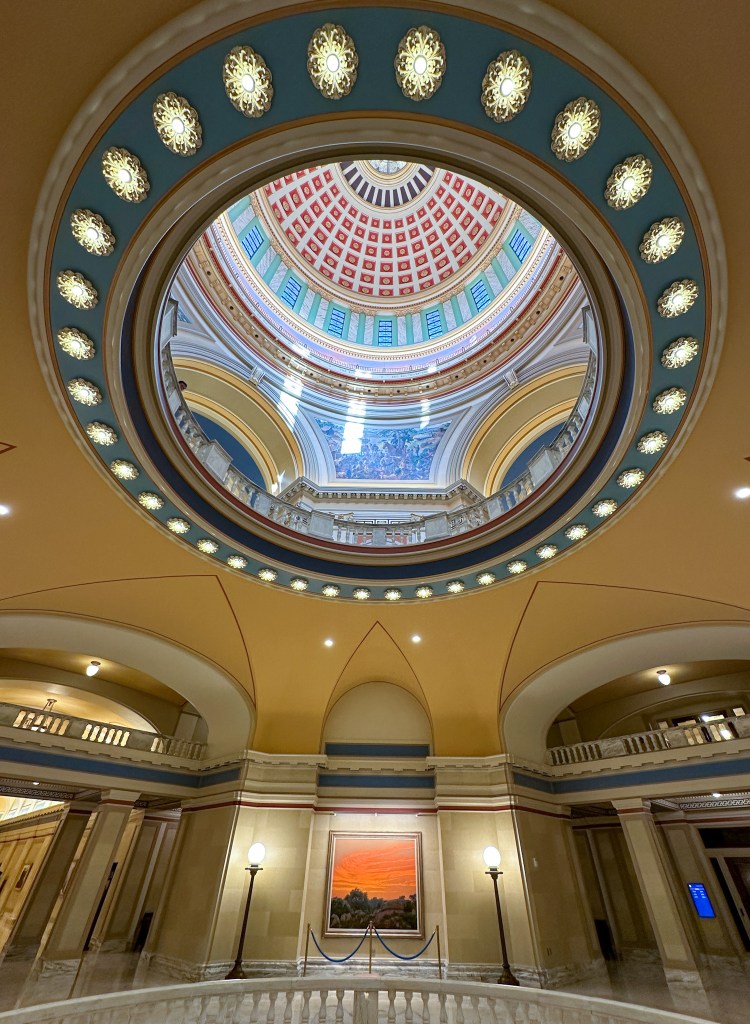
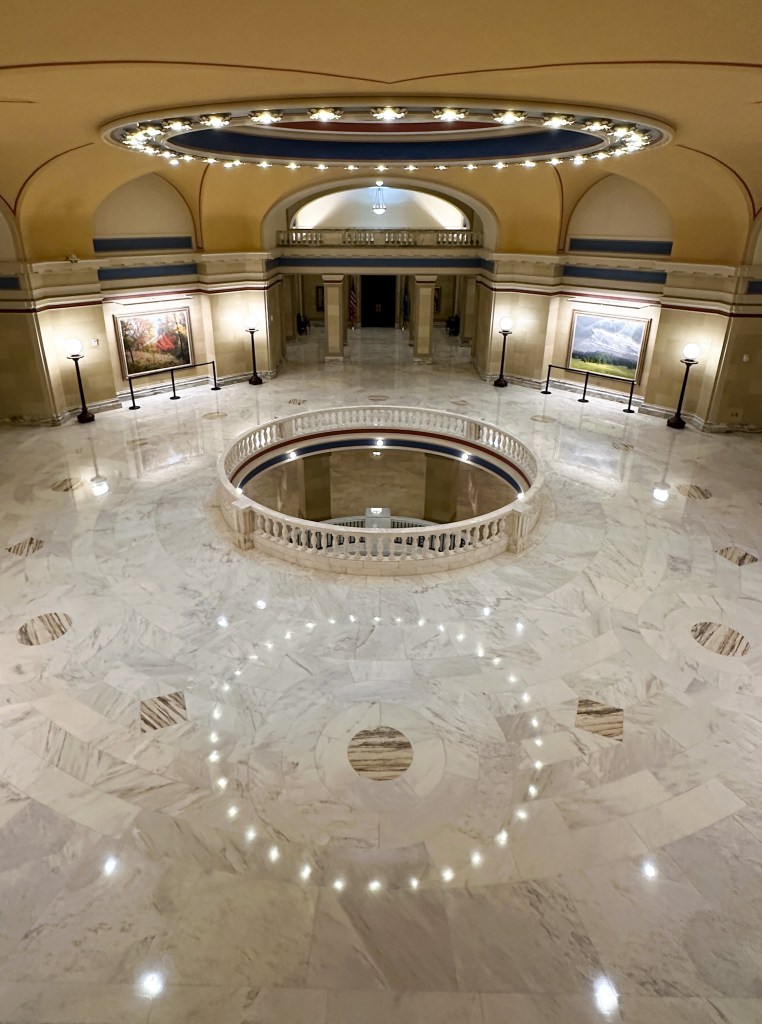
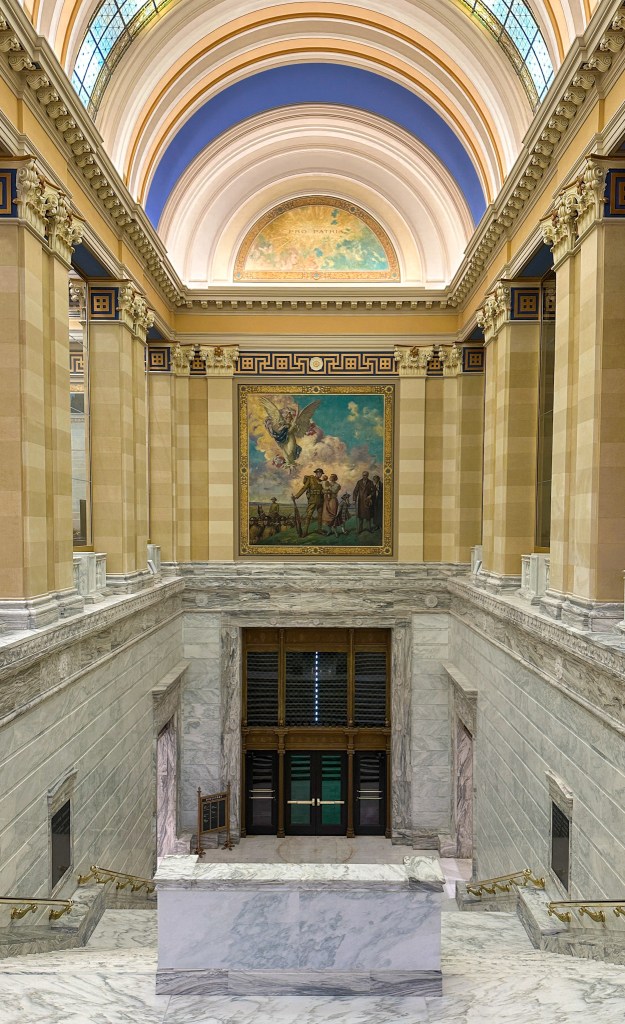
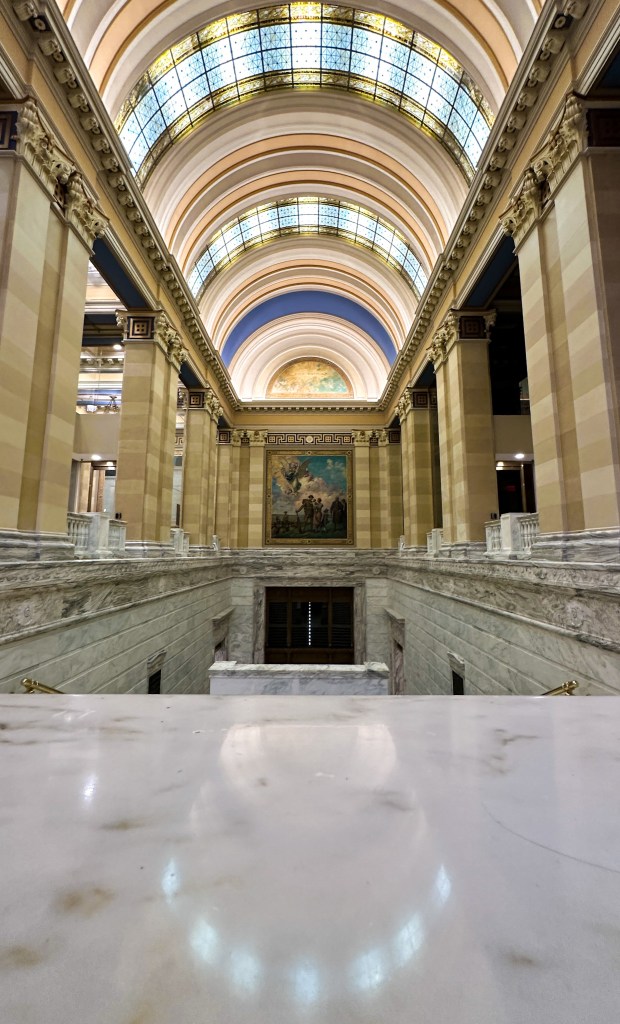
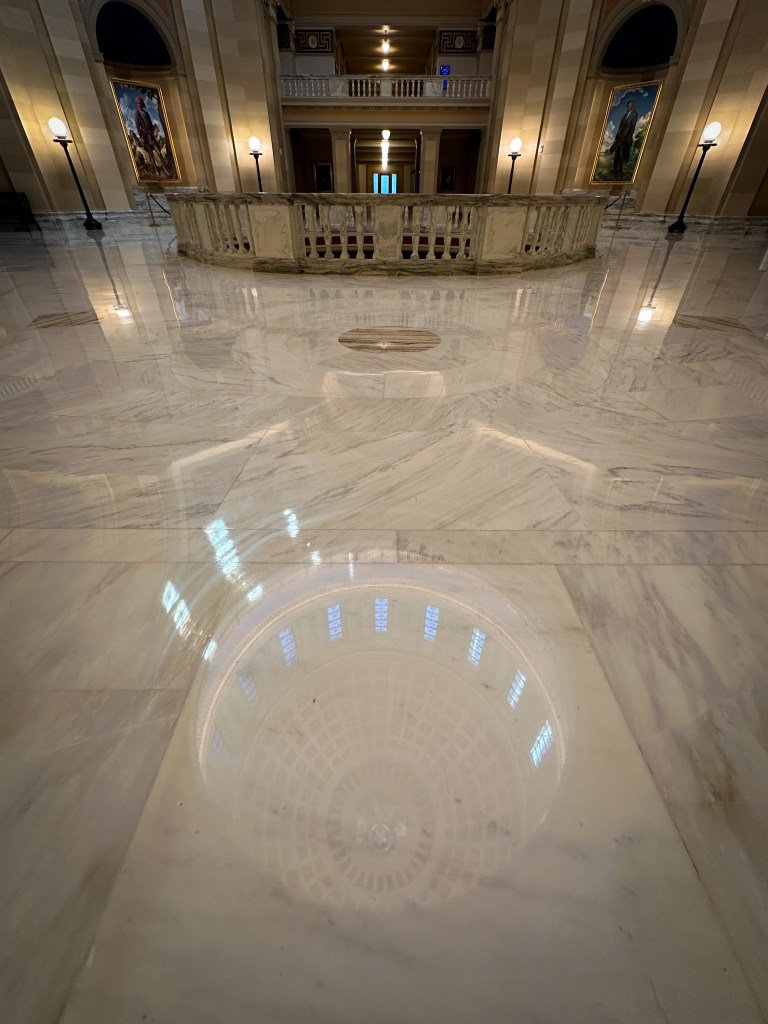
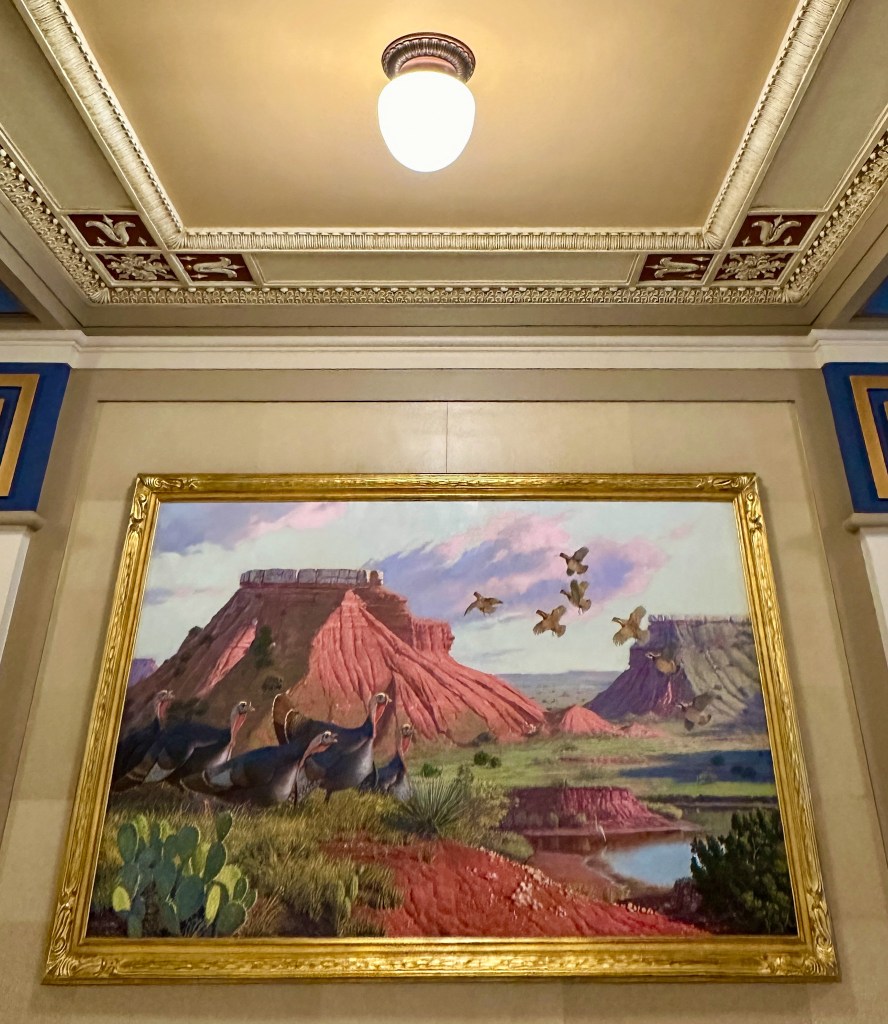
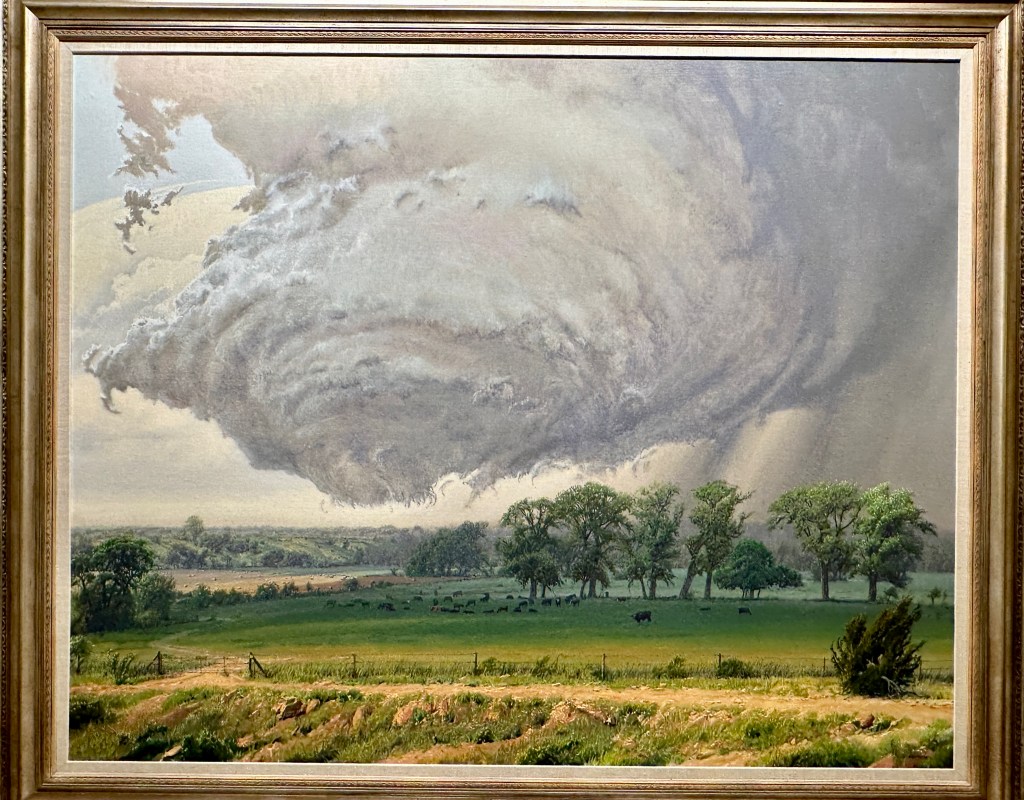
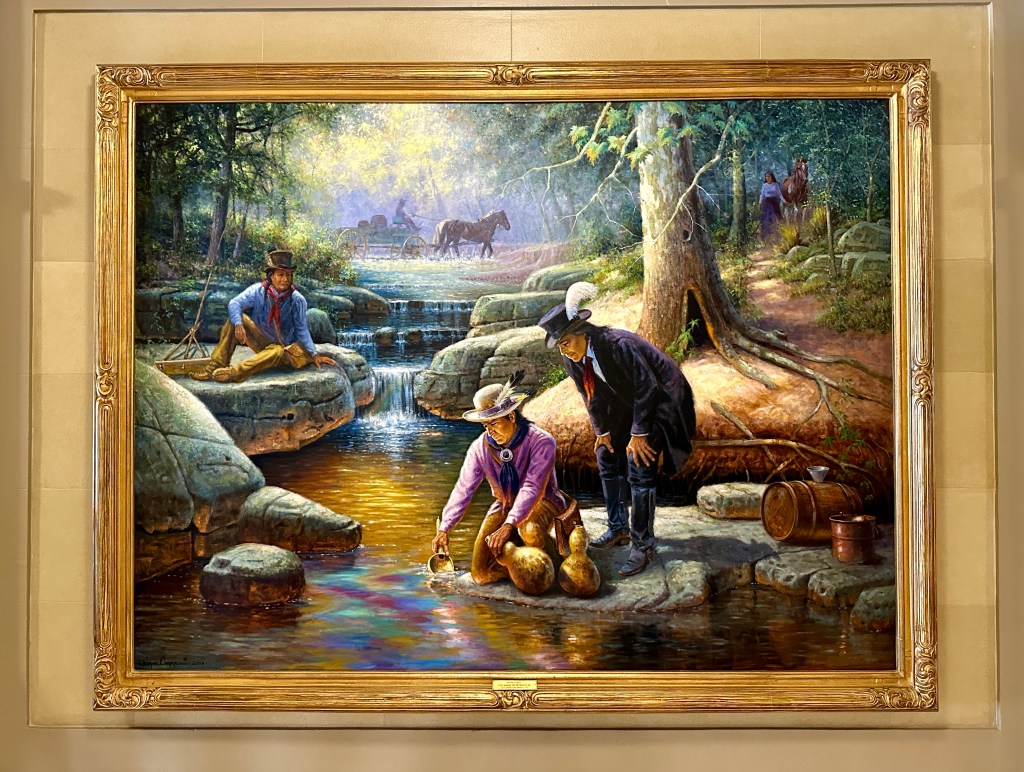
Rather than drive our big truck around the city and search for precious parking spaces, we used Uber to continue our tour of the Big Friendly. After a five-minute wait and a 10-minute ride, we were standing outside the entrance of the Oklahoma City National Memorial.
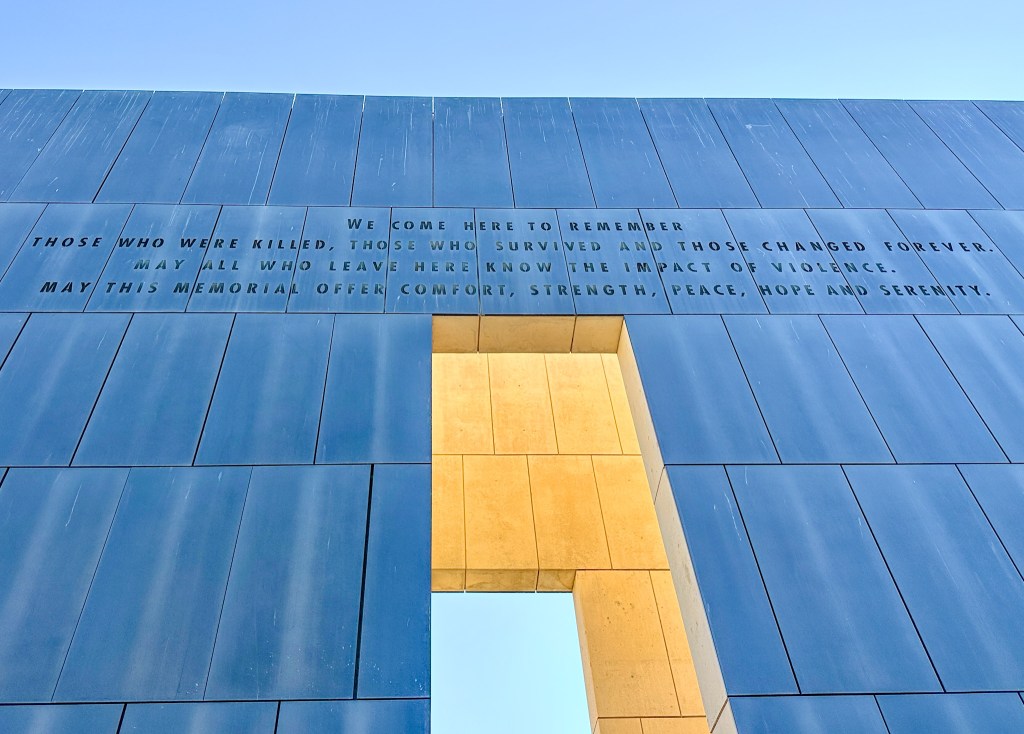
The National Park Service describes the memorial as “…an outdoor symbolic memorial…a place of quiet reflection, honoring victims, survivors, rescuers, and all who were changed forever on April 19, 1995”. Nowhere on the memorial grounds will you see the names Timothy McVeigh or Terry Nichols – but you will see all the names of the victims and survivors. You will not read placards describing the morning events of April 19, 1995 that began when McVeigh parked a rented Ryder truck on 5th St in front of the Alfred P. Murrah Federal Building. Nor will you see reference to the precise minute, 9:02 am when the deadly bomb exploded. And you will not read that this was the worst act of domestic terrorism the country had experienced.
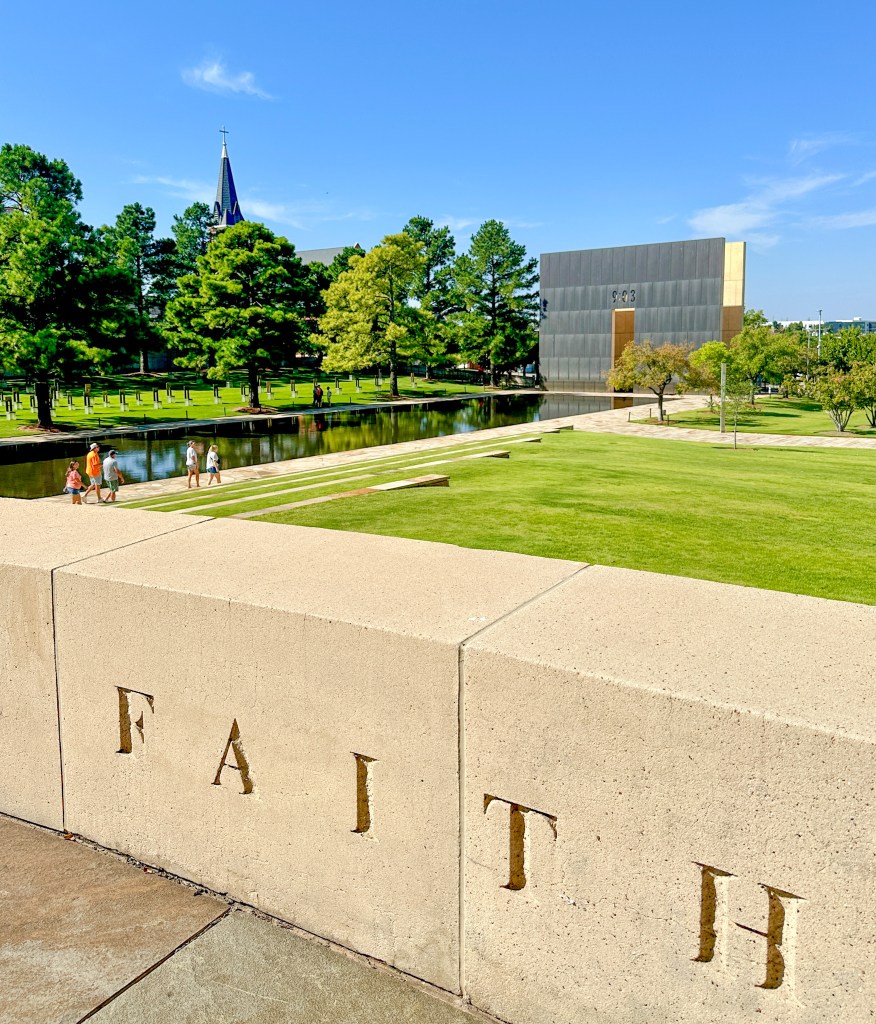
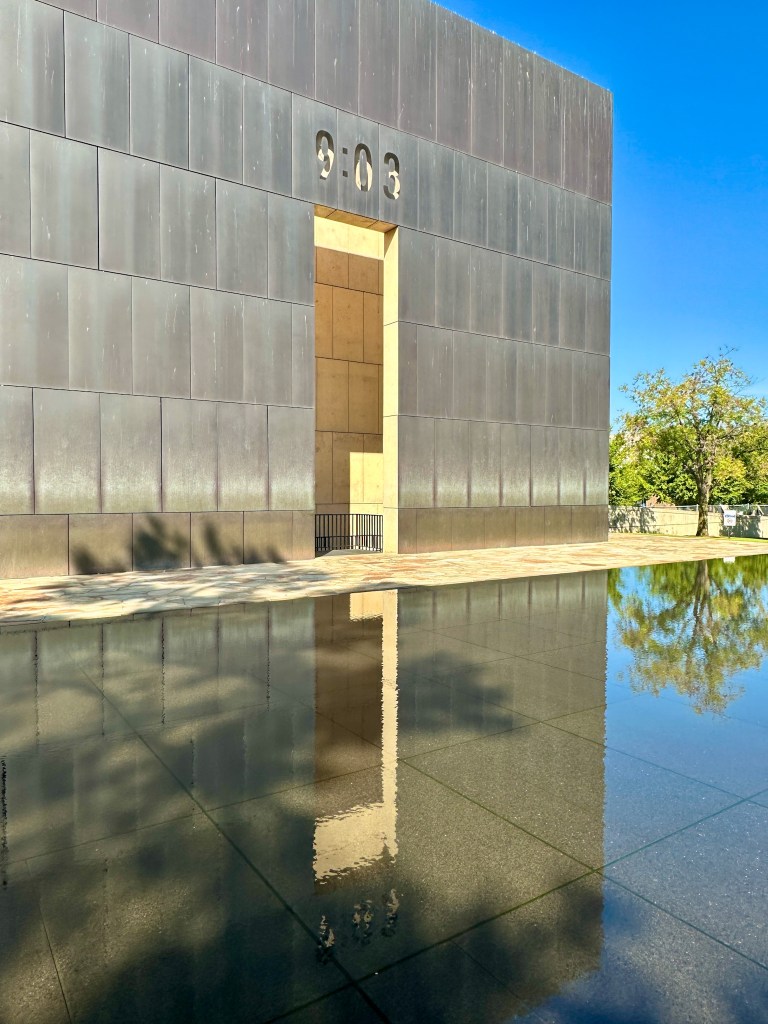
Instead, you will walk the “now sacred soil where the Alfred P. Murrah Federal Building once stood” and contemplate the impact of violence on a community and a country from 9:01 the time of innocence to 9:03 the time of healing.

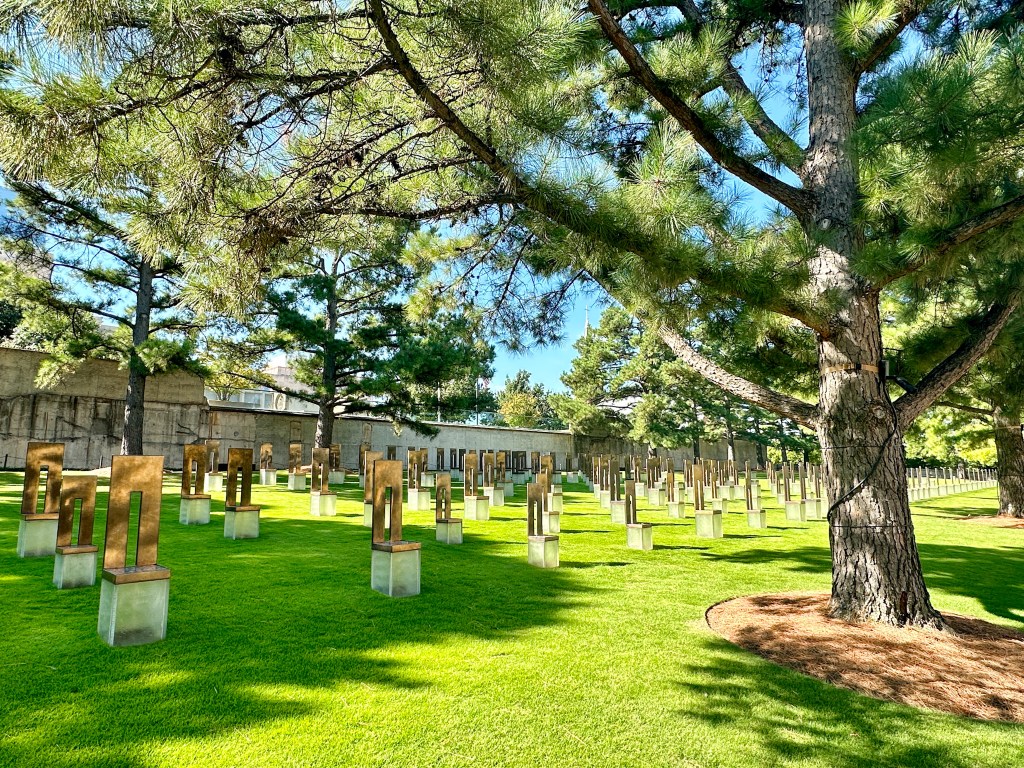
You’ll walk among the 168 empty chairs thoughtfully placed where the building’s entrance was once located.
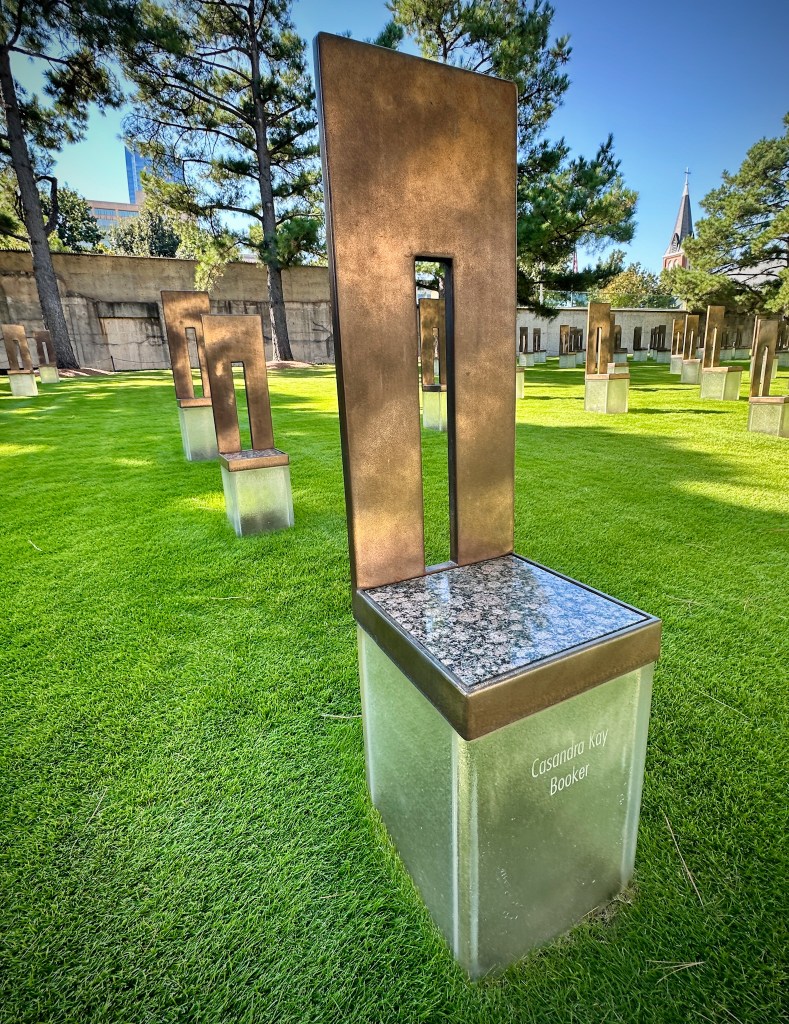
Mesmerized, you will gaze at their reflections on the reflecting pool that was once 5th St.
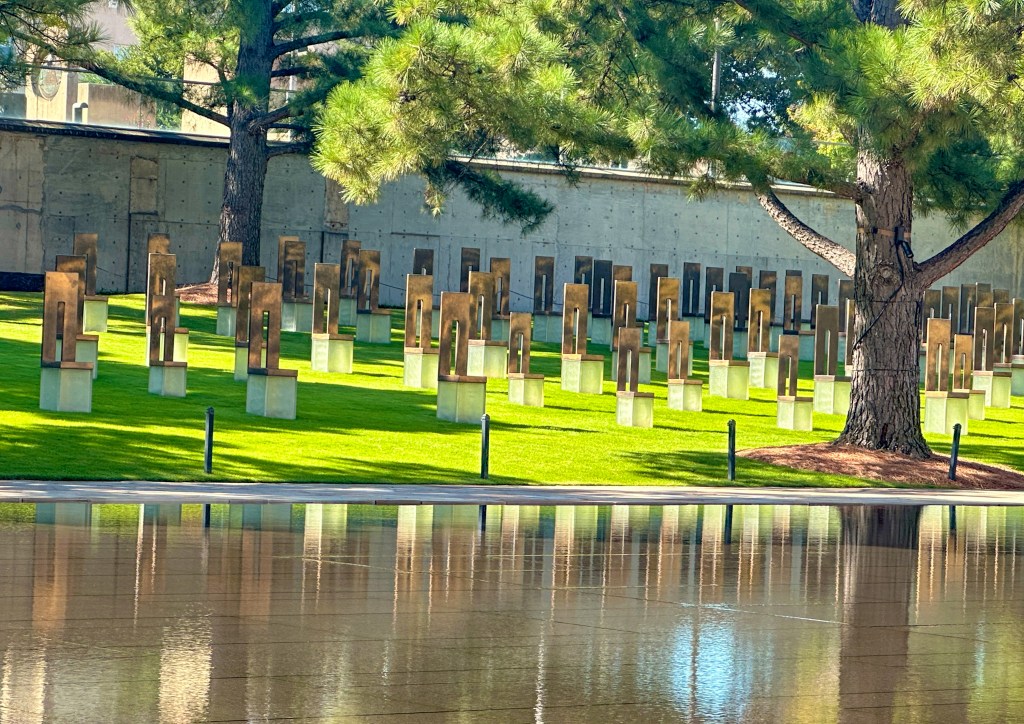
Not far from the chairs, you’ll notice crumbled walls that are the remains of the building. Here, you can walk up to the Survivor Wall and read 600 names carved into two large marble slabs.

From there, you may look across the reflecting pool where the Survivor Tree stands encircled by a promontory wall. The 100-year-old elm is the highest point on the memorial grounds, serving as a symbol of strength and resilience. Before April 19, 1995, the tree stood in the middle of a parking lot and offered shade to those coveted parking spaces.

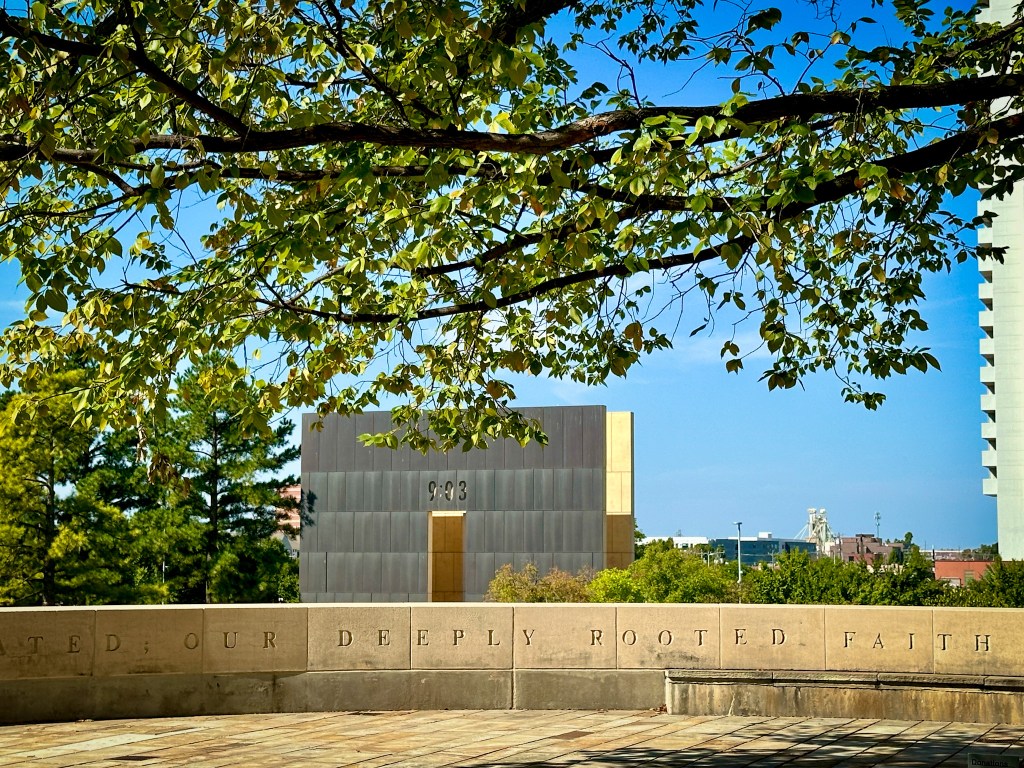
Words cannot describe what most of us have come to remember as the “Oklahoma City bombing”.


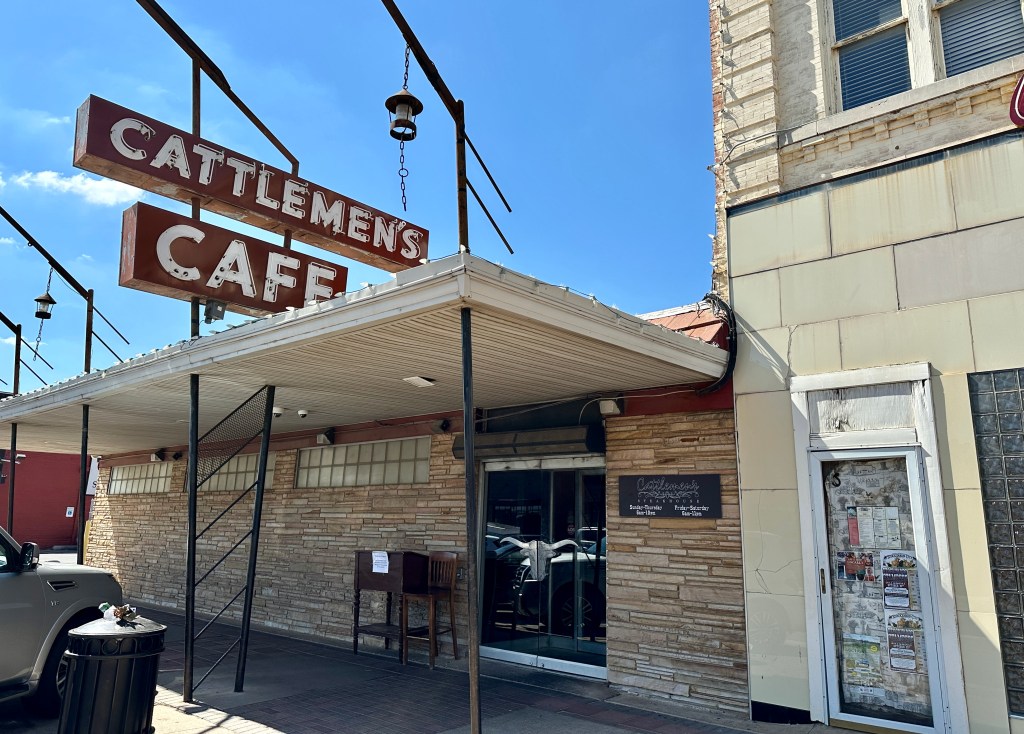
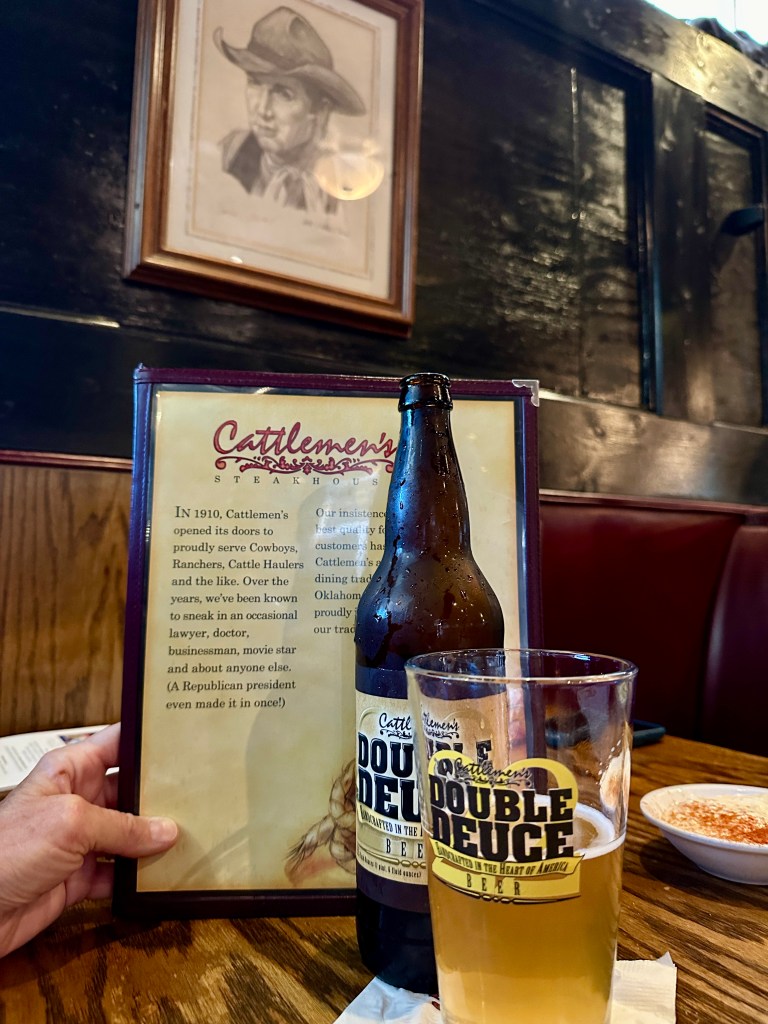
We caught another Uber ride and headed south to Stockyards City main street to have lunch at the Cattlemen’s Café (steakhouse) and take in a little cowboy culture Oklahoma style. Oklahoma has a long history of cattle ranching beginning with the five tribes (Cherokee, Chickasaw, Choctaw, Cree, and Seminole) that were resettled there on Indian Territory. After the Civil War, the great cattle drive from Texas to Kansas and Missouri began – and Oklahoma was smack in the middle of it. Today, Oklahoma ranks among the top five states for the number of cattle.

I could probably come up with plenty more reasons to stay longer in Oklahoma, but during one week in the Sooner State, we packed in enough to feel content leaving it behind. With our truck in disrepair, eight more states added to our sticker map (not to mention two provinces), and over 7600 towing miles since May, we were ready to work our way toward Florida. But hurricane season was not over yet, so we planned a few more weeks on the road and took our time in Arkansas before crossing the Mississippi River. Stayed tuned for yet another visit to a state capitol building.
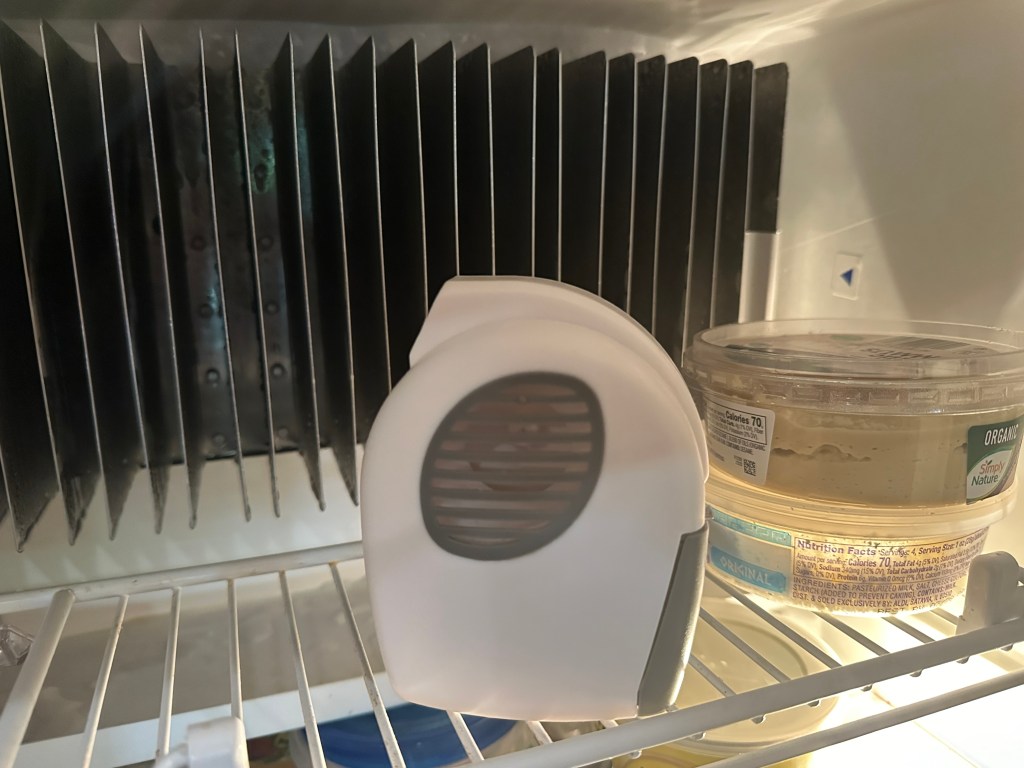
RV TIP Our 2018 fifth wheel came with the typical Dometic propane/electric refrigerator. These are notorious for not keeping refrigerator temperatures below 40 degrees without the fins freezing up. One strategy to keep temperature within an ideal range is to use a small fan to help circulate air. We point it toward the fins, which helps avoid ice build up while maintaining temps within 34-36 degrees. This Camco battery-powered fan doesn’t take up much shelf space, but we do have to exchange batteries on a weekly basis. We recommend using rechargables.


The Oklahoma City bombing memorial was one of the saddest sights we have seen on our journey. I suppose because it happened in my lifetime. How was the steak at the Cattlemen? Lorraine and I thought about eating there but they only had steak on the menu!! Great pictures, as always!
LikeLike
Vivian says she’s had better steak! I liked the beer!
LikeLike