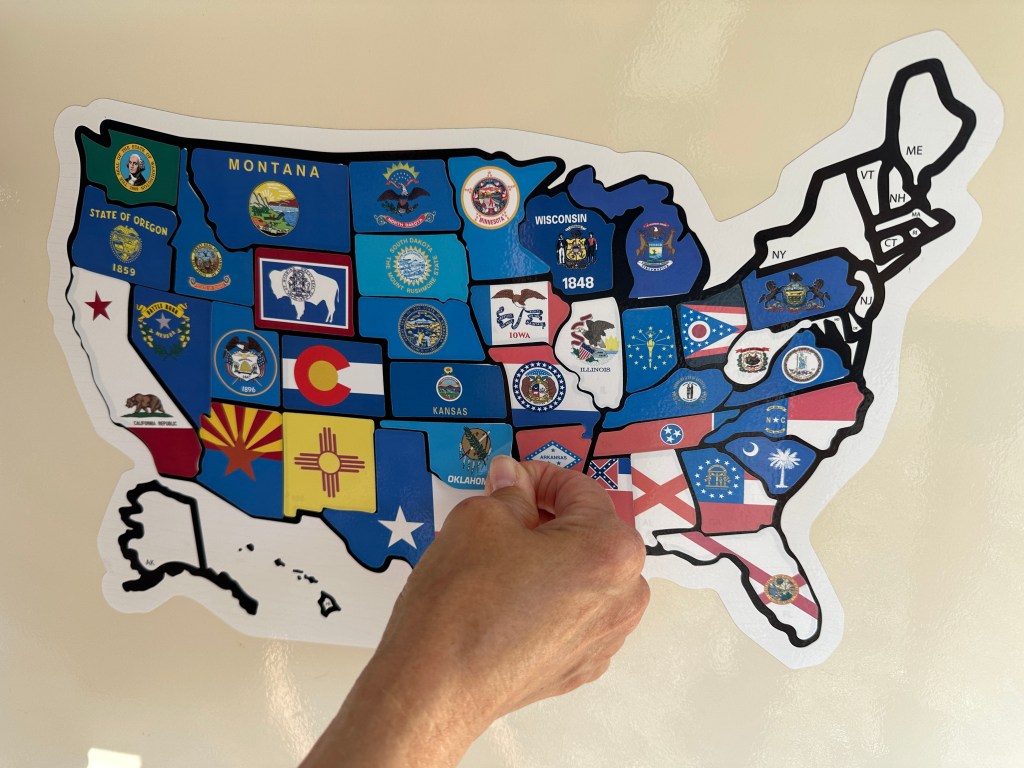
Traveling from Colorado to Tennessee, it didn’t make sense to go 250 miles out of our way. But we did anyway. Of all the places we intended to visit east of the Rocky Mountains, I was most excited about the Wichita Mountains, which were a little out of the way. Not only that, our state sticker map had an empty space between Texas and Kansas that was burning a hole through our rig, so we had to fix that issue before getting back to Florida.

I learned about the Wichita Mountains Wildlife Refuge from a book that Vivian and I consult regularly before traveling. It is titled “1,000 Places to see in the U.S. and Canada Before you Die”. The book’s description begins as follows, “Rugged islands of ancient rock surrounded by a sea of grass, the Wichita Mountains are the nation’s first big-game wildlife preserve”. That description and the fact bison roam the preserve was all the information I needed to want to spend a couple days exploring its many hiking trails and scenic roads, and to photograph its bison.

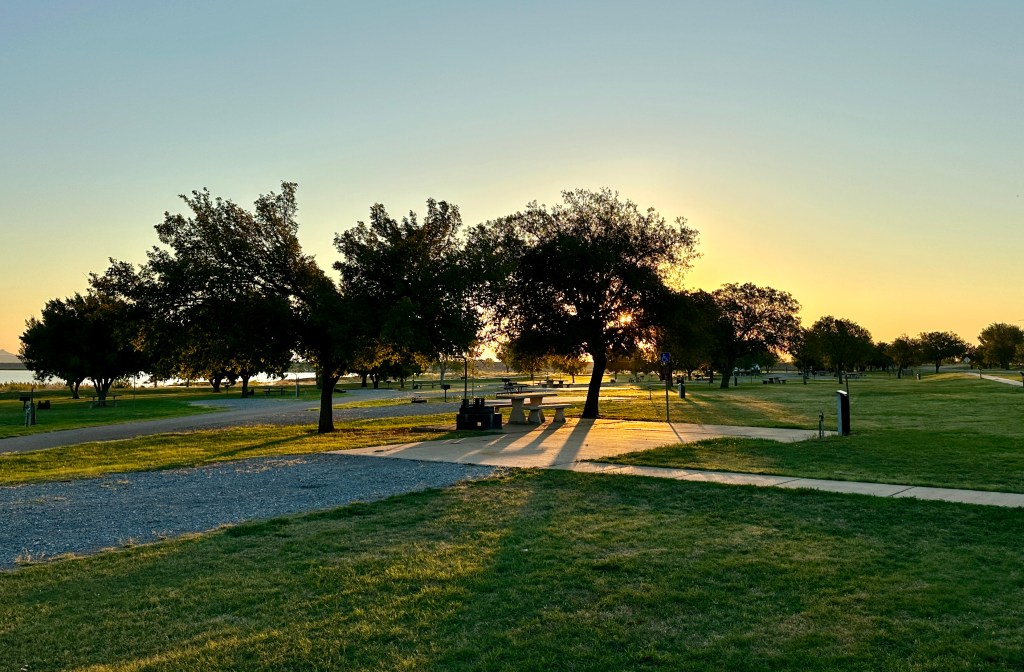

At our campsite and eager to get to the preserve, we were out the door before the crack of dawn. Inside the boundaries of the refuge and feeling like we were the only people within miles, we drove east on a narrow park road toward the rising sun. Curves and upslopes reminded me to go slow; after all, large mammals roam this refuge – bison, elk, longhorn cattle, and white-tailed deer.

And then within a split second, our plans were altered from that point on. I spent the first 25 years of my life living in Michigan and put thousands of miles on my vehicle driving its roads and highways. Michigan ranks fourth in the likelihood of an animal involved in a vehicle collision claim. Although a variety of animals can be hit by a vehicle, deer are at the top. In 2022, Michigan’s Office of Highway Safety Planning reported 58,000 vehicle-deer crashes. Despite the high probability of hitting a deer in Michigan, it never happened to me – until I got to Oklahoma. FYI, Oklahoma ranks 29th in the likelihood of hitting an animal with a vehicle.

On an inclined road and facing the sun directly on a cloudless day, it was impossible to see the small deer on the side of the road before it leapt in front of the truck. Imprinted on my mind forever is the sight of a backlit white tail standing straight up from the backend of a harshly silhouetted animal. At the instant before impact, it was clear to me that a deer had just leapt into midair as skillfully and quickly as they are known to do, but with the worst timing imaginable. It was over as soon as we heard the loud thud.
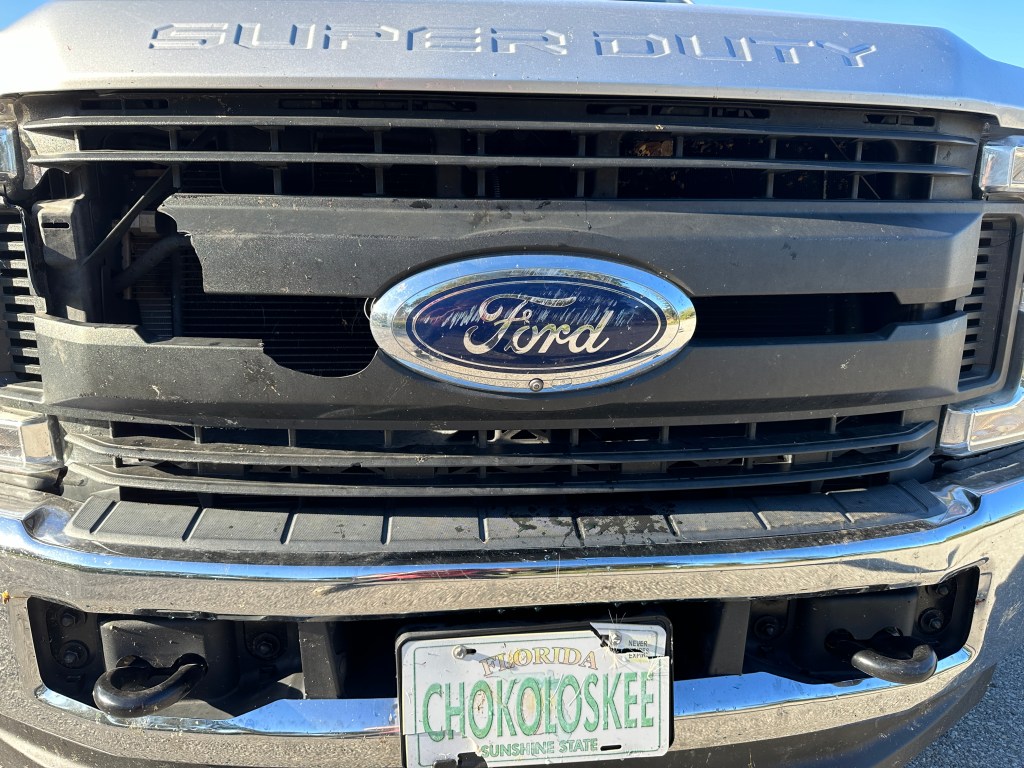
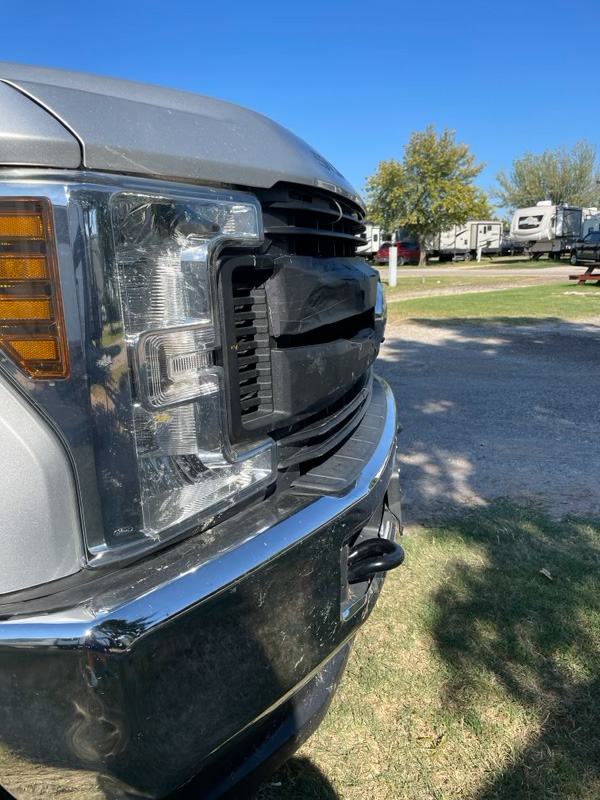
I will spare you the details, but the cruel irony of killing a fawn was that the damage to the truck was not enough to keep us off the road and we were both unharmed. Repairs to the truck were needed, but that could wait until we got back to Florida.
That event took the wind out of our sails. But with extra caution, we went back to the Wichita Mountains to do what I set out to do in the first place, photograph the largest mammal in North America. We had one last morning to drive to the preserve, this time on a wider highway that ran through open prairie where the bison were more likely to be and where we could pull off more easily. Shortly after sunrise, I spotted a herd on a hill overlooking the highway. Although the previous day’s tragic event was fresh on our minds, seeing the bison quickly dampened our sadness.

I spent about an hour on foot alongside the road tracking the animals from a safe distance while Vivian stayed with the truck. The bison are descendants of the original 15 that were put here after President Theodore Roosevelt named the Wichitas a “Game Preserve” in 1901.


The Wichita Mountains will always conjure mixed emotions for us, grateful to have seen them and to photograph the bison; yet broken hearted that they will be remembered for something we prefer to forget.
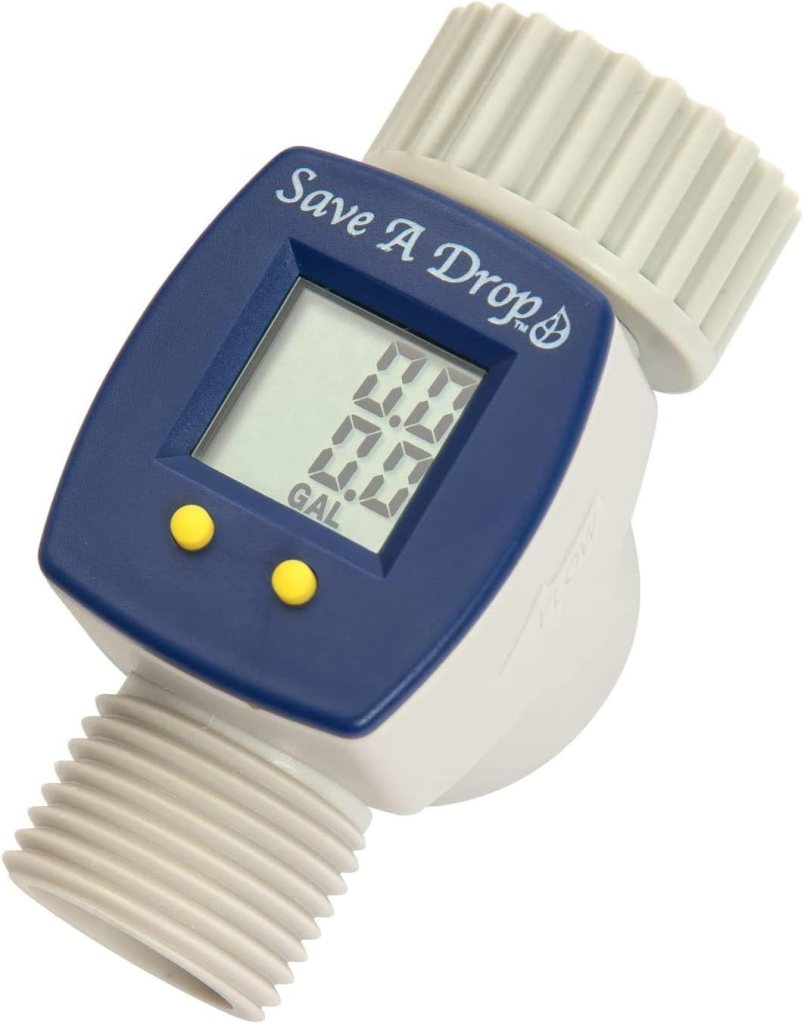
RV TIP – I love full hook up sites for lots of reasons, but one of them is that I can take my time emptying the gray and black tanks when it comes time to leave. When not rushed I give the black tank a good flush and close it to fill it once or twice with the flush hose. To help me avoid the disaster of overflowing when adding water to the tank, I use an inexpensive water flow meter that I attach to the flushing hose. With that, I can see how many gallons are going into the tank. It can be used for other things as well. For instance, when we know we are boondocking for the night, I’ll put some water in the fresh tank before leaving a campsite. We don’t like to travel with more than 5 gal in the tank because of the added weight, so I use the water meter when filling the tank.

 Changing Views From Our RV
That’s a heart wrenching story. You both must have been in shock after the accident. Glad everything worked out in the end. Btw, I LOVE my water flow meter and would not travel without it.
LikeLike