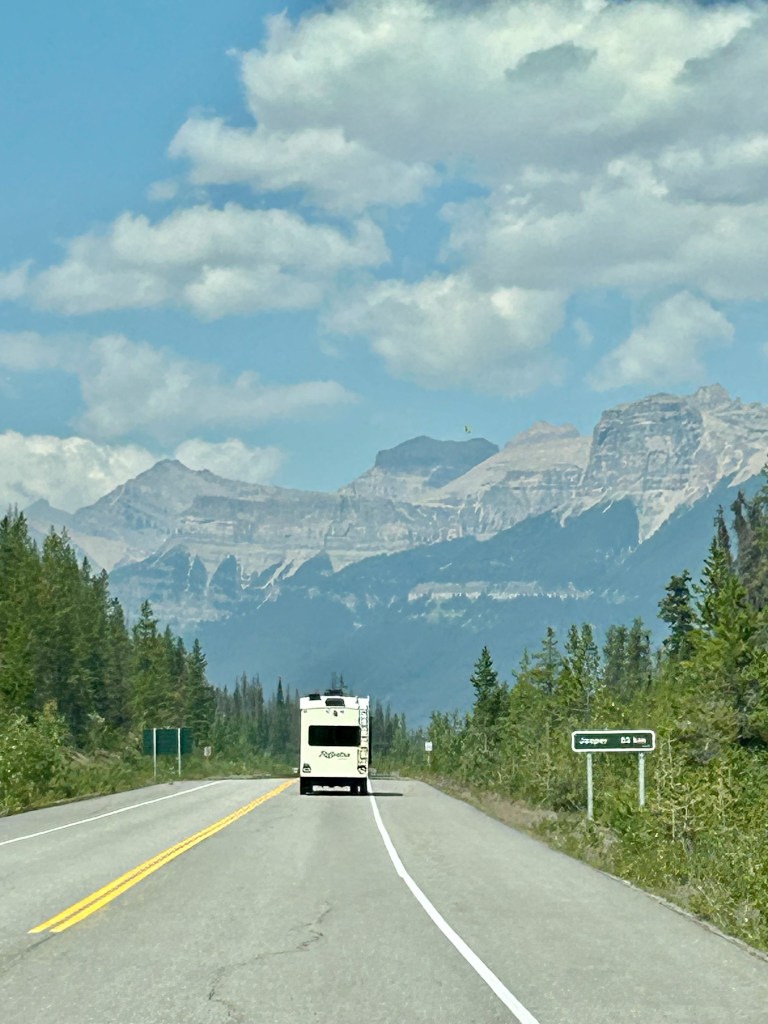
You might think leaving Banff National Park would not be easy, but the fact we would drive north on Highway 93 toward Jasper National Park made it so. If Banff was a preview, Jasper was the show. Our drive was approximately 180 miles to our campground in Jasper National Park, 140 miles of which is the Icefields Parkway, considered one of the most beautiful drives in the world.

Lorraine and Spencer followed us as we towed our fifth wheels along the Parkway. We had high hopes that there would be several pull-off opportunities along the way, but with our two relatively large trucks and tow behinds, we knew our limits and certain popular stops would be inaccessible. Fortunately, most of them were short distances from our Jasper campground and with 12 days to explore, we came back to the Icefields Parkway several times.

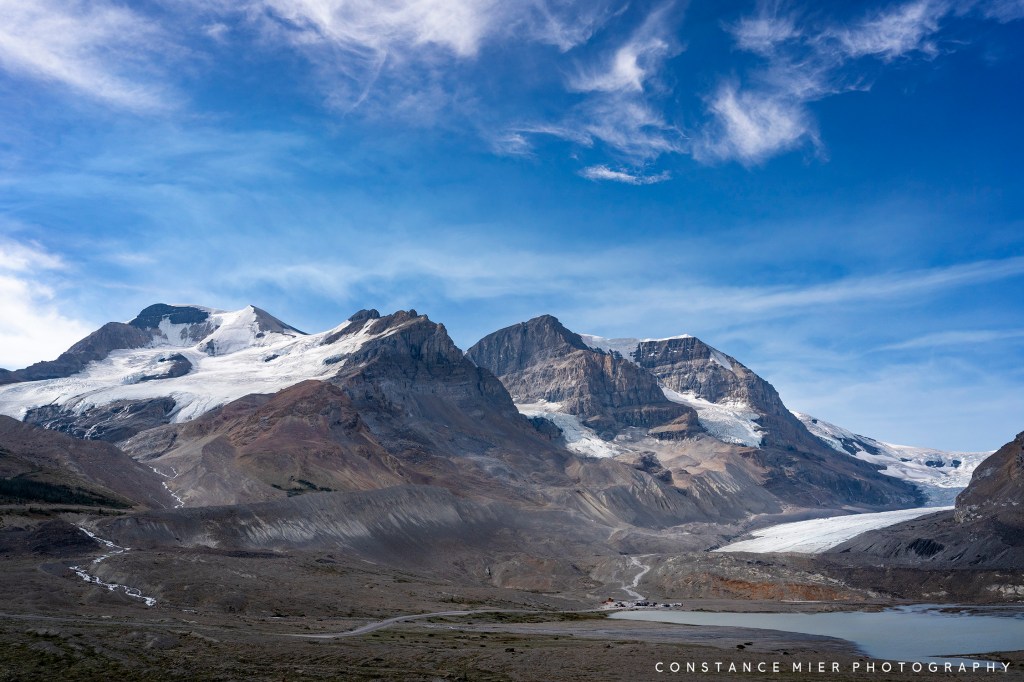
Along the Parkway is the Columbia Icefields where ‘Tongues of Ice’, including roadside attractions like Athabasca Glacier move through the mountain valleys. At about 80 square miles, the Columbia Icefield is the largest mass of glacial ice in the Canadian Rockies that feeds several large glaciers including the Athabasca. Glaciers form where more snow falls in the winter than melts in summer. Over time the snow gets thicker and heavier and slowly moves downhill. But as the planet warms, the reverse occurs as these glaciers gradually become remnants of themselves.

The Columbia Icefield has an impressive role to play as a hydrological apex (Snow Dome) of the Continental Divide. This is where a drop of meltwater begins its journey to one of three oceans. If a water droplet manages to roll down the west side, it enters the Columbia River and eventually the Pacific Ocean. From the east side water rolls down to the North Saskatchewan and Athabasca Rivers and eventually to the Atlantic and Artic Oceans, respectively.

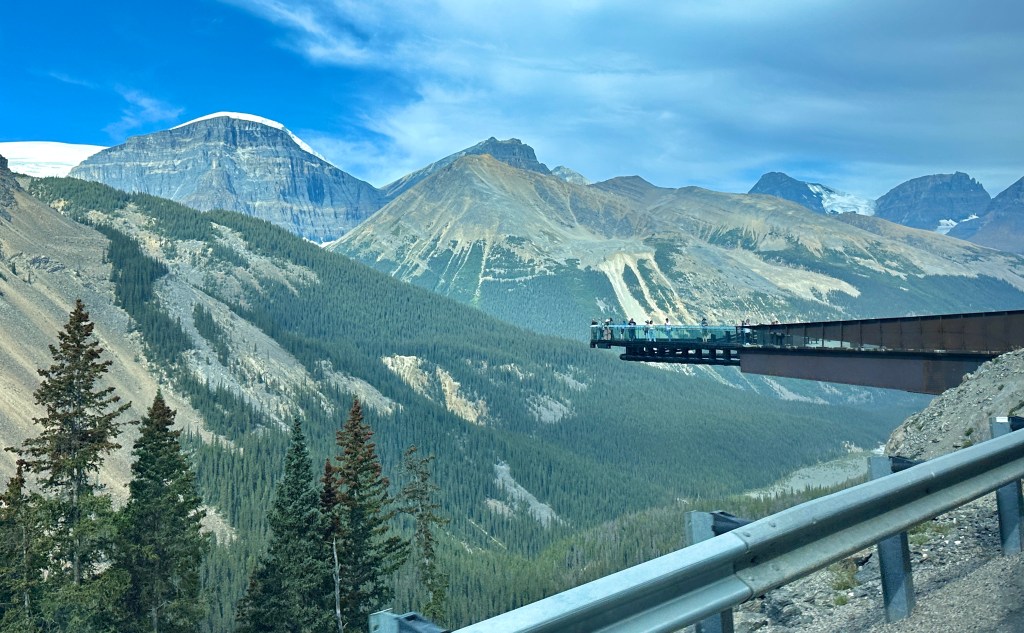
The rocks themselves have another great (and incomprehensible to most) story to tell with three distinct chapters. Beginning with an ancient sea that spread over the land, sand, silt, and gravel deposited over time in the shallow waters that covered an area now occupied by snow-capped mountains. The accumulation of sediment eventually filled the sea while at the same time, the earth sank in that area. Over millions of years, layer upon layer of sediment built up and hardened into solid rock. Chapter two began when a disturbance in the shallow depression occurred as the earth’s crust became more unstable. Over time, the sediment layers lifted up and broke in many places (faults) while compressive forces caused blankets of rock to fold, buckle and break such that one part slid up over another part. It is unimaginable what was going on beneath the surface to make all that happen. But thankfully, it happened!
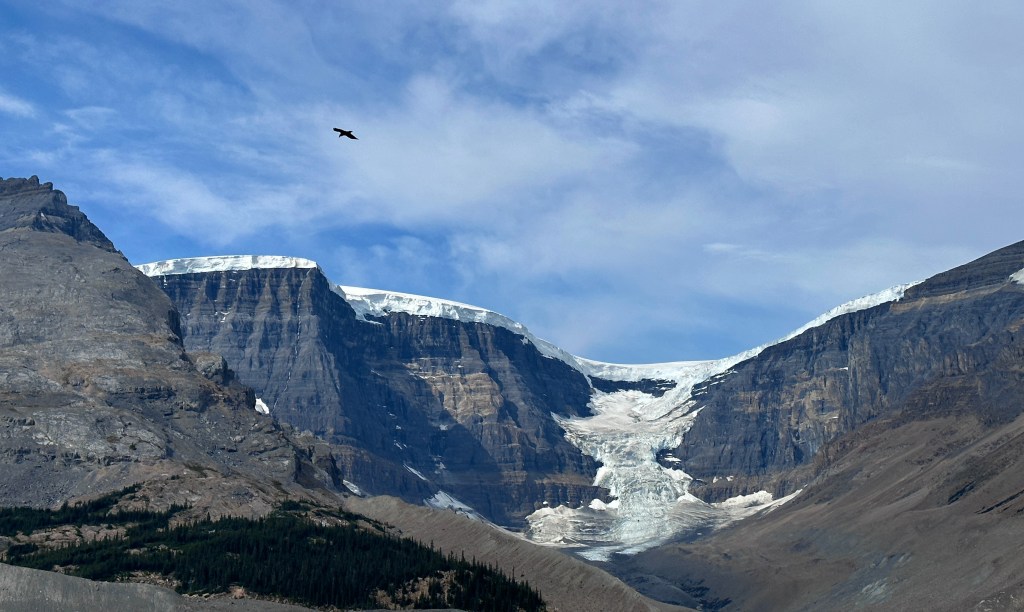
Some of the Rocky Mountain’s history is contained within Jasper National Park, spreading over 130 miles along the eastern slope of the Rocky Mountains from the Continental Divide and then eastward to the foothills. With 4,200 square miles, Jasper is one of the largest national parks in the world, and one of the most beautiful. Containing land drained by Athabasca River and its tributaries it holds many grand waterfalls and gorges. And this is where chapter three of the Canadian Rockies comes in, which describes how the most spectacular displays of water movement on the planet came about. I’ll leave that for the next blog. Meanwhile enjoy this slideshow of views along the Icefields Parkway.
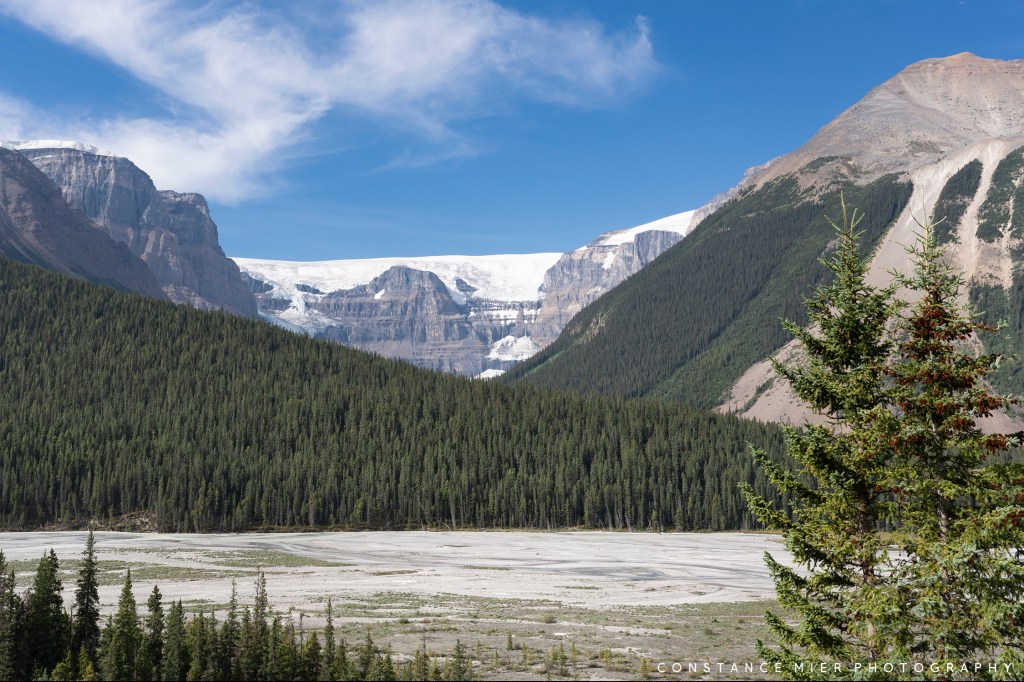
A view of Stutfield Glacier from the Icefields Parkways 
Zooming in on the Stutfield Glacier 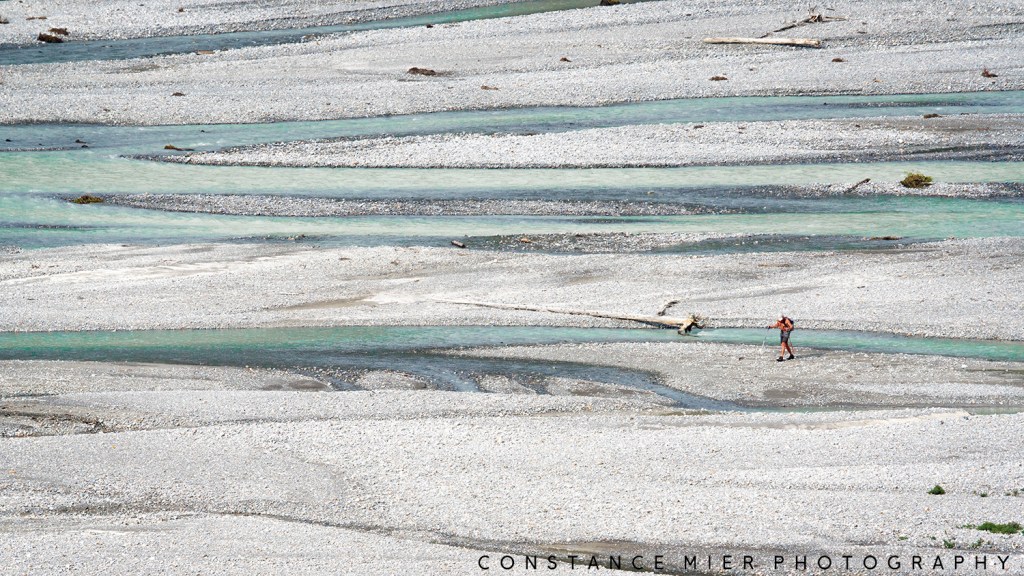
Below the Stutfield Glacier is a braided river flat filled with sand and gravel. 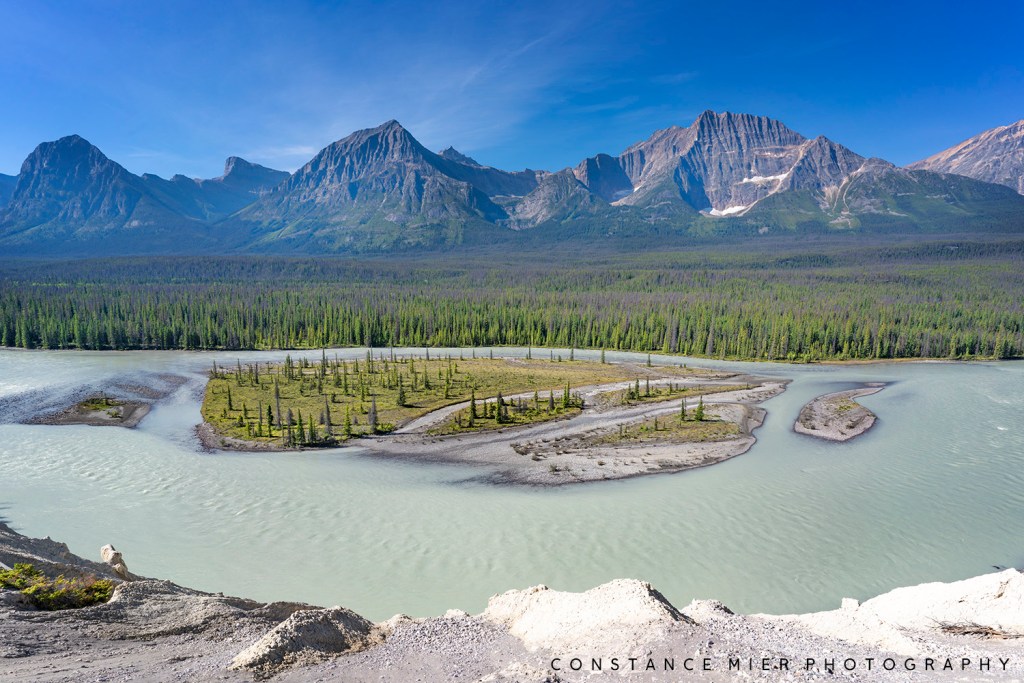
A view of Goats and Glaciers from Icefields Parkway. We did see goats, but I am saving that for another blog! 
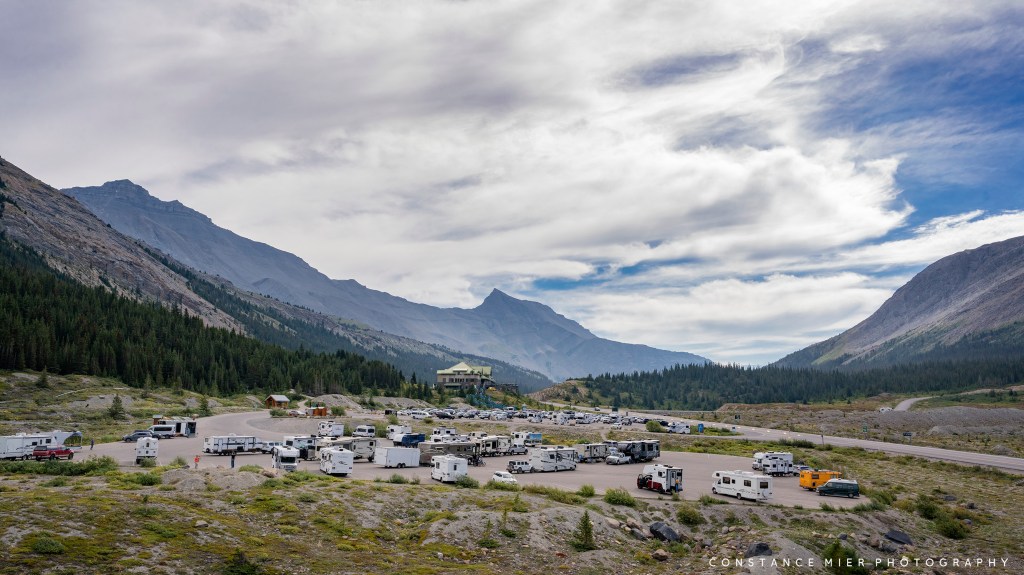
Athabasca Glacier viewed along the Parkway from the Jasper National Park Visitor Center parking lot. 
Look at the left bottom corner, you can see people walking on the glacier. 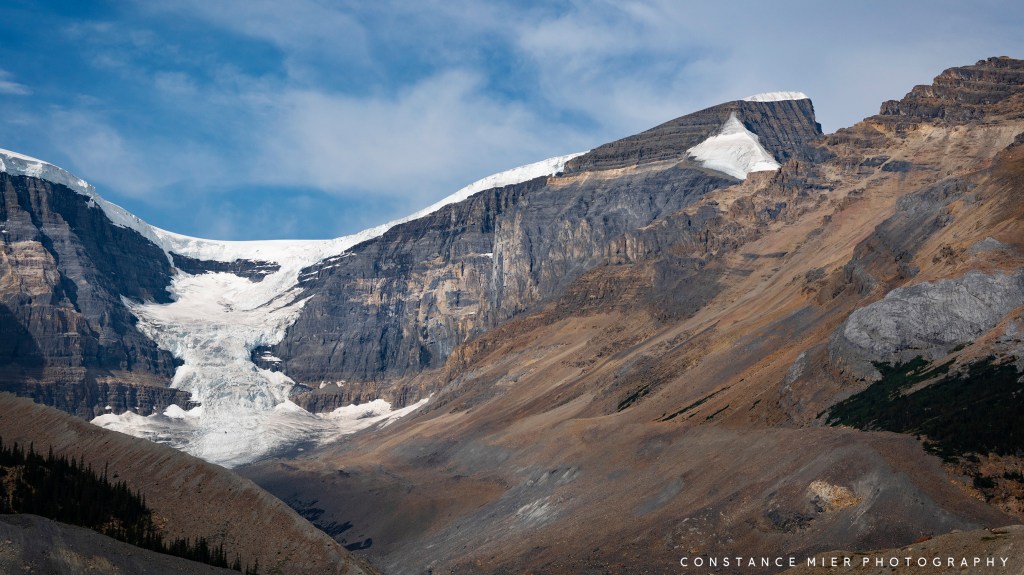
The Columbia Glacier facing north from the visitor center. 
A zoomed in shot of the peaks to the right of the Columbia Glacier. 
Left of the Columbia Glacier. 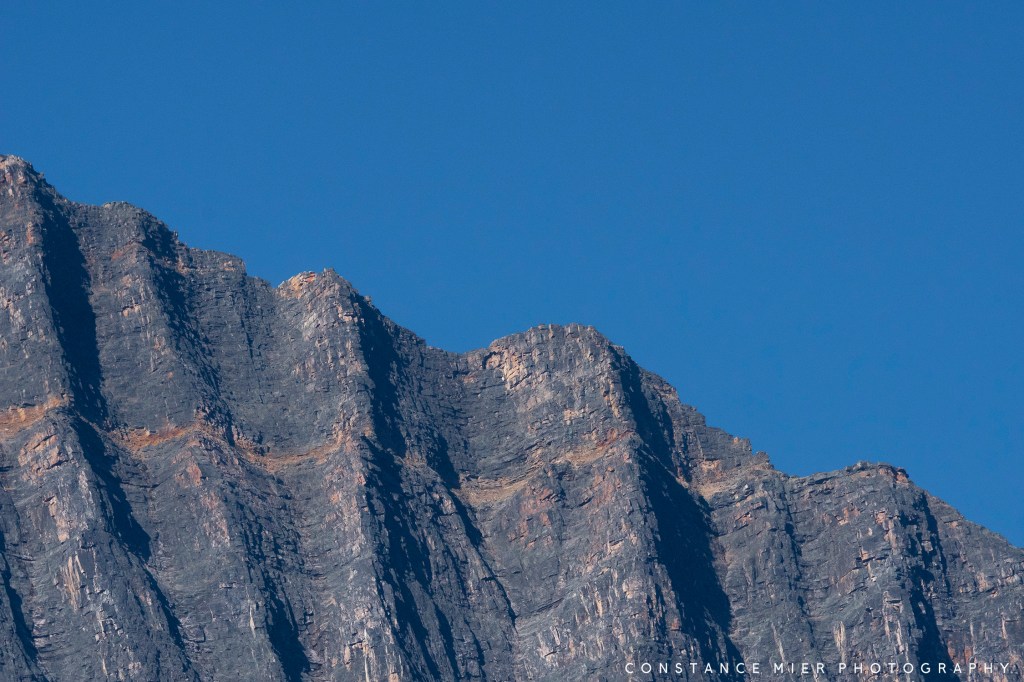
Compression folds that characterize some of the Rocky Mountains. 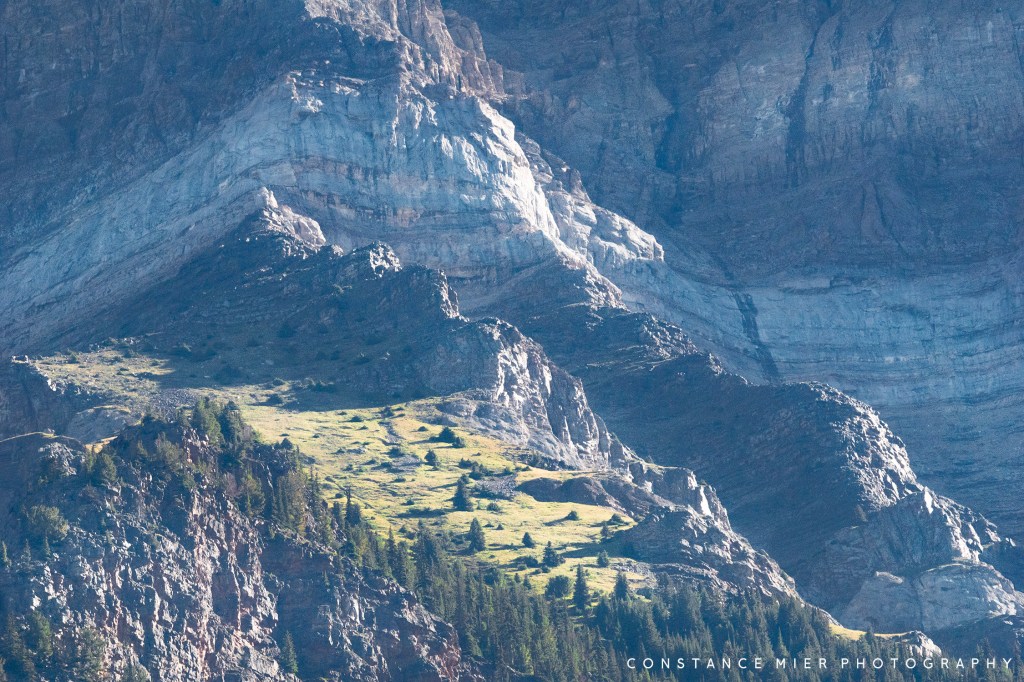
A sun-soaked subalpine ridge where the tree line ends on a mountain. 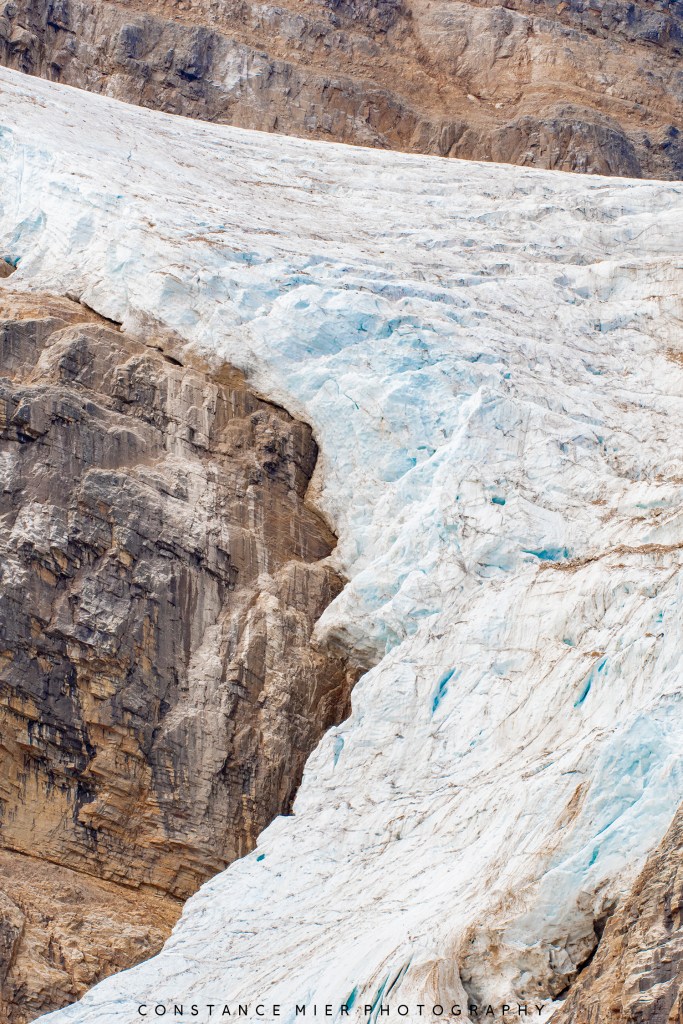
A close up view of Angel Glacier. 
I love photographing pieces of mountains. 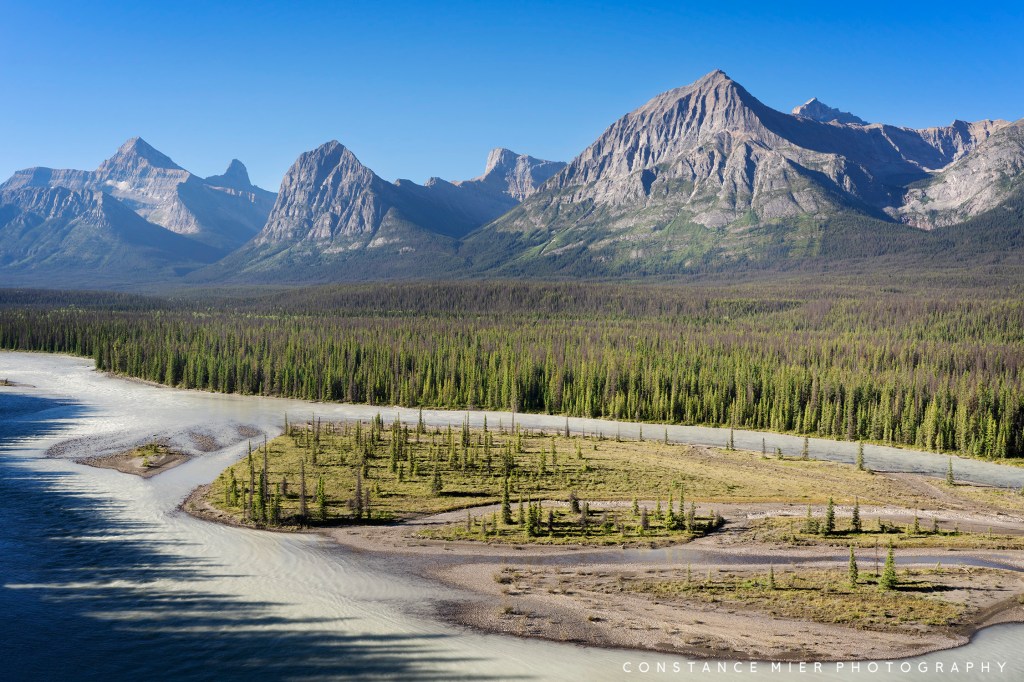
Another view from Goats and Glaciers lookout point.
In addition to the views from Icefields Parkway, we came to another glacier located on Mt Edith Cavell. How doe one get a mountain named after them? During WWI, Edith Cavell was a British nurse that helped British and French soldiers escape German-occupied Belgium and into Britain, against German military law. She was imprisoned and later executed in Germany. Following her death, she became an iconic figure, mostly from propaganda for military recruitment in Britain and was popularized because of her apparent heroic approach to death. Regardless of the name’s origin, Mt Edith Cavell and Angel Glacier topped our visit to Jasper National Park, see for yourself.

A paved trail leads to a full on view of Angel Glacier, seen on the right. 
The glacier is a tiny remnant from its previous glory days. A lake forms as ice melts. 
A close up of Angel Glacier where it continues to recede. 
We heard a very loud bang and then watched a piece of the glacier break off and dissolve down the rocks. 
Along the water is a leftover piece of Angel Glacier. 
Here it is reflecting on the lake. 

The lake will continue to grow as snow continues to melt faster than it falls. 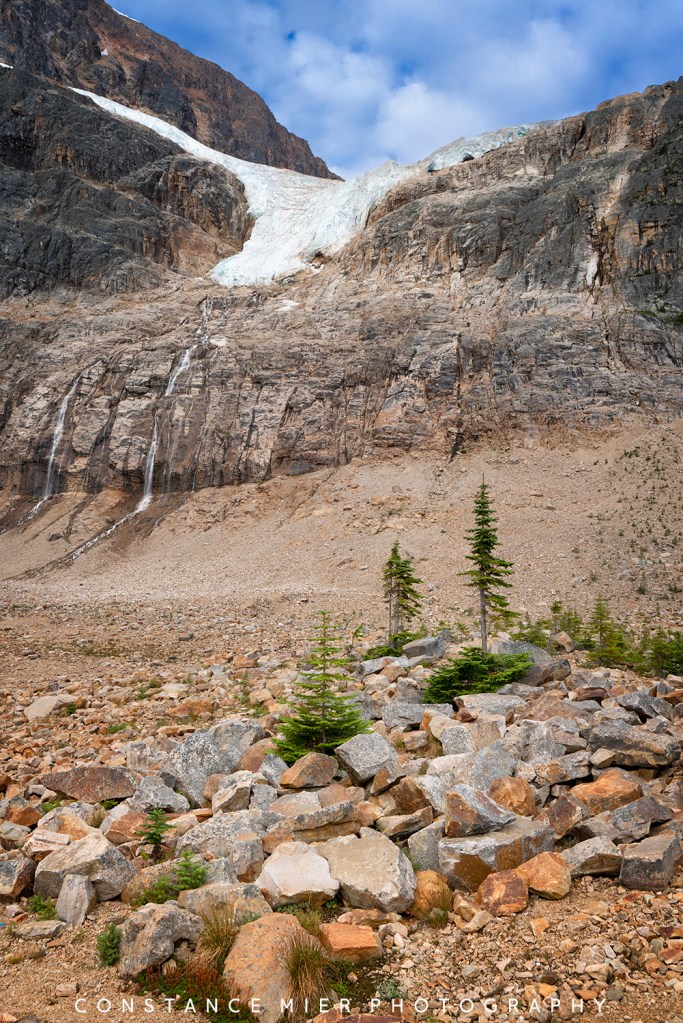
Note the lighter colored rocks, evidence of where the glacier once existed. 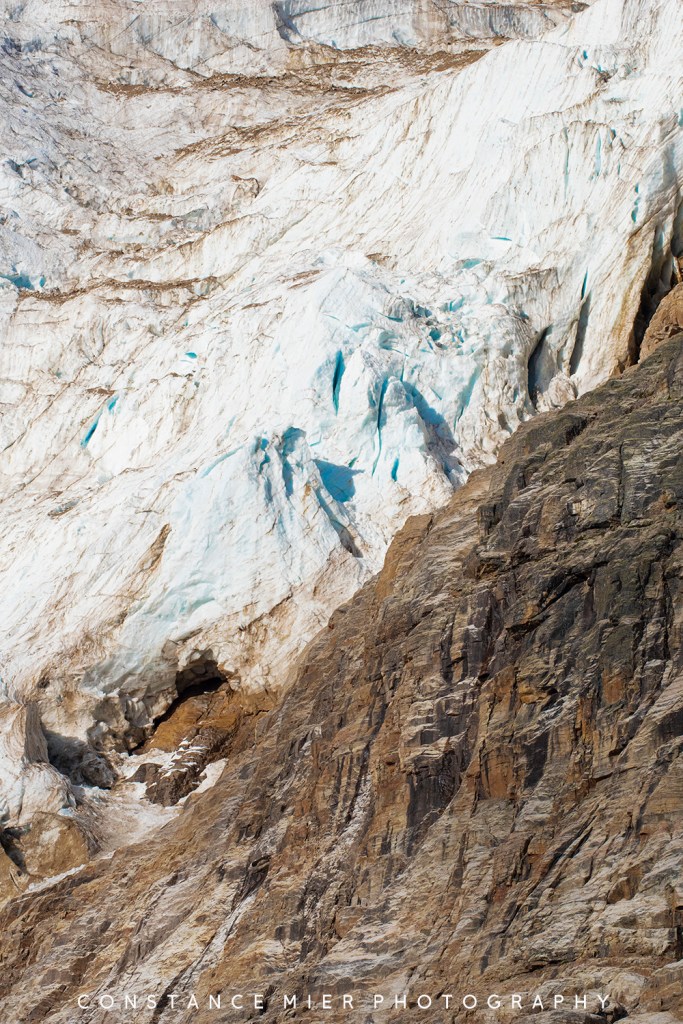
Zoom lens capture of glacier and rock. 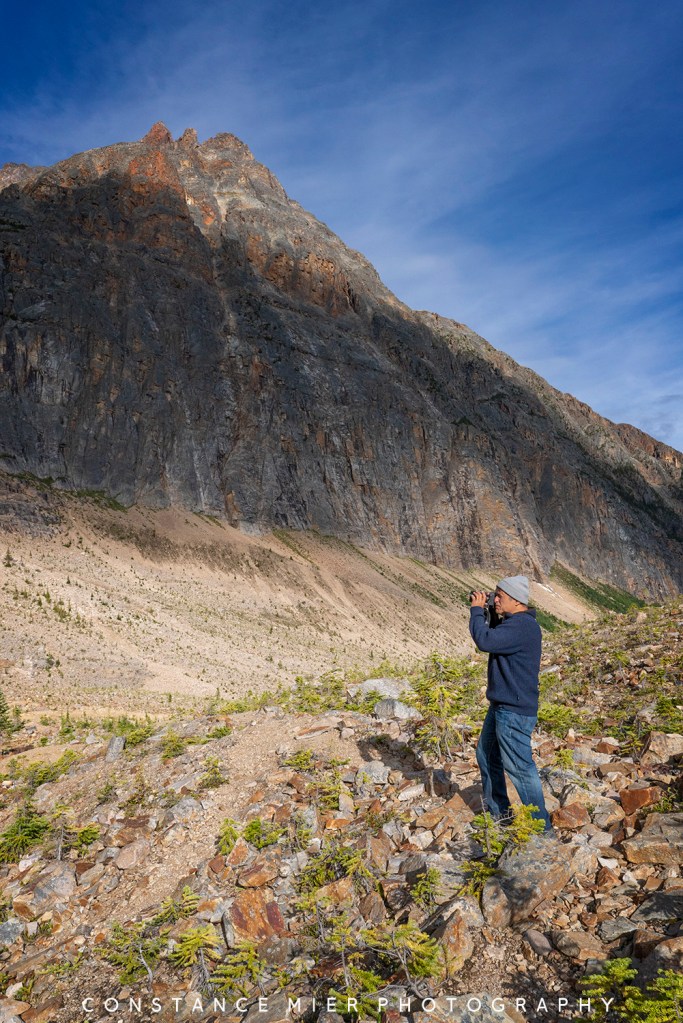
The rocky ridge opposite of the glacier is the remains of where a glacier ground its way across the land. 
The valley view while standing on the ridge. 
Growth among rocks. 
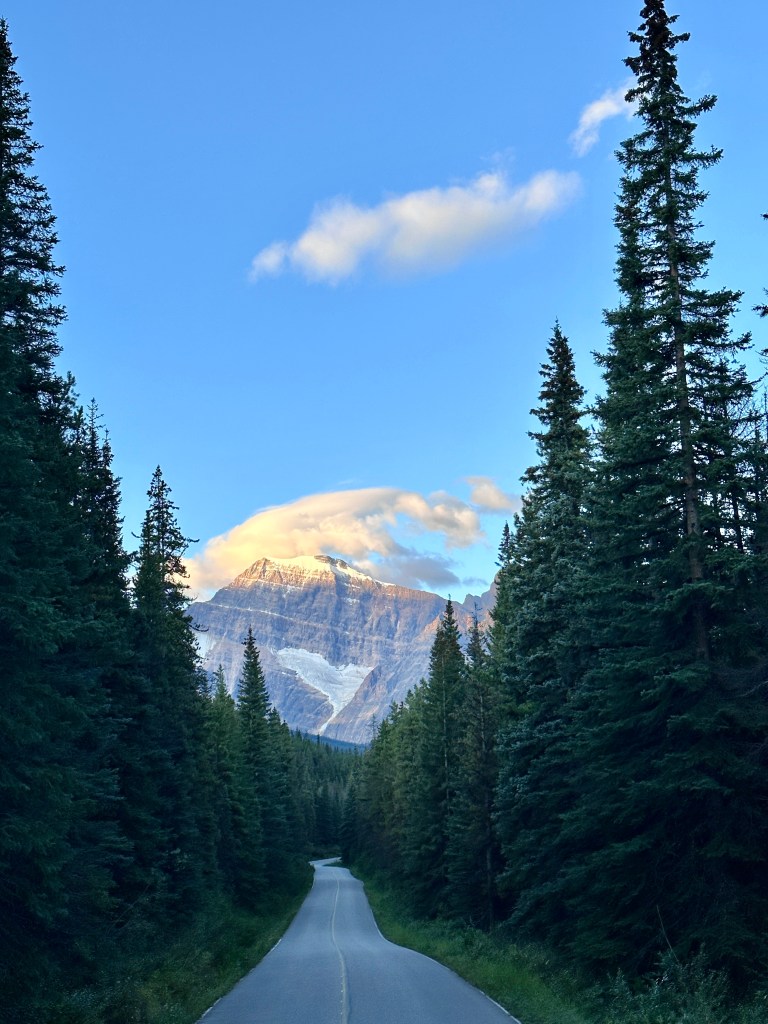
A view from Edith Cavell highway. 

RV TIP. One thing we like to do is keep our RV cleaned and waxed on the outside. We discovered Wash Wax All works well for us, especially when we are on the road and cannot use water to wash the RV (most campgrounds do not allow it!). So with some cloths and a long handle to reach the high parts, we can wash the road grime from our RV without water, helping to protect and extend its life.

Check out these previous blogs about our visit to Canada:

 Changing Views From Our RV
Such a great time! Of course, you forgot to mention the number of times we said “C-onnnie!!” (a la: Seinfeld’s “Newman!!”) 🙂
LikeLike
Funny, I never heard any complaints!
LikeLike