
What do Sonny Bono and Marilyn Monroe have in common, besides leaving this world too soon? You can find them both or at least a likeness of each one in Palm Springs. And this is one of the reasons we enjoyed the infamous desert resort town with ‘Hollywood values”. Hearing the ‘ca-ching’ ringing in my ears, I braced myself for Palm Springs, but we had to see it. And we were pleasantly surprised.

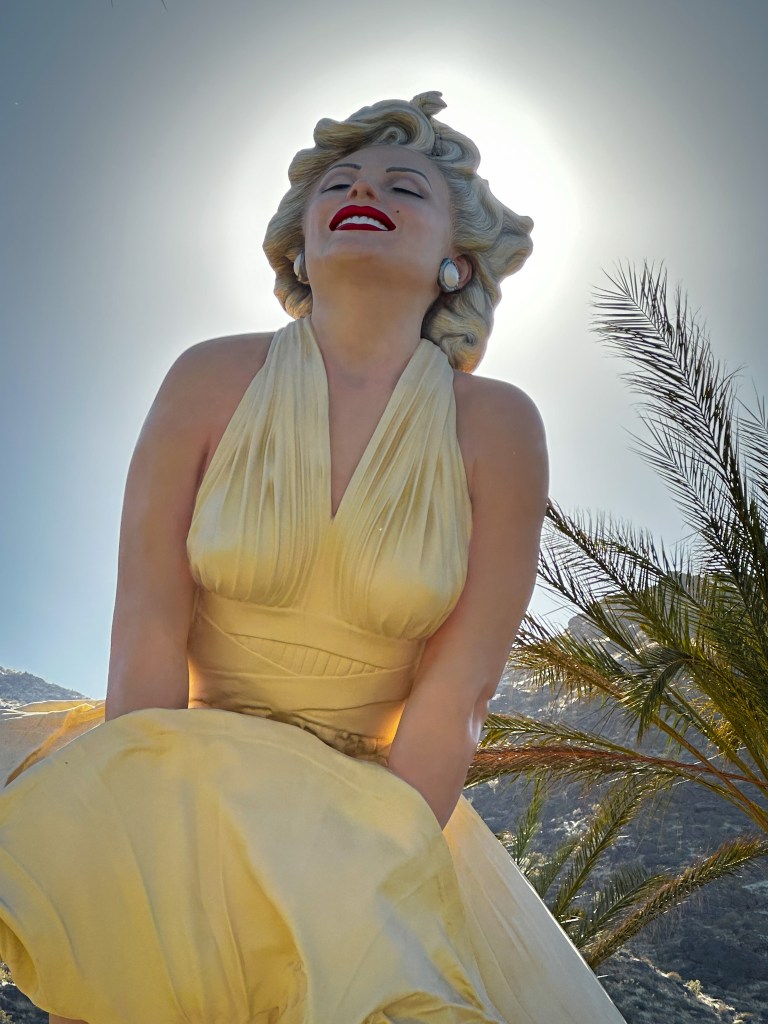
Palm Springs’ festive and casual downtown is adorned with colorful sculptures & murals, and the iconic California fan palms. Its renowned mid-century or desert modern architecture embraces the desert with a sophisticated informality that contributes to the city’s casual lifestyle. Instead of opulence and excessiveness, we got art and whimsy. And lunch there? Affordable!
By the way, the highlight of our time in Palm Springs was meeting up with Vivian’s long time friend and colleague in the Interior Design business, Kristin, and her adorable dog, Vivian – as in Leigh not Oliva!
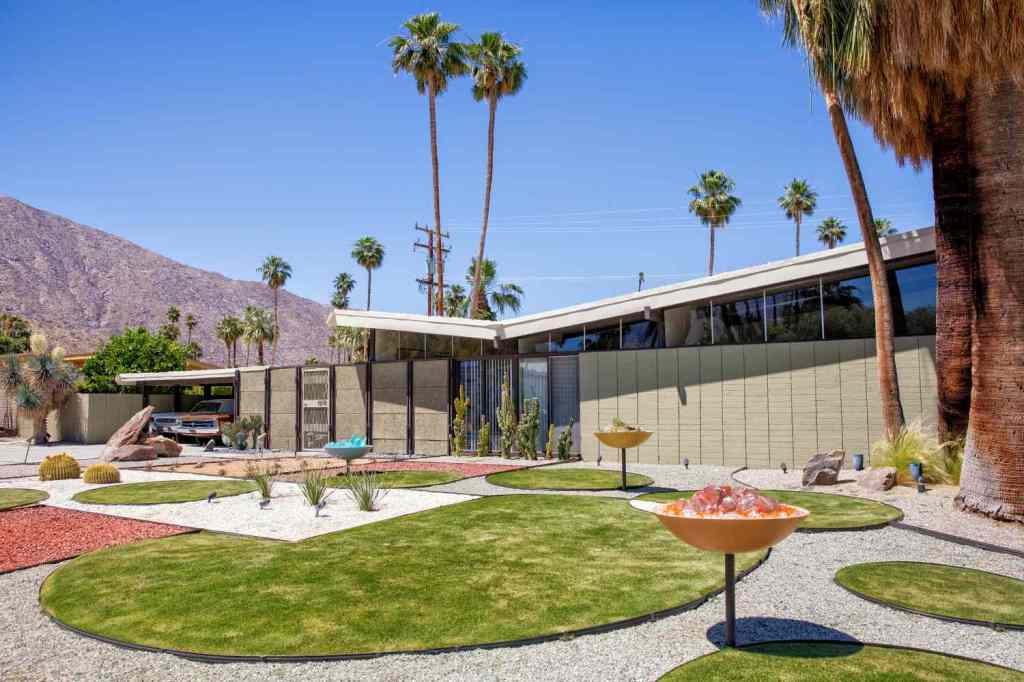
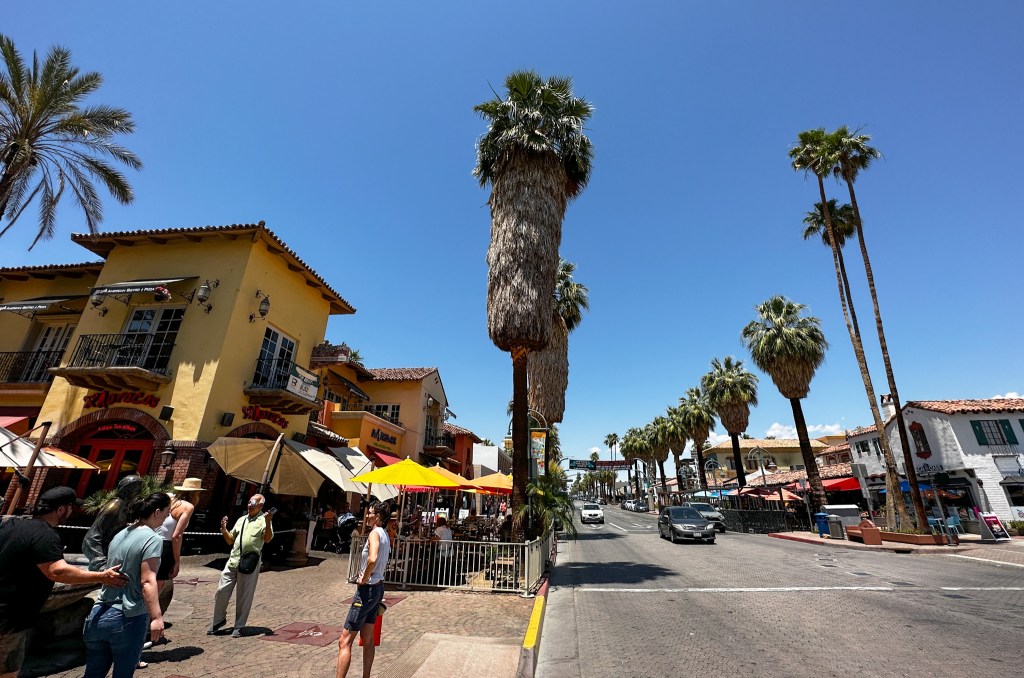
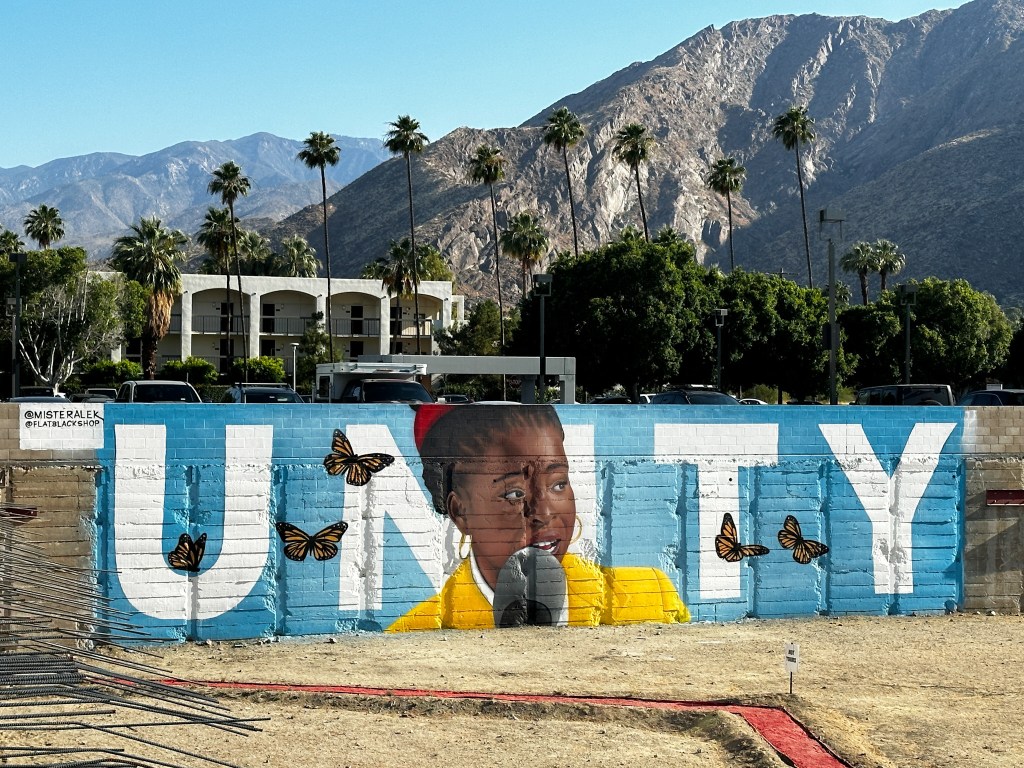
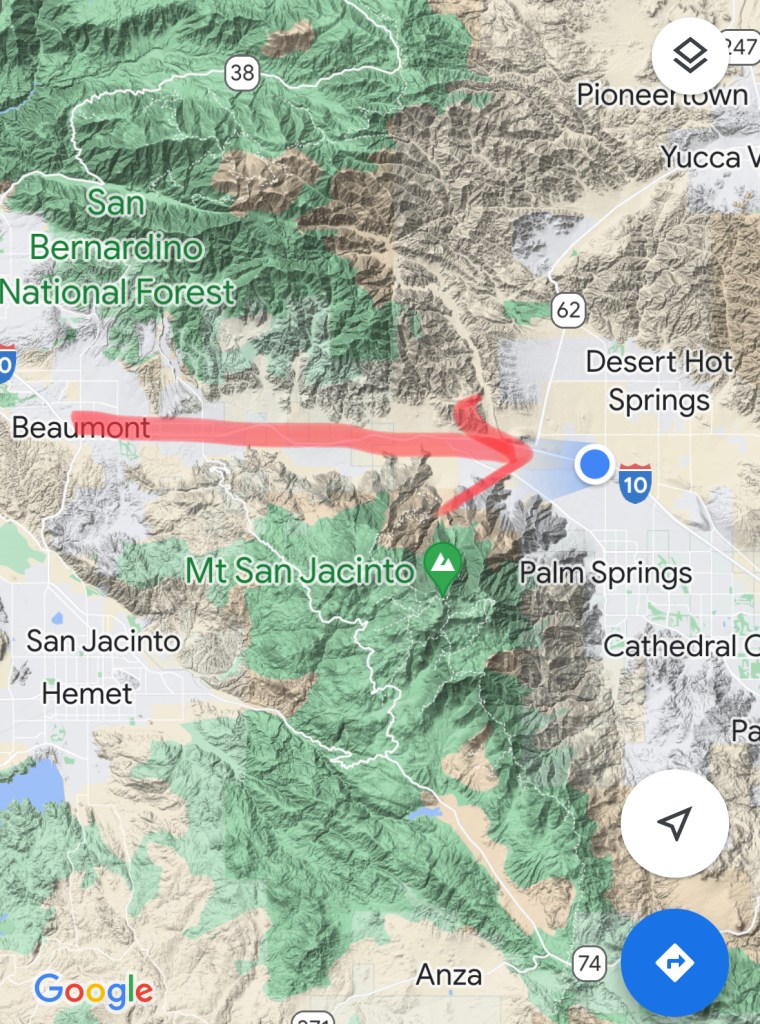
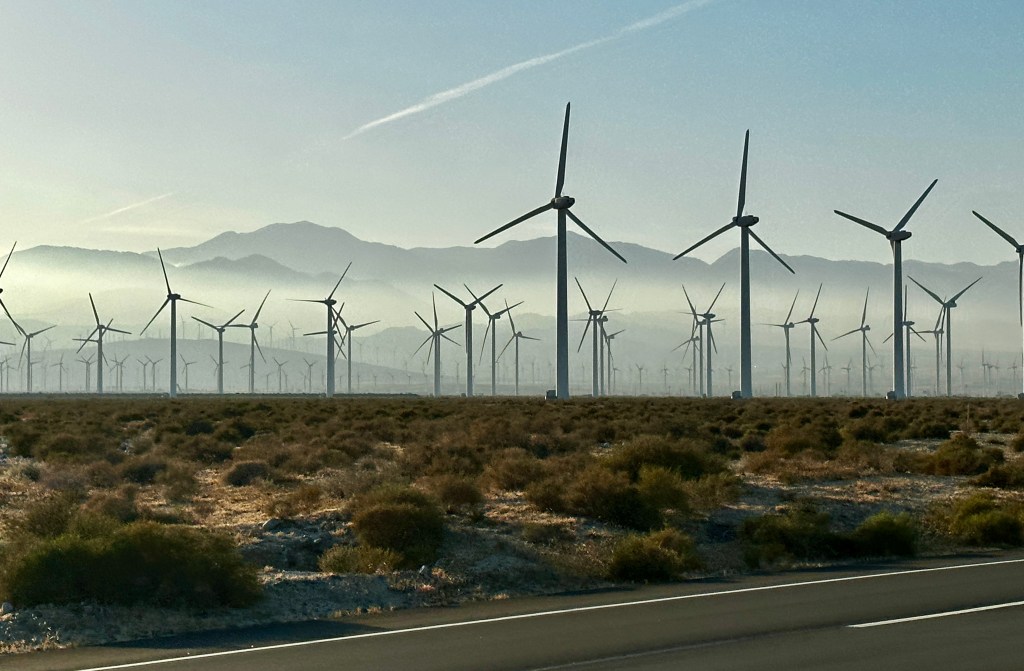
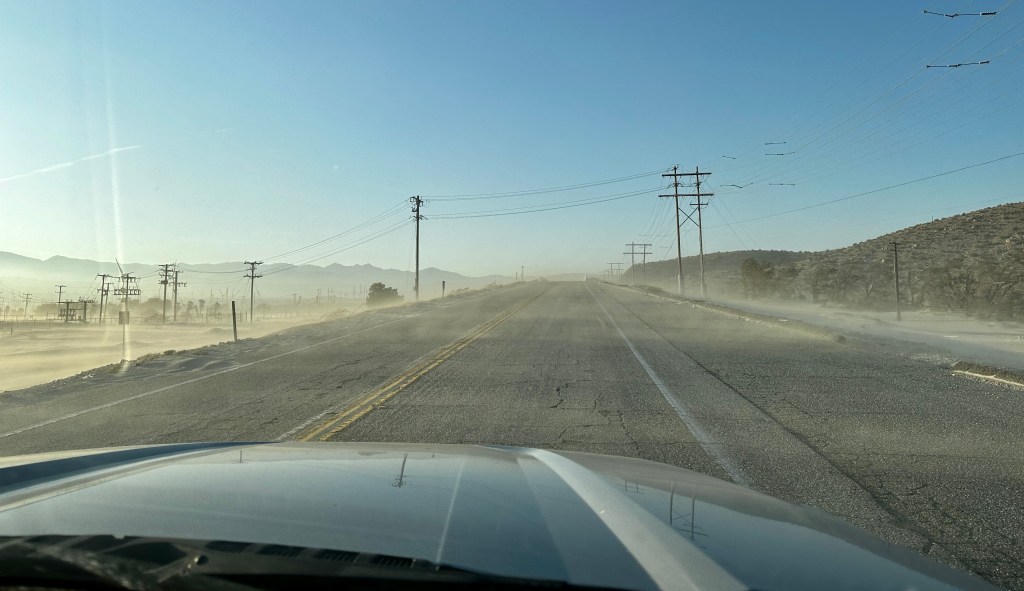
Palm Springs is in Coachella Valley – the land of wind and dust. And while the desert oasis appeal is very much alive in this southern California region, not all is well here. This area has some serious challenges. It’s a hot desert with smog-filled winds that funnel through the San Gorgonio Pass activating over 1200 wind turbines, but also causing frequent sand blasting storms.

Further south is a much stranger anomaly – the Salton Sea. It began in 1905 and comes into the present day as one of the largest sources of lithium that can meet all of America’s future demand and more than 1/3 of global demand for electric vehicles. The Salton Sea began when an extreme rain and snowmelt event (like this year!) caused the Colorado River to flood. The flooding broke through the irrigation system for farms in the Imperial and Coachella Valleys and consequently created what became known as the Salton Sea.

The water flow into the newly formed sea continued for a couple years until a protective levee was built. By that time, a 400-sq-mile Salton Sea had formed on the basin of southern California, with no river or stream connected to it. This makes it an endorheic lake, which means the only way water can move is to leave by seeping into the ground or evaporating. Consequently, as water leaves over time, the leftover has a very high salt content.
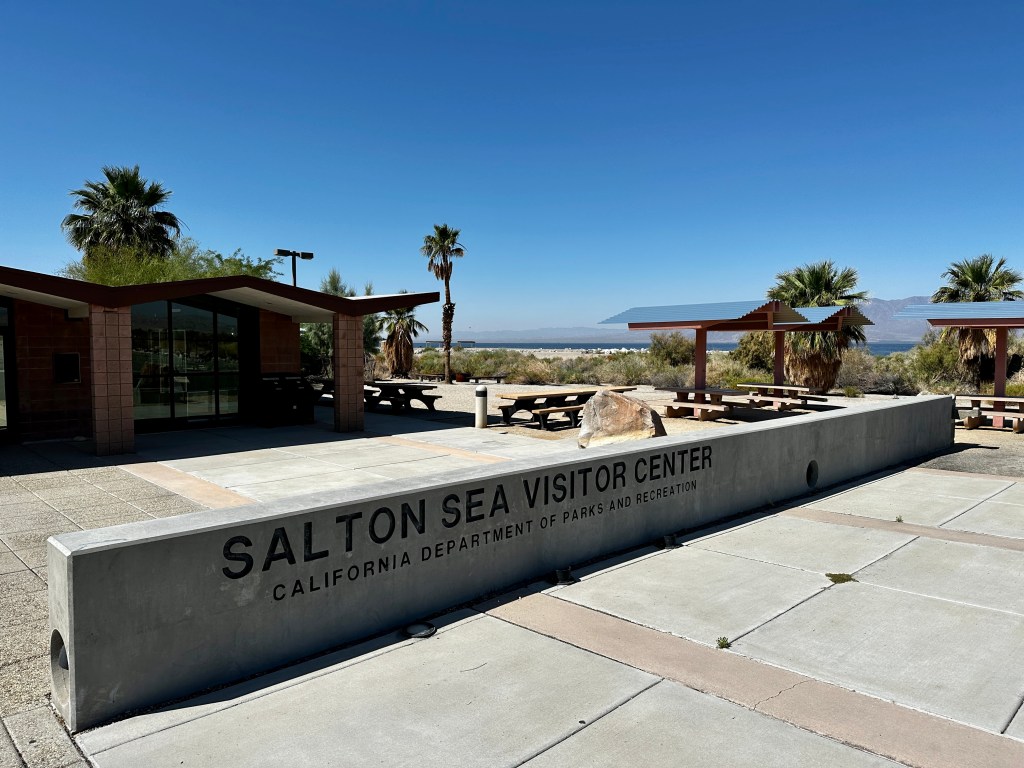
So, why hasn’t the Salton Sea disappeared by now and become a mere salt bed? For decades, the Salton Sea received drainage coming from the heavily irrigated crops in the Imperial Valley. That is, until it stopped. And this is where the story of the Salton Sea becomes oddly interesting with a dystopic twist.
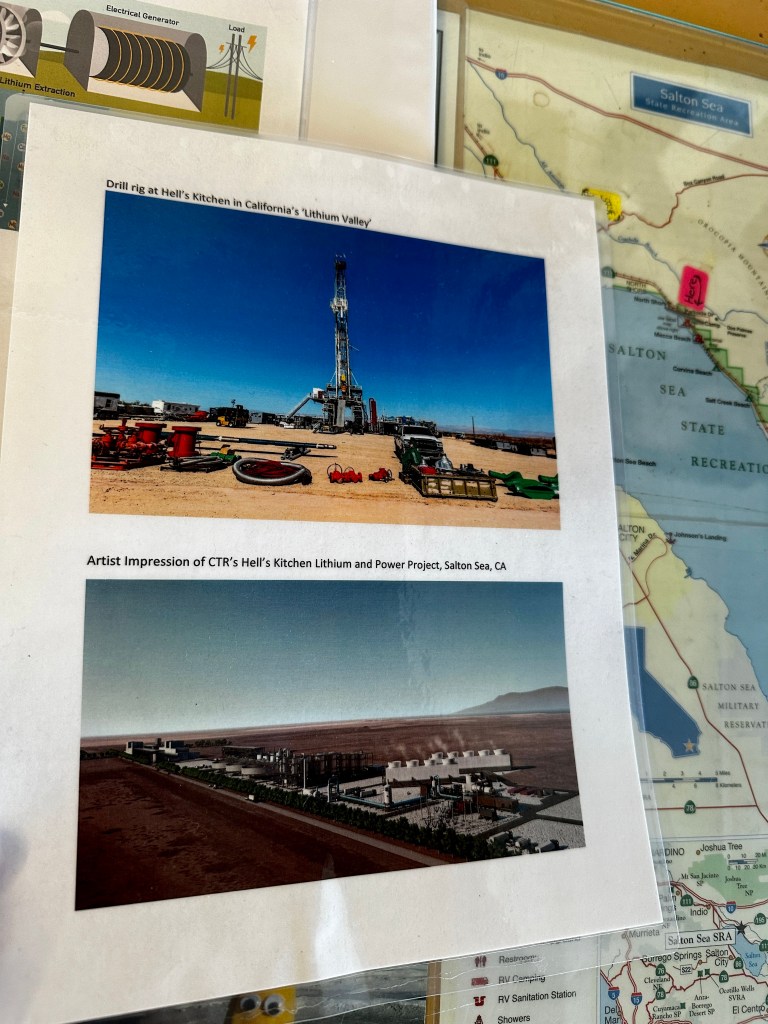
For decades, the Salton Sea was an important habitat for millions of migratory birds as California was losing so much of its wetlands and lakes. Consequently, a wildlife sanctuary was established on the Salton Sea in 1930. In the 1950s and 60s, with salt levels not too high yet, the Salton Sea became a destination for those seeking a tropical oasis outside of Palm Springs. Bombay Beach became a popular location on the sea where celebrities like Frank Sinatra and the Beach Boys frequented luxury resorts that attracted a half million tourists annually.

Despite its thriving tourism, the Salton Sea was already in trouble, likely beginning with the completion of the Hoover Dam in 1936. The Hoover and Imperial Dams ended the occasional flooding of Imperial Valley – after which the first noticeable reduction in water input to the Salton Sea began. Meanwhile, agricultural runoff continued.
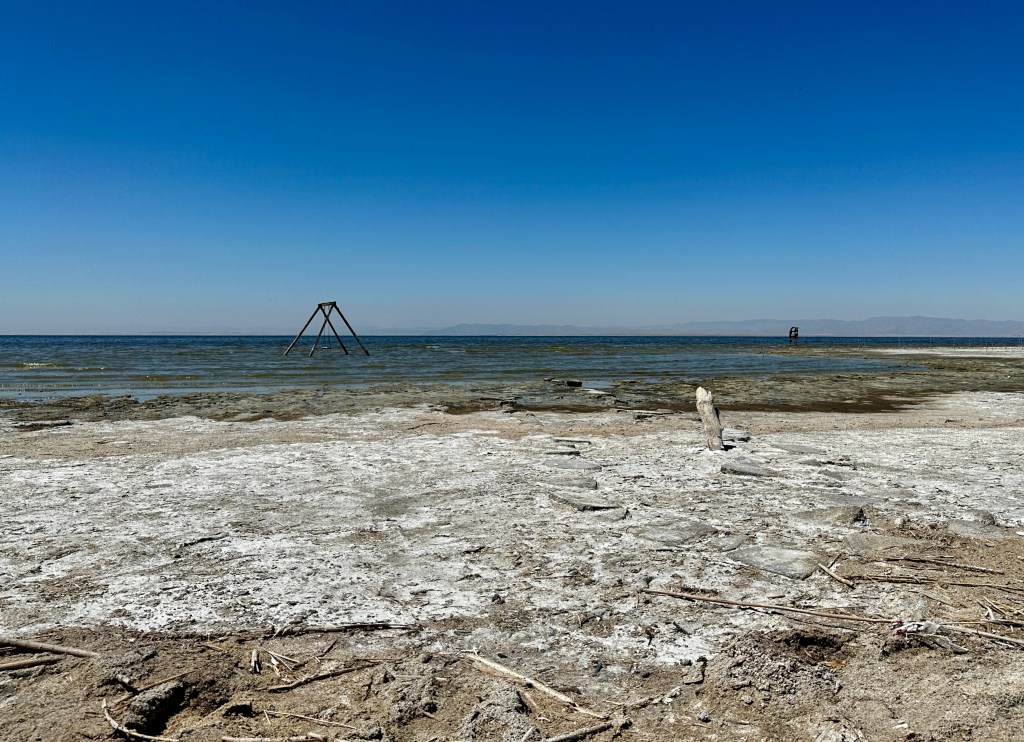
Long story short, the shallow Salton Sea waters evaporated and seeped over the years, significantly reducing the sea’s volume. Add to this the salts and fertilizers brought in by the ag runoff. By the 1970s, the Salton Sea lost its appeal as salinity rose and wildlife died, including all the fish. People stopped coming and Bombay Beach became a ghost town, while Palm Springs thrived. Even worse, the receding shoreline began exposing nearby communities to toxic fumes. Currently, children living in Imperial County have the highest rates of asthma.

Welcome to a tropical paradise! 
Where artists have transformed run down homes into art exhibits. 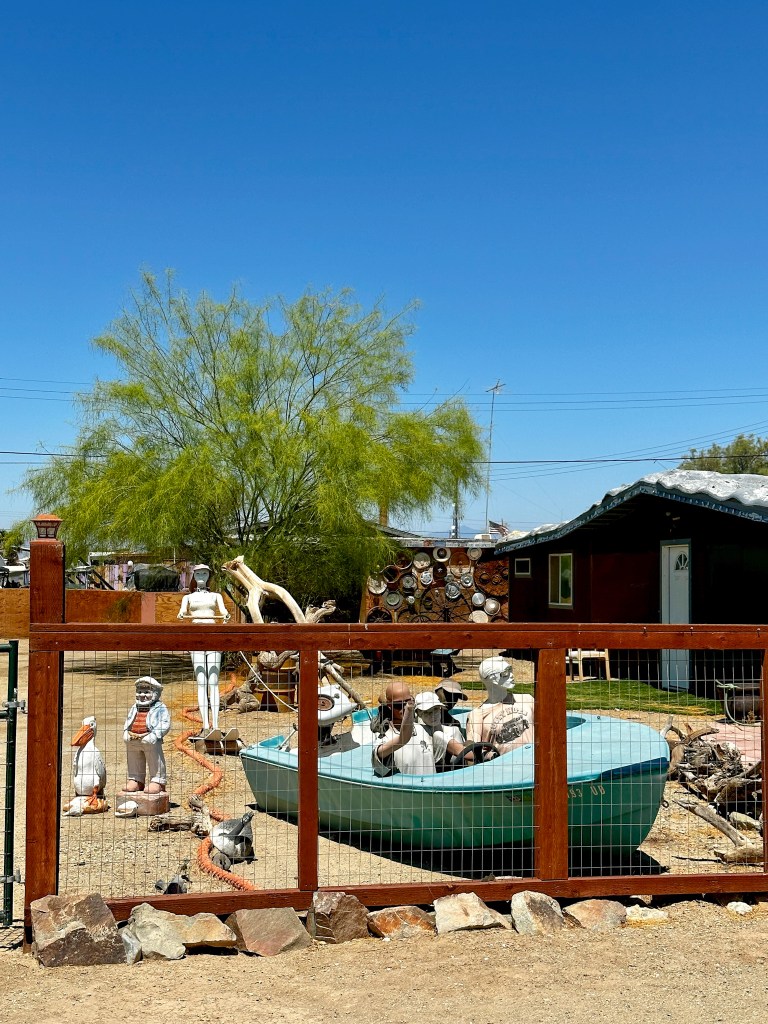
A tribute to a past long gone. 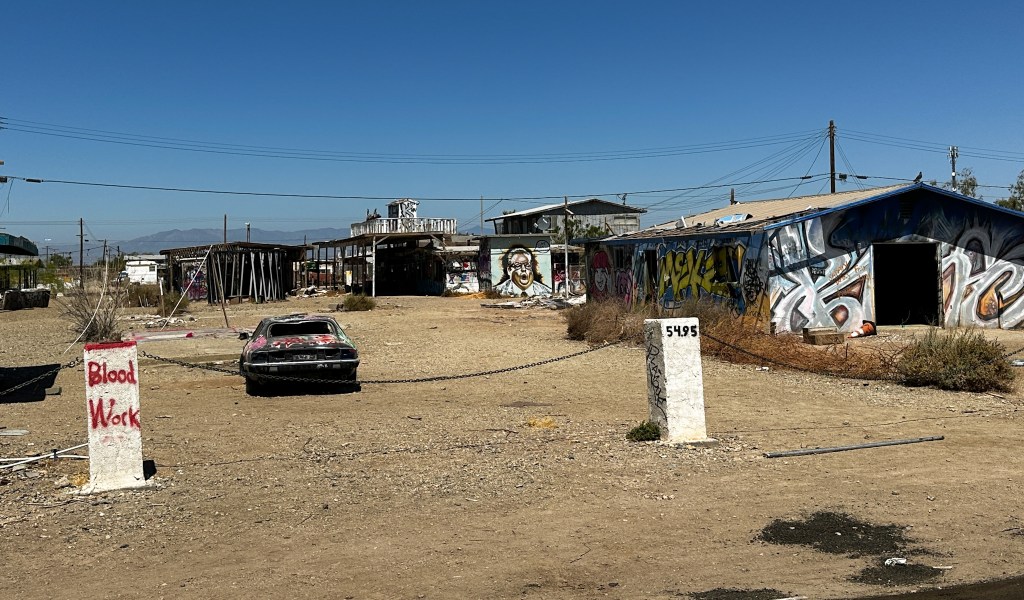
Not one structure in Bombay Beach is left untouched. 
The Museum of Bombay Beach appears to be closed for renovations. 
But the drive-in theatre is open! 
There is property to be sold at Bombay Beach. 
And here’s one for sale, a nice place to park an RV. 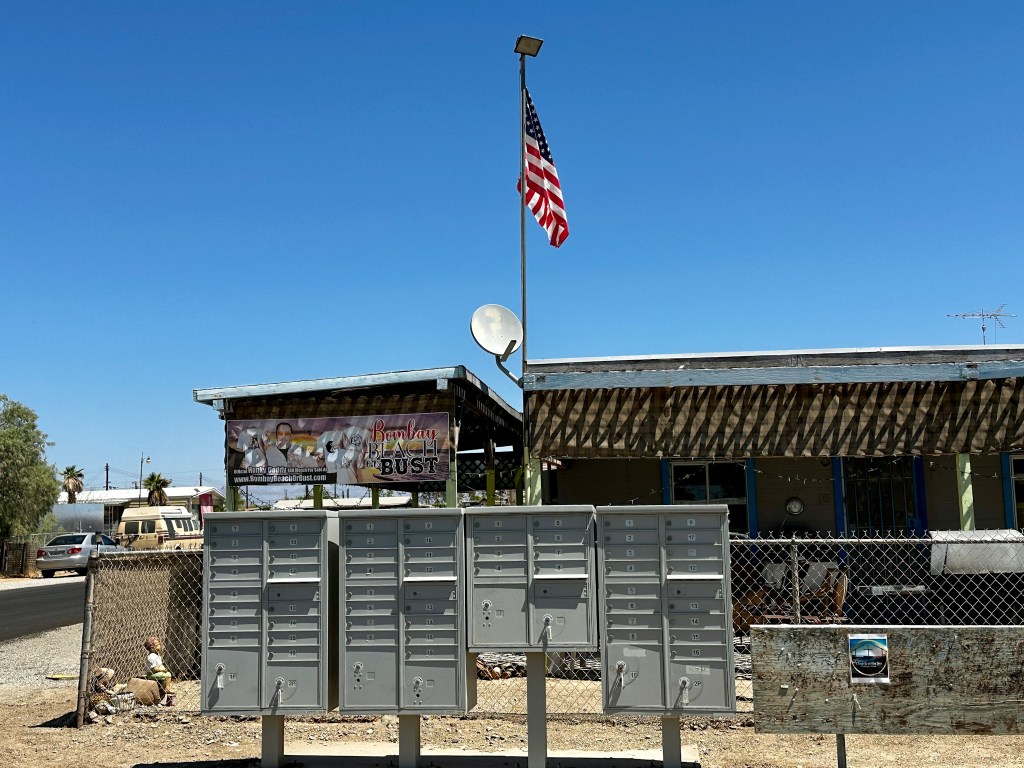
Yes, people do live here. 
And they have a restaurant (that is open for business) 
The beach serves well for installation art 


What’s with the hay bales? Well, seems they help absorb toxins from the air. Parts of the Salton Sea shoreline are lined with hay bales for this reason. 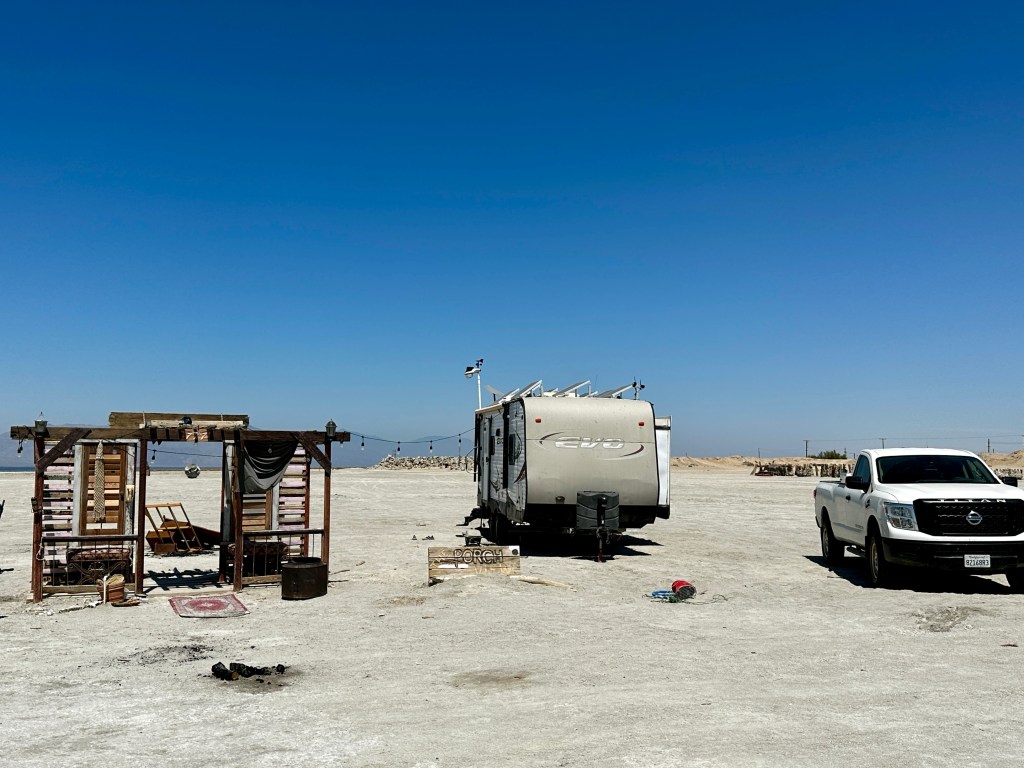
Feel free to come stay awhile.
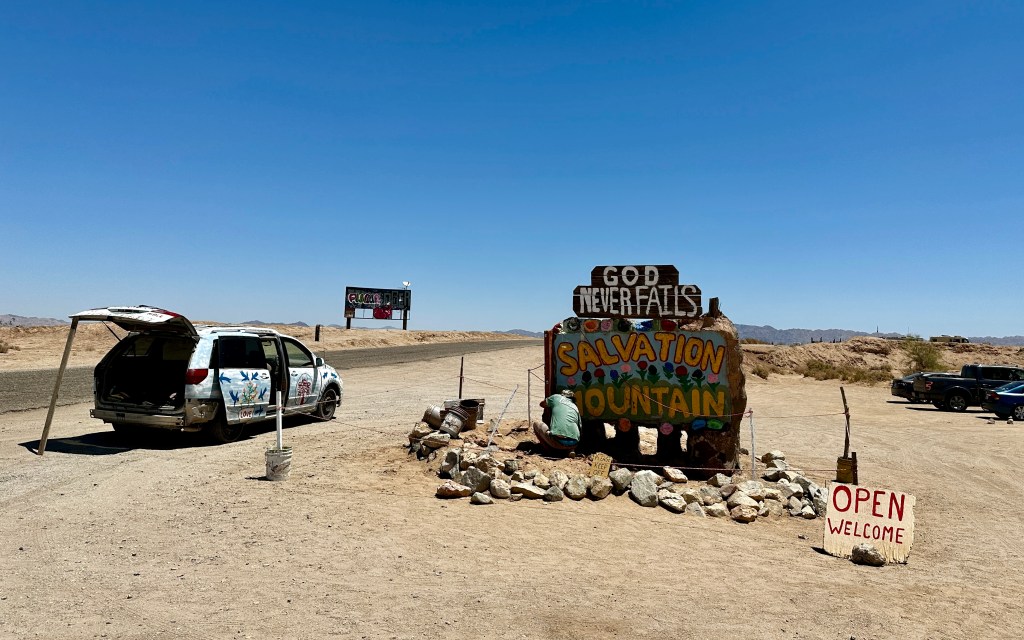
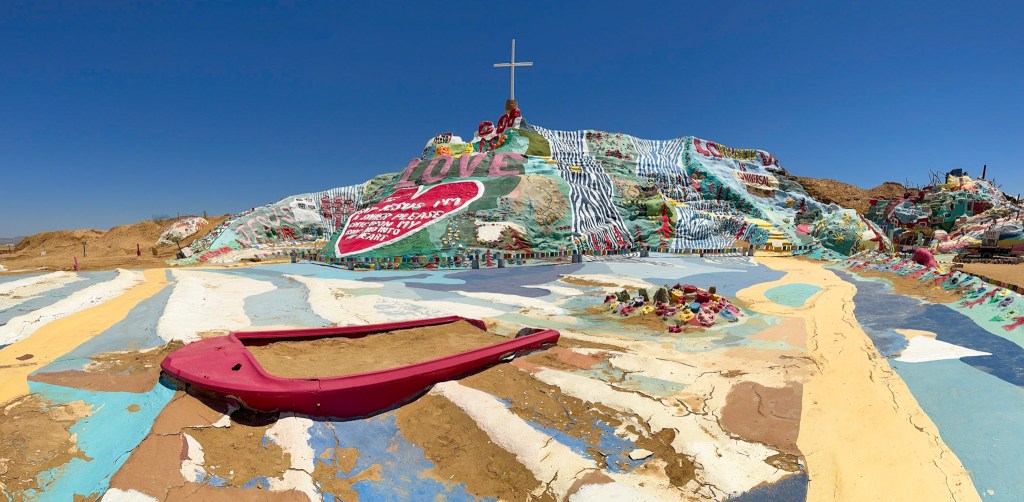
Meanwhile, while tourists enjoyed Bombay Beach, another community was created a few miles east of Salton Sea. Prior to World War II, the US Marine Corp built a training ground on 600,000 plus acres. Fully functioning during the war, its base operations eventually ended in 1956. The buildings were dismantled but the slabs remained. Over time, some veterans from the base settled there and this attracted drifters and RV owners searching for free camping spots outside of the Palm Springs area. This was the beginning of Slab City.


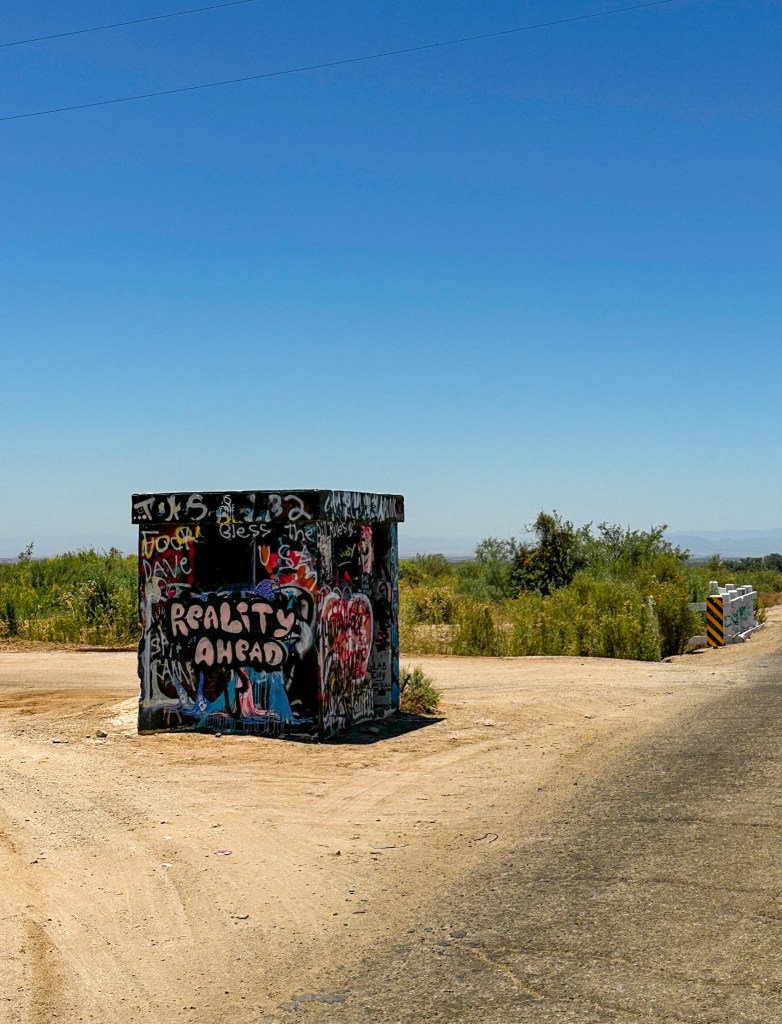
By the time Bombay Beach disintegrated into a Zombie movie set, Slab City’s population was growing. Totally off the grid, residents of Slab City have water shipped in, rely on generators and solar power, and discard waste by digging holes. Despite this, Slab City has a zip code, and school buses and amazon delivery trucks frequent the community. How long Slab City will continue is only a guess, but I can’t help but think of the couple hundred residents who remain there during the summer months as the area experiences record-breaking temperatures.
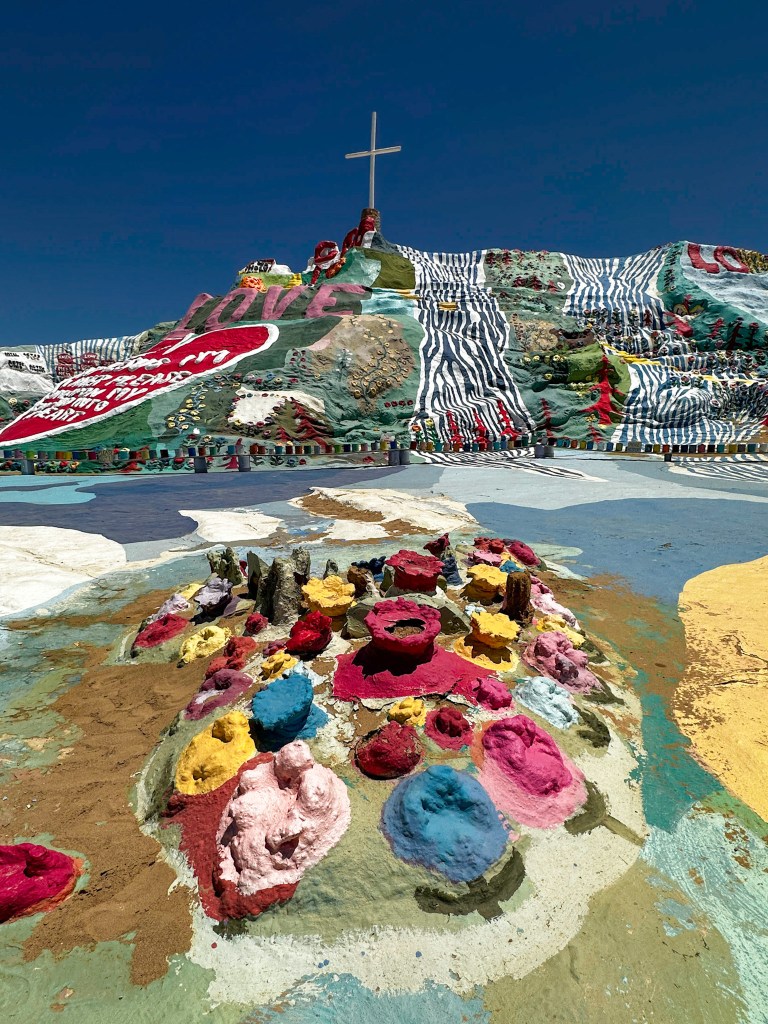
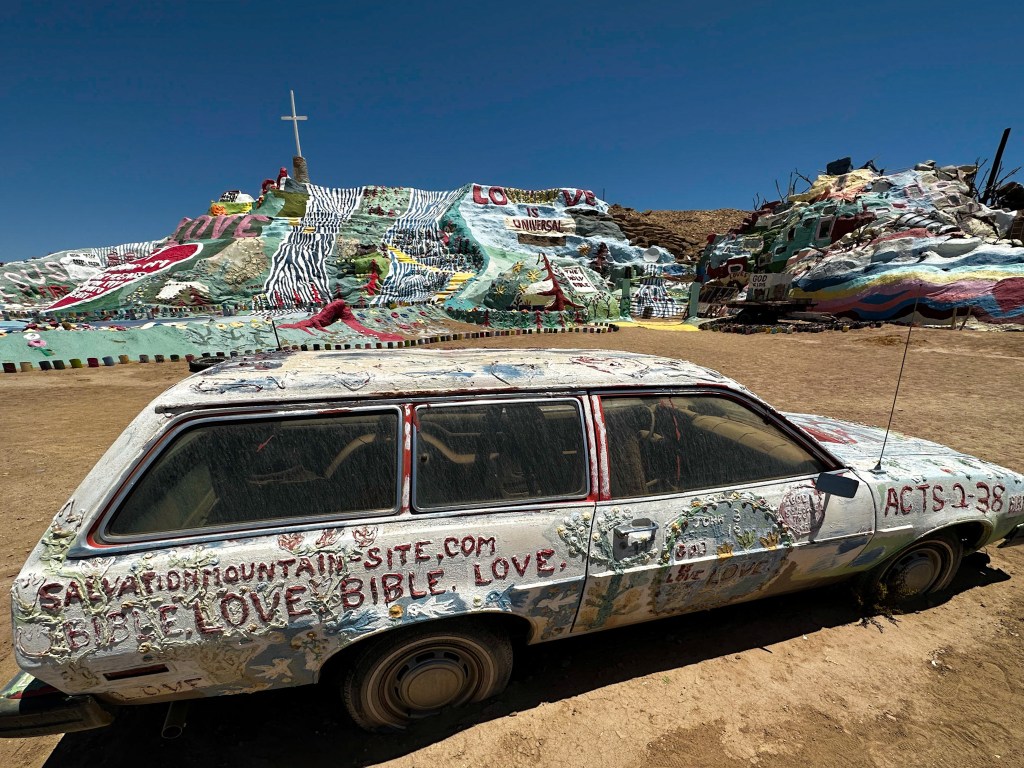

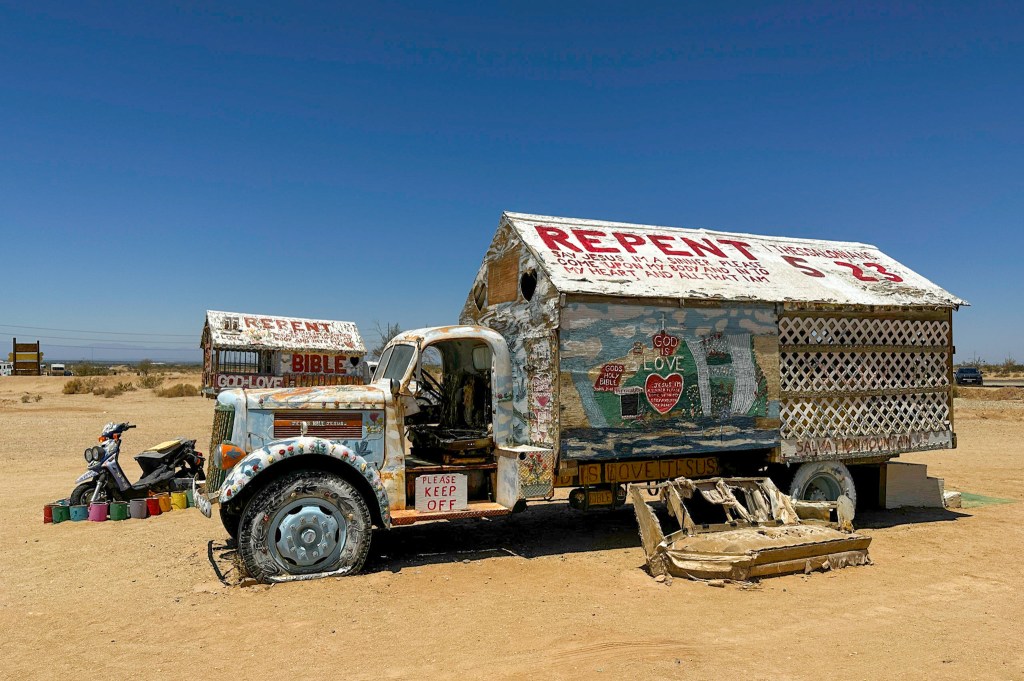

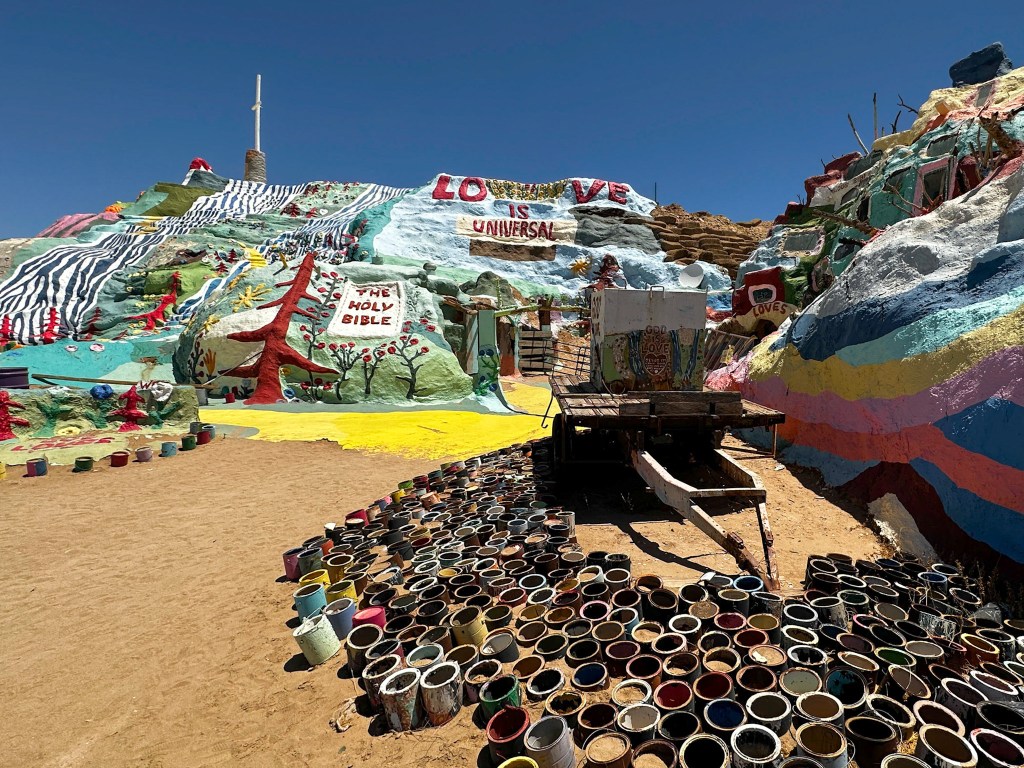
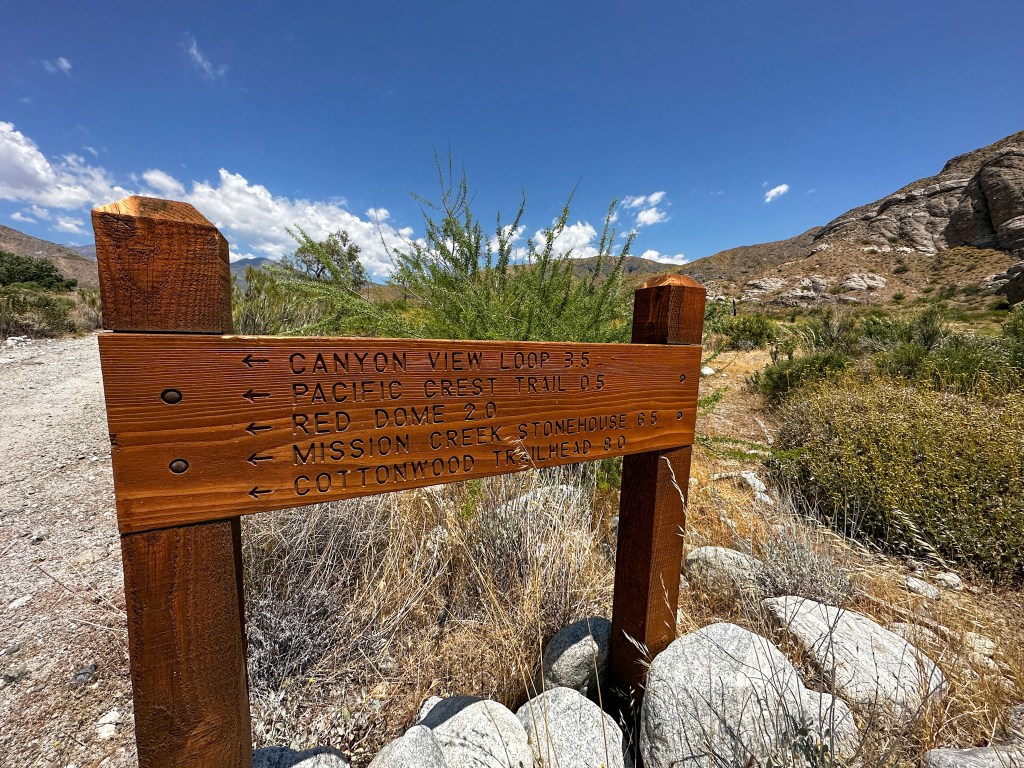
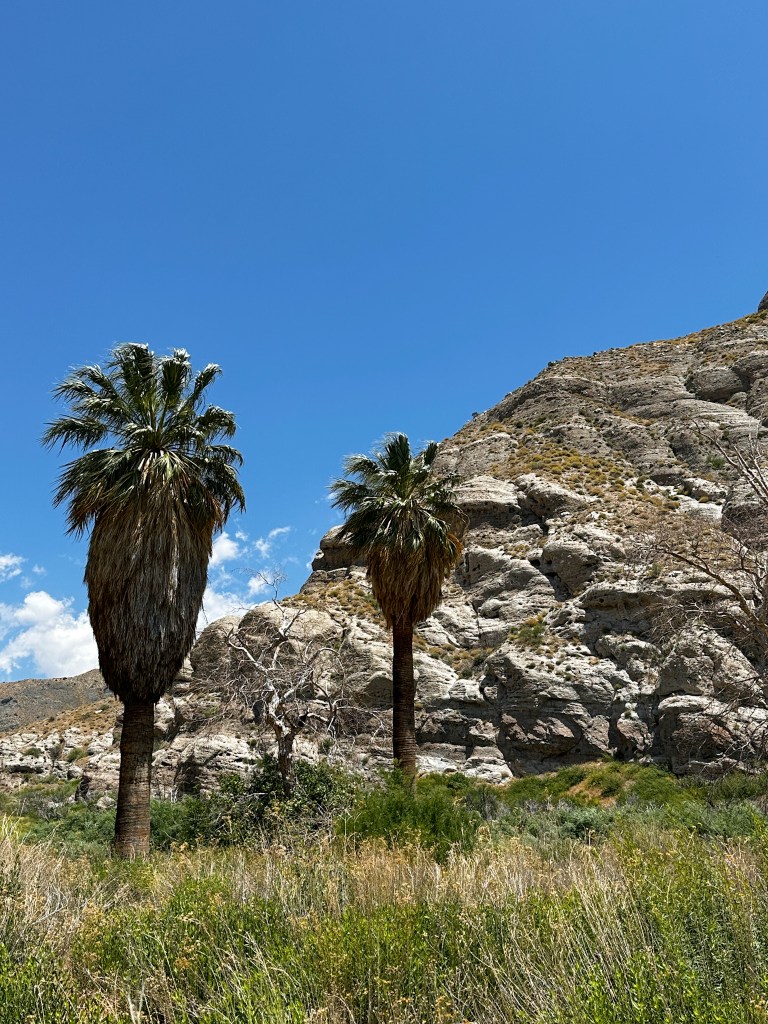
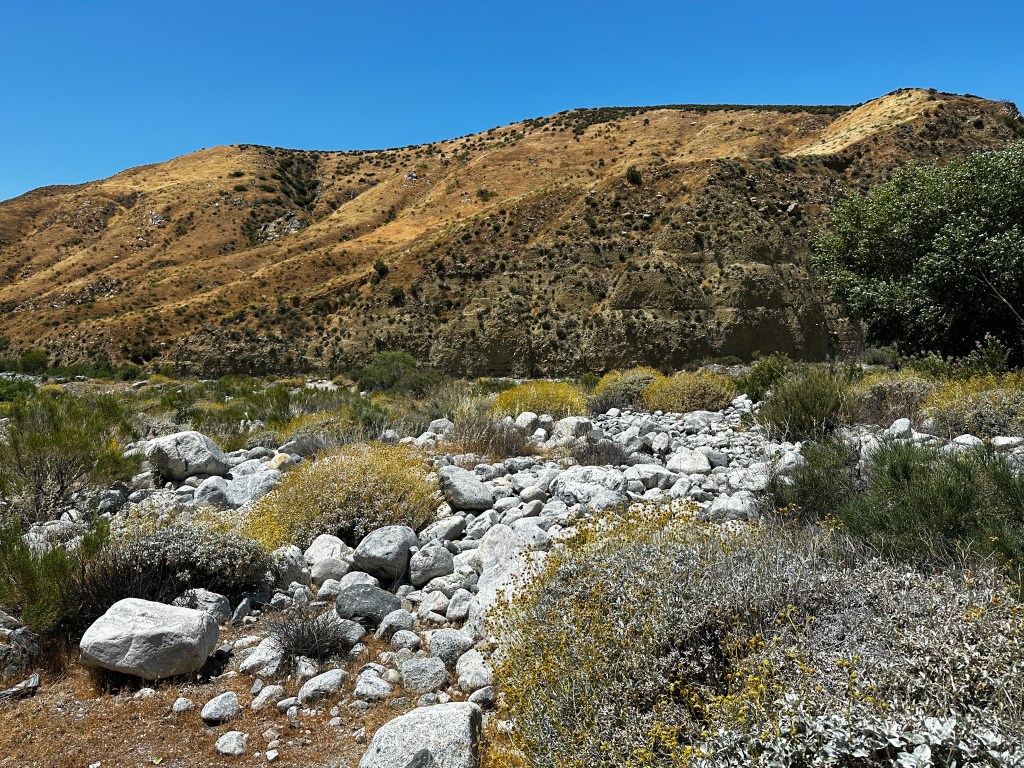
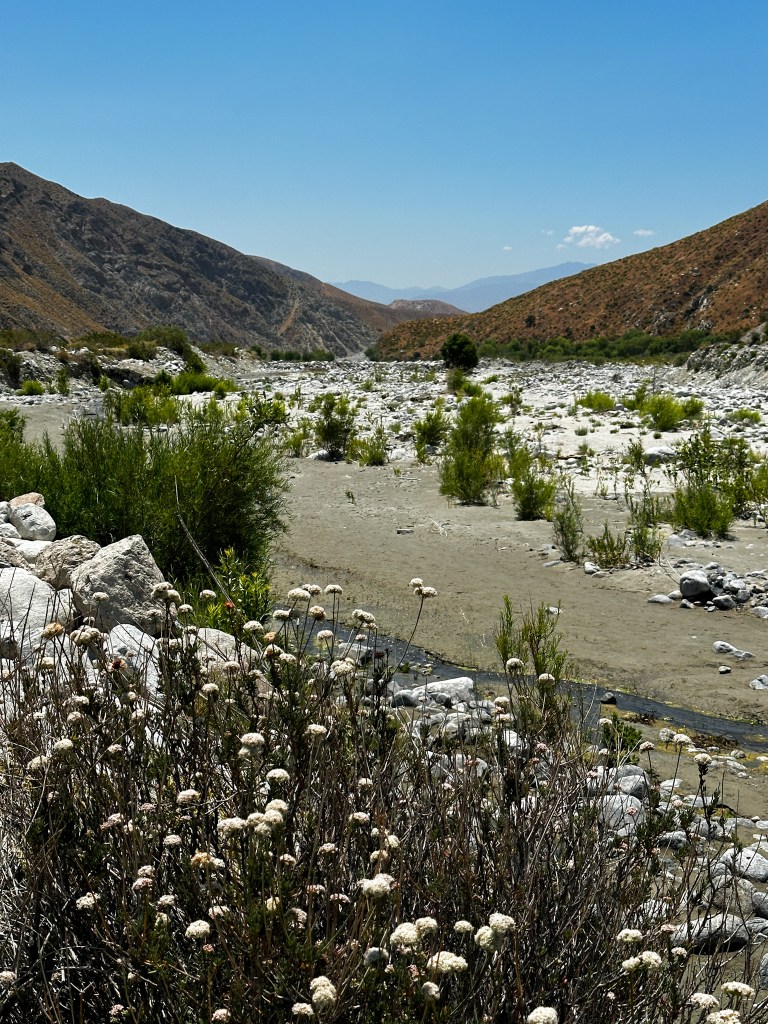
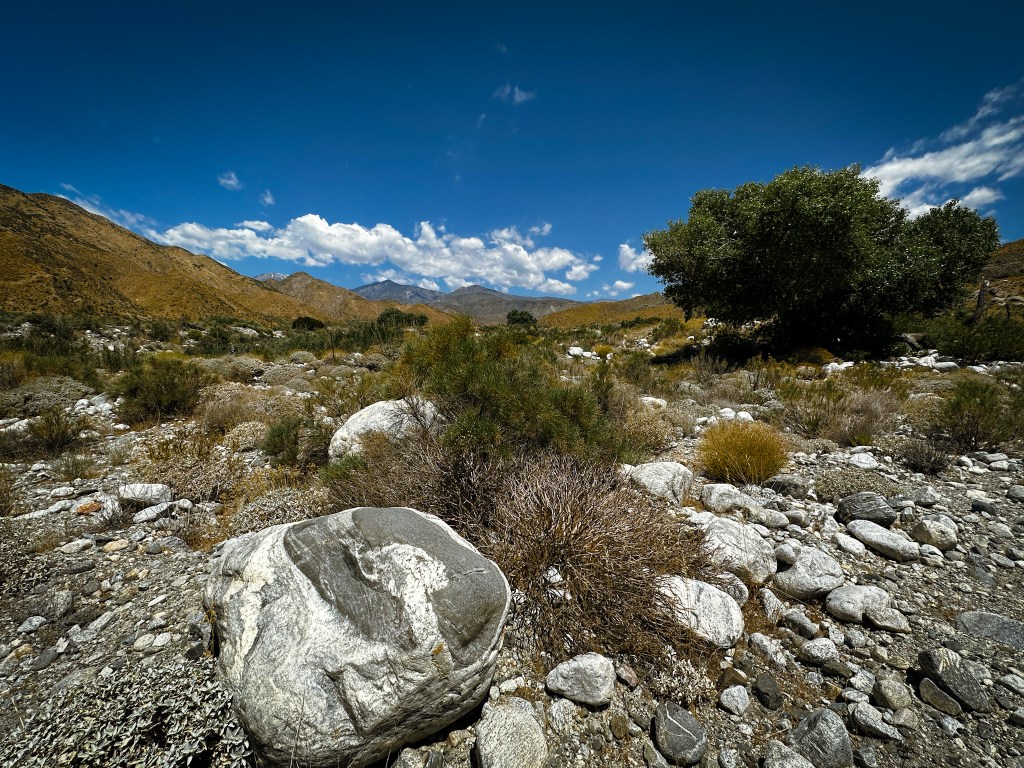
While we enjoyed the shiny, happy Palm Springs and some beautiful wilderness areas near there, I couldn’t help but think of the high stress from water and energy demands that coalesce in this region. But I also got a feel for the innovation and sheer resolve of people trying to meet these challenges. The area remains a draw to thousands of tourists in the winter months and for some strange reason, people want to live here. Living on the edge of a tropical oasis.


And last, I didn’t include an RV tip in my last blog, so this time, here are two tips!
First, when I flush the black tank, I like to close it up and refill it and flush it out once or twice more to give it an extra wash. To avoid overfilling, I use this:

This is the P3 P0550 Water Meter that I attach to the hose I dedicate to flushing the black tank. I know the tank has a 40 gal capacity, so I usually let it fill to about 30-35 gal. Not expensive and can be used when wanting to add a specific amount to a fresh water tank as well.
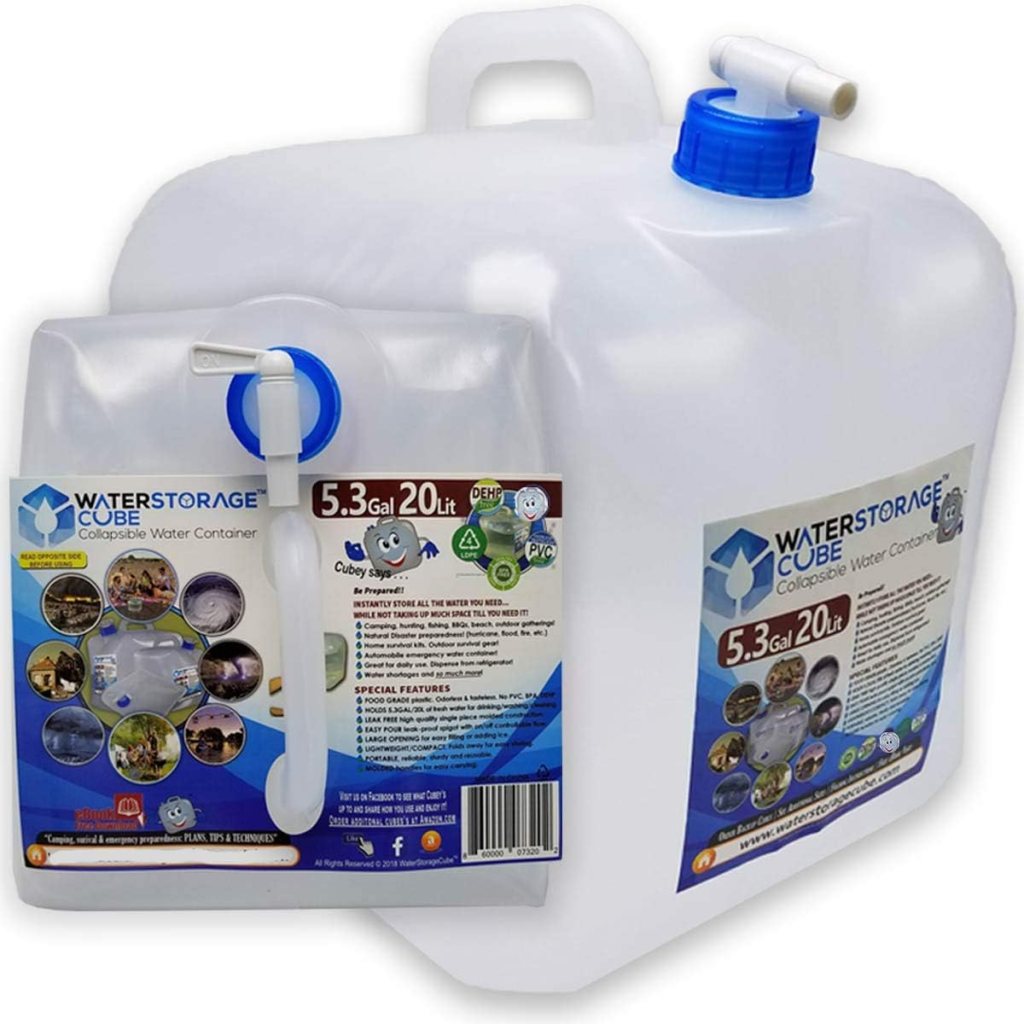
Second, we sometimes camp where we need to use our fresh water tank. For extended periods, I sometimes need to add water to the tank. That’s when the collapsible 5-gal plastic container comes in handy. I can take the container to the water source, fill it, then bring it to the RV and siphon the water into the tank. Simple! Without conserving, we can easily go through 5 gallons in one day, so this helps to extend our stay one more day.

 Changing Views From Our RV
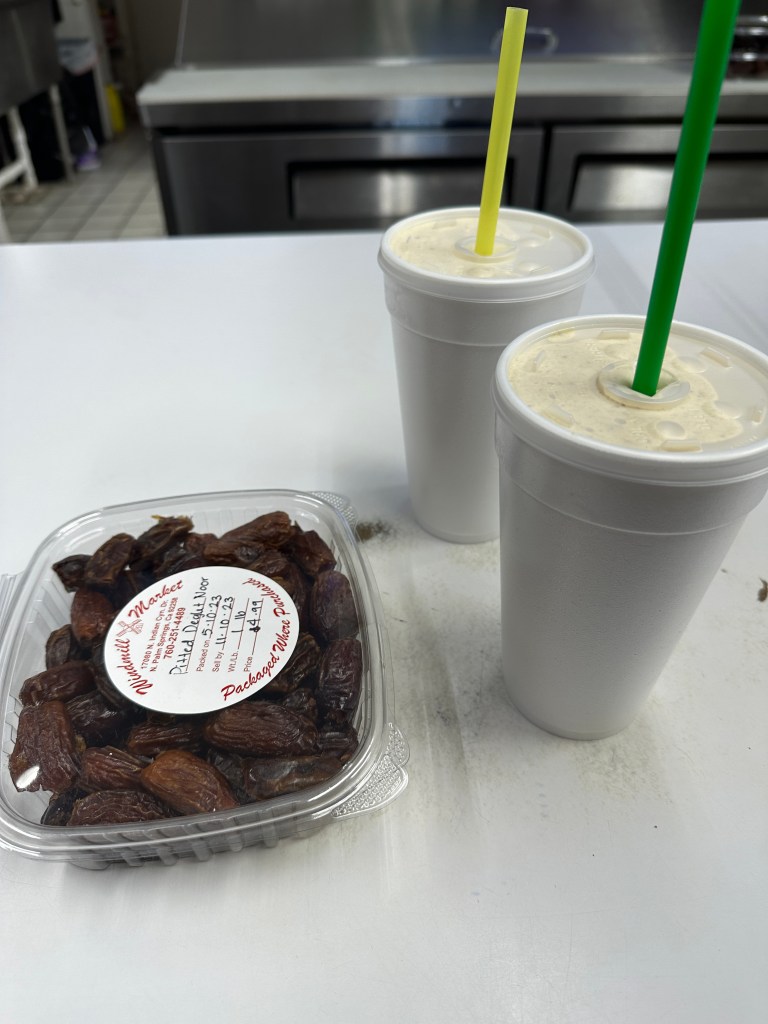
I found the Salton Sea and its history very fascinating. Unfortunately the whole area had a strong smell of dead fish when we visited. It’s hard to believe that this sea had been a very popular tourist attraction in the 50-60’s. As for Slab Ciry, it was nothing like what I expected. Quite a bit more sketchy than I anticipated. The sight of sewer hoses running into open pits in the ground can’t be healthy. Sadly, you missed out on the greatest food item EVER.. date-pizza from Polo Pub. Best pizza we’ve ever had!
LikeLike