
Big Bend National Park is out there – I mean really OUT there. You don’t visit Big Bend as you pass through Texas, you deliberately go out of your way to get there. Big Bend National Park is truly big with over 800,000 acres. However, as far as national parks go, Big Bend isn’t nearly the biggest. It ranks 15 in size among our national parks and is a little more than half the size of Everglades National Park. Nevertheless, it is a very large piece of real estate described accurately on the park’s website as “splendid isolation”.
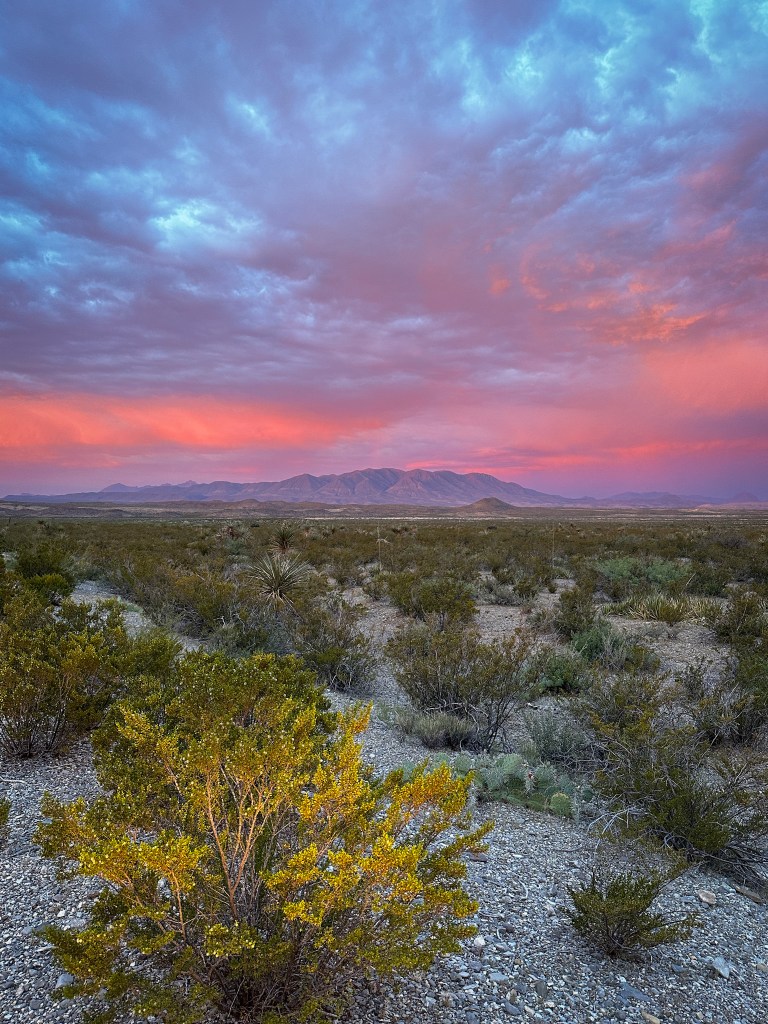
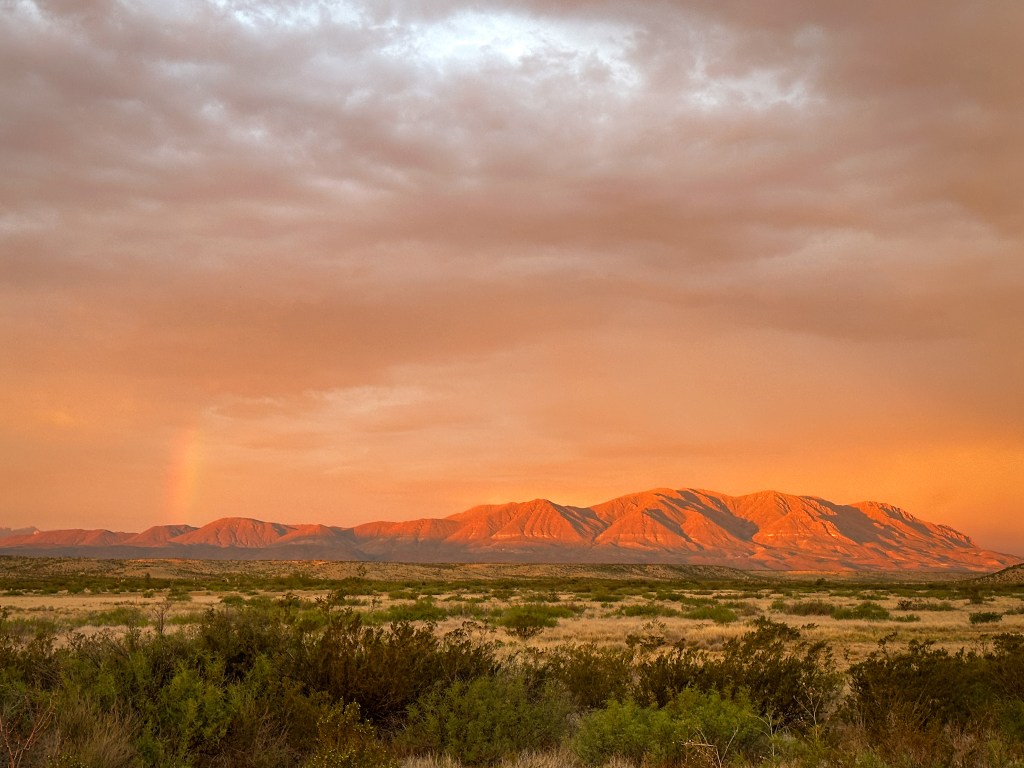
It is the isolation of Big Bend National Park that attracted us to the park. One early morning before sunrise, we set out from our home base in Marathon and headed south to the park entrance 42 miles away. During the drive, we witnessed the northern portion of the Chihuahuan Desert, the largest of North America’s four deserts open itself up to us as the ascending sun peaked through the clouds. The sun could afford only a band of light on the distant mountains briefly, enough to create a brilliant iridescent glow of red tones, a complementary backdrop to the greens and browns of the desert foreground.
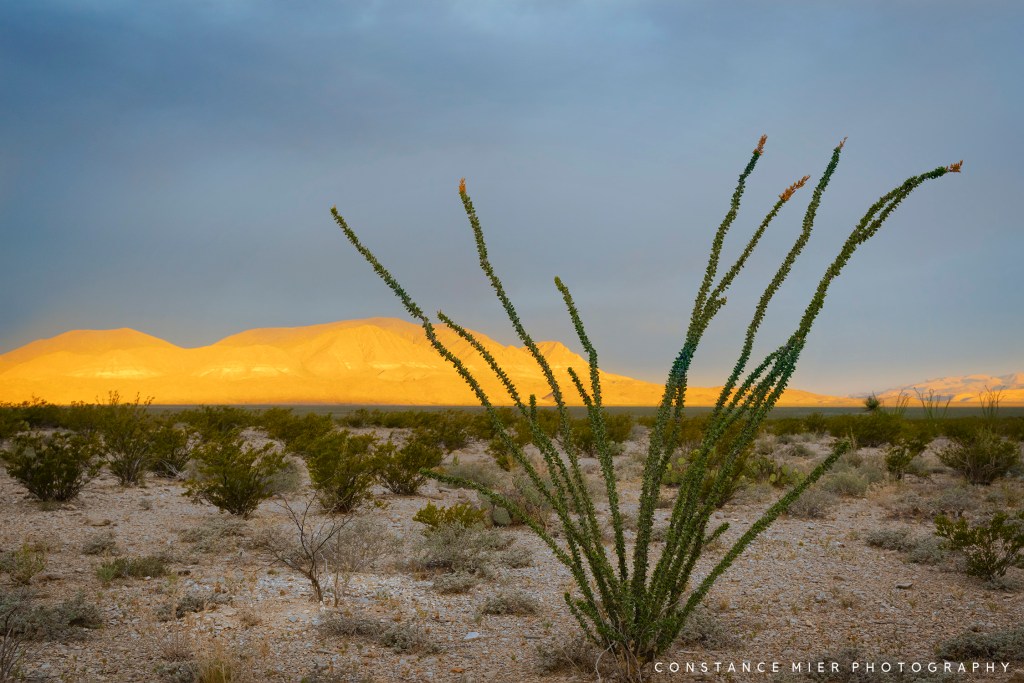

With increasing daylight, the desert and its flora awakened – a vast and seemingly barren land caressed in the distance by the Rosillos Mountains to the west and the Dead Horse Mountains to the east. Edward Abbey once described the desert perfectly, “…a generous gift of space for each herb and bush and tree, each stem of grass, so that the living organism stands out bold and brave and vivid against the lifeless sand and barren rock”.
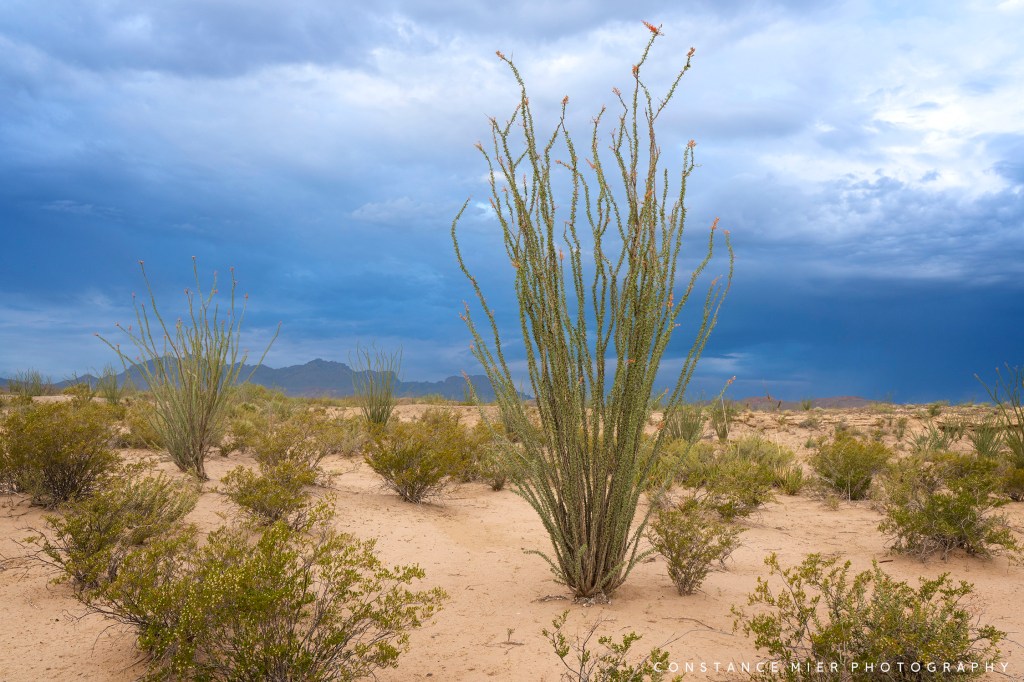

We entered the park as we crossed the expanse of the Chihuahuan desert speckled with blooming dagger yucca ornamented with white flowers and the spindly ocotillo showing off its leafless red flowers. At some point, the desert almost becomes a forest of yucca plants, the generous gift of space compressed between each plant. With some care, you can easily walk among the desert plant life as I attempted to do while capturing those early morning scenes.

As we continued south, the sky islands came into view. These are the Chisos Mountains. Their indifference to symmetry and gentle slopes is the essence of Big Bend’s geology summed up this way, “volcanism, vertical faulting and erosion equals Big Bend National Park”. At the base of the Chisos, our drive on Highway 385 ended 68 miles south of Marathon at Panther Junction, the crossroads of Big Bend National Park.
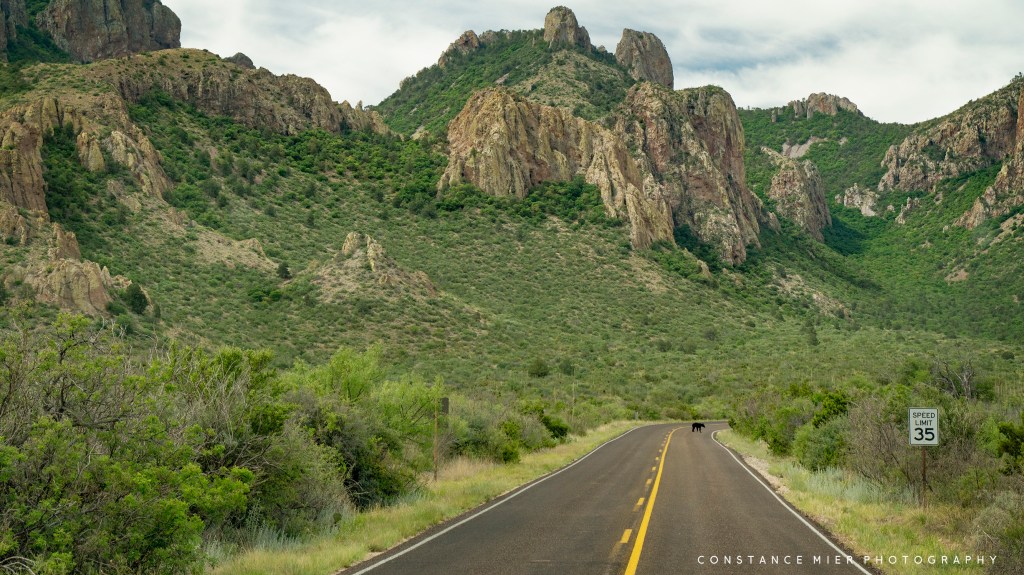
This is where the main visitor center is located and where you decide which part of the park to explore first, second, then third if you have multiple days to visit. There is no scenic loop drive that takes you around the park’s expanse, instead, you go out and come back, then make a right or left and go out and come back again. Do this a third time if you want to cover it all.


The lifeblood of the park is of course the Rio Grande River, its attraction partially owed to the fact it serves as a natural border between two countries. The park’s southern boundary is 118 miles of twisting river that changes its southeasterly flow abruptly to the northeast, forming the ‘big bend”. The Rio Grande is born out of the southern Rocky Mountains of Colorado and then makes its way to the Gulf of Mexico, traveling almost 2000 miles as it flows south – diverted often by the demands for water and power.
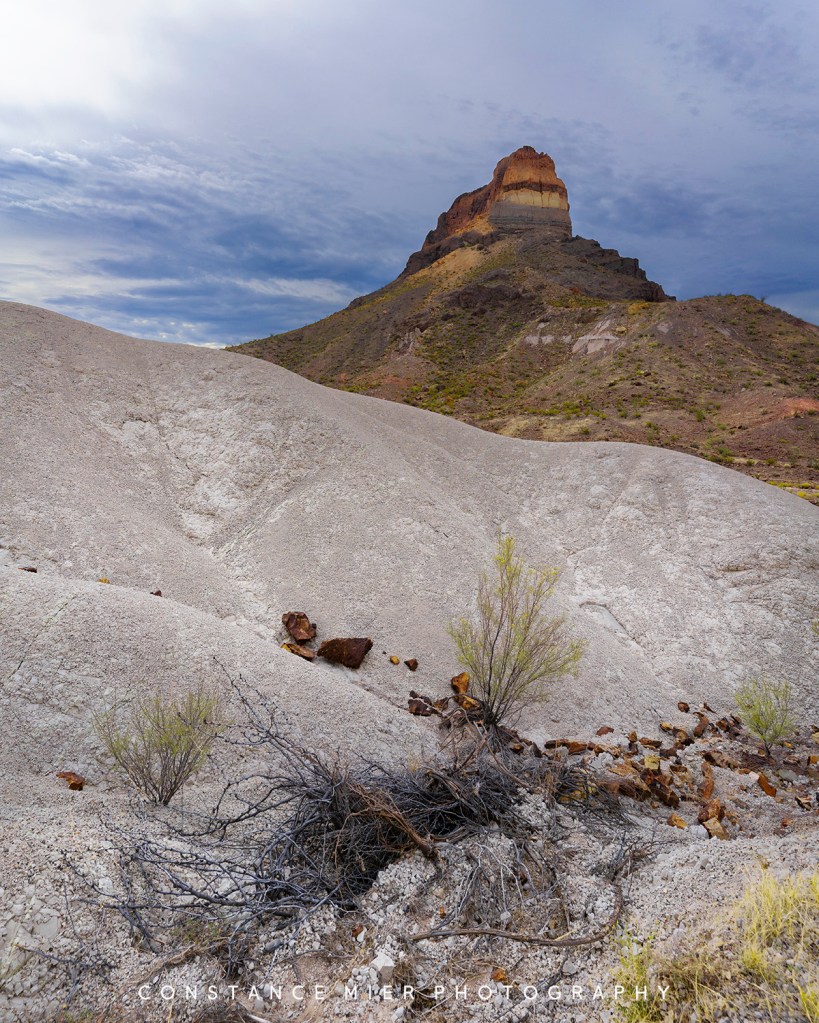
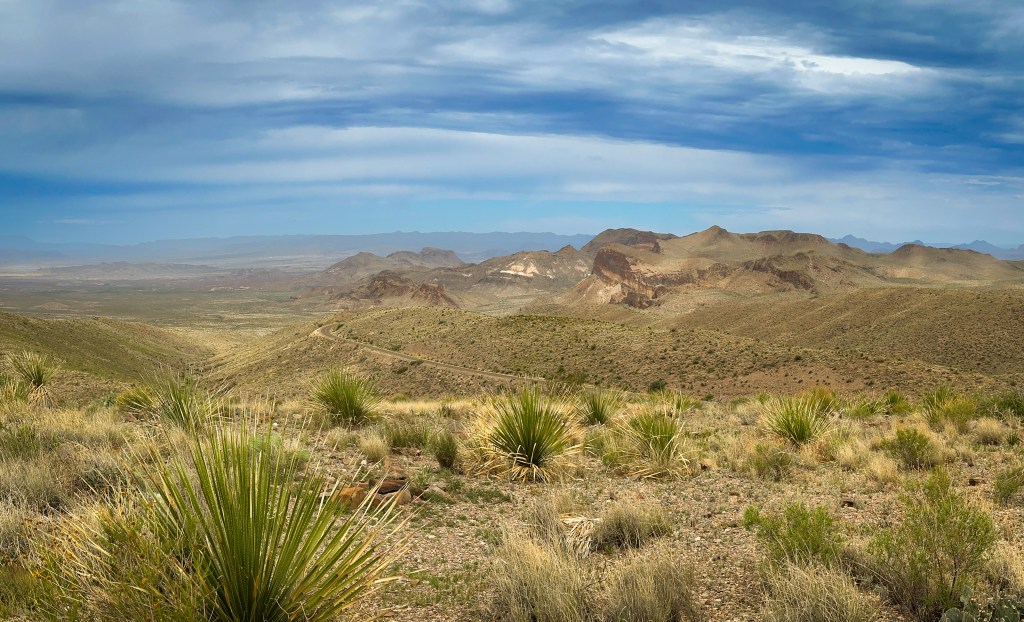
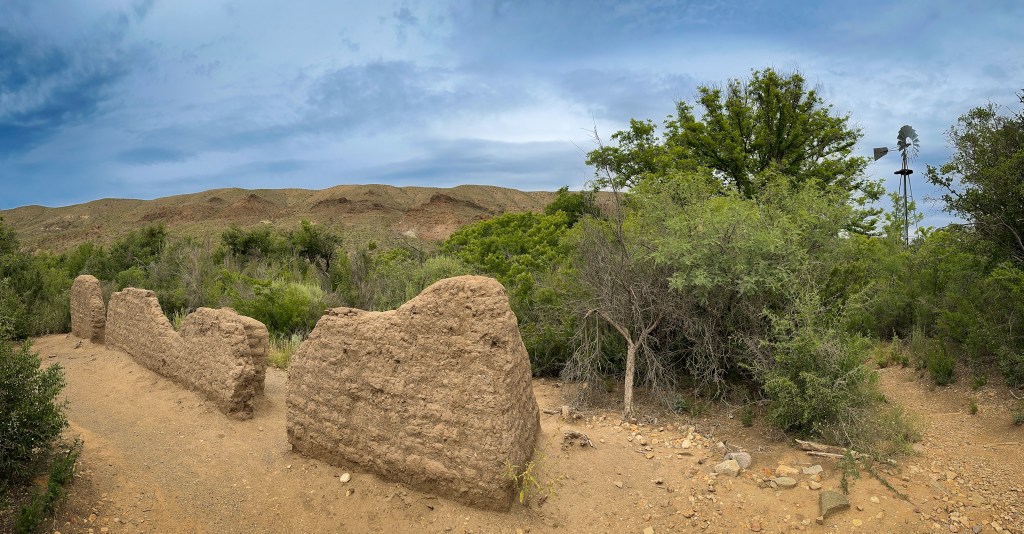
Our goal was to see the Rio Grande River. After a long drive beginning at 5:30 am, we stood at the river’s muddy edge shortly after 8 am. The grand river looked meager and unnavigable. It’s the time of year when the park is just starting to come out of a dry season, but the low water levels are evidence of the diversion of water that occurs upstream, leaving little leftover to make its way to the big bend. The shallow water made the Santa Elena Canyon walls even more impressive; after all, these steep canyons are the work of the river, carving its magnificent rock wall sculpture over the past two million years.
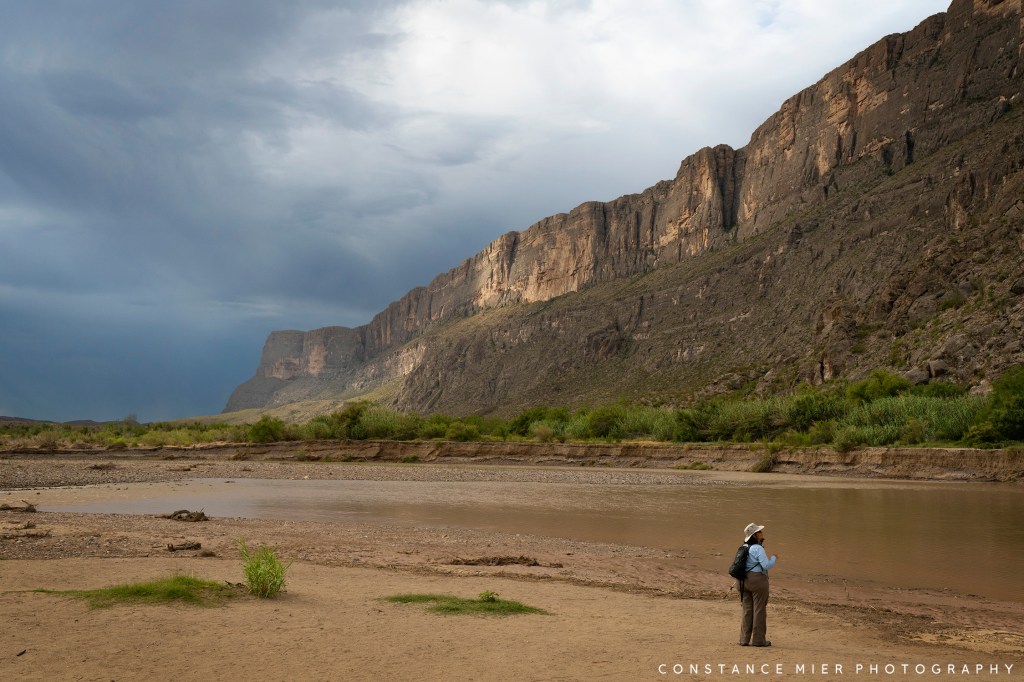

We came to Big Bend in the middle of May to see it and to say we’ve been there. The weather gave us a bit of a break so we could explore it more than we thought we would in the short time we had planned, and that was enough to tell us that we did not truly experience Big Bend National Park. Paddling the Rio Grande, experiencing its dark skies, hiking its backcountry, seeing its wildlife and photographing its unique grandeur are all part of our plan to visit Big Bend National Park – next time.
Here are a few more images of Big Bend and the little town of Marathon where we stayed.
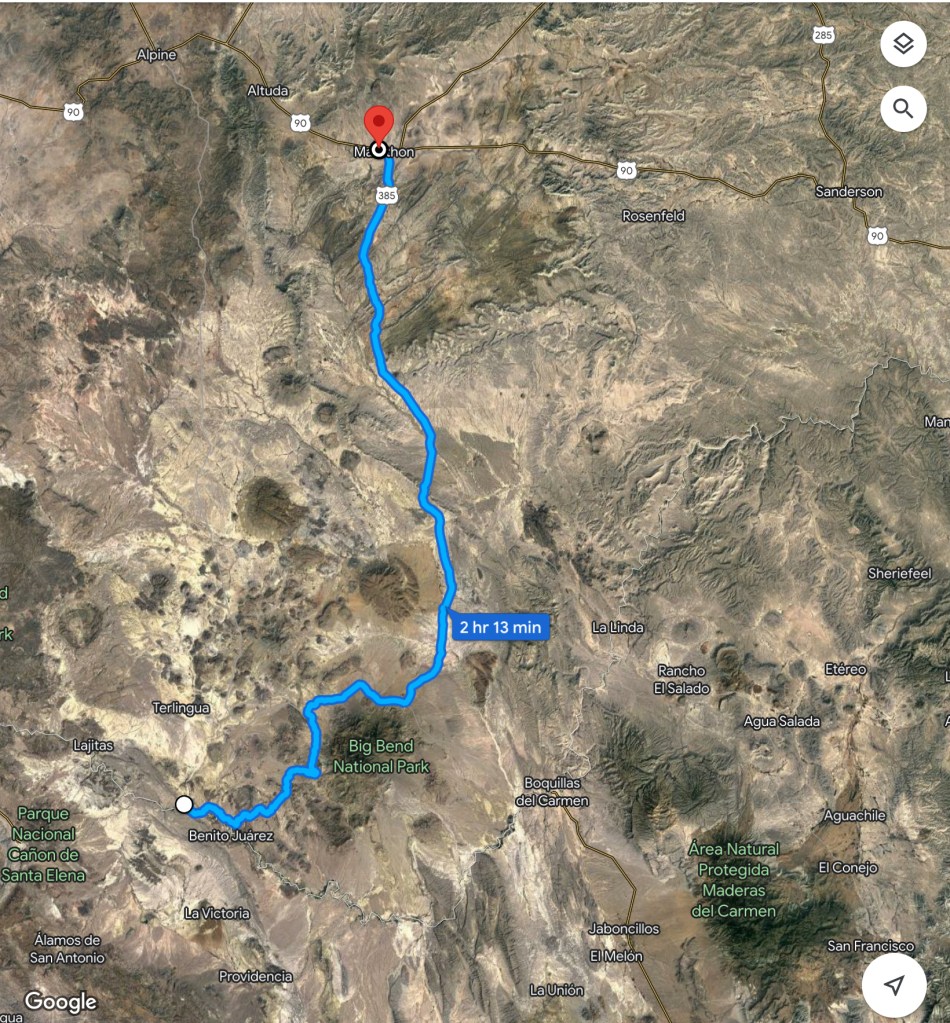
Our drive from Marathon to Santa Elena Canyon. 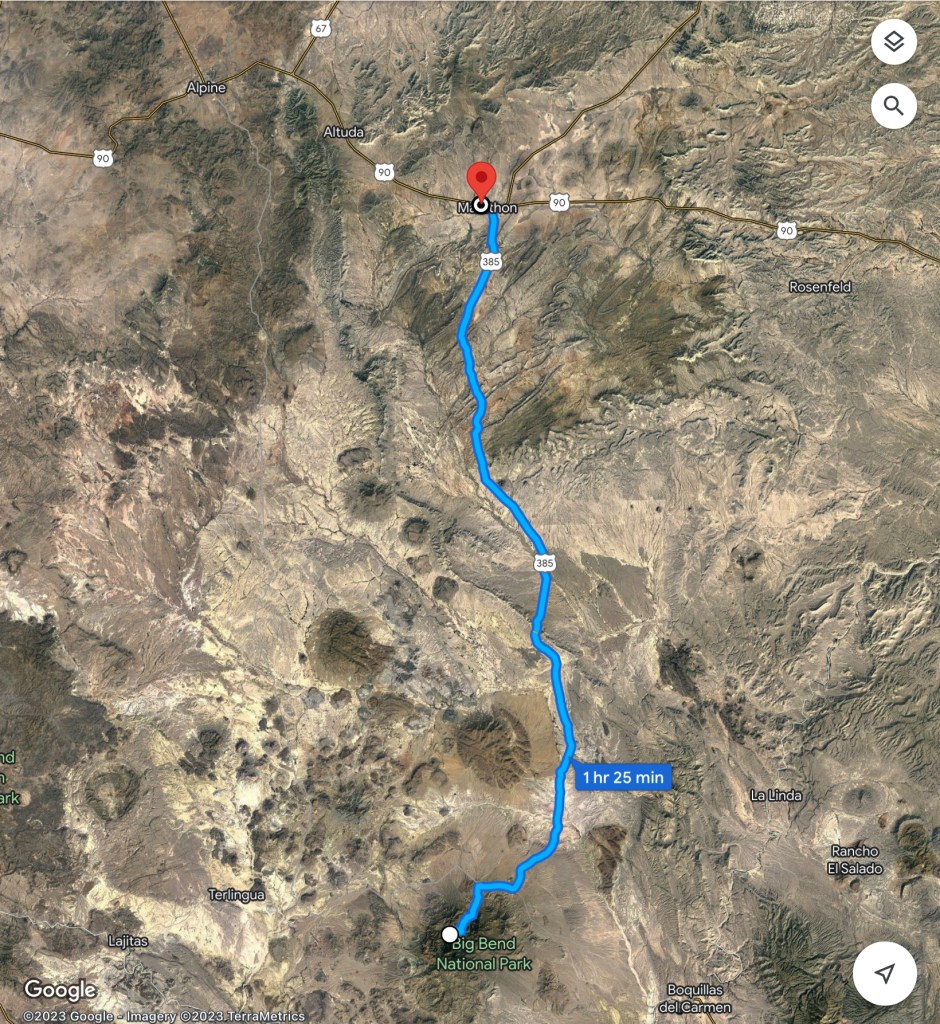
Our route from Marathon to the Chisos Visitor Center. 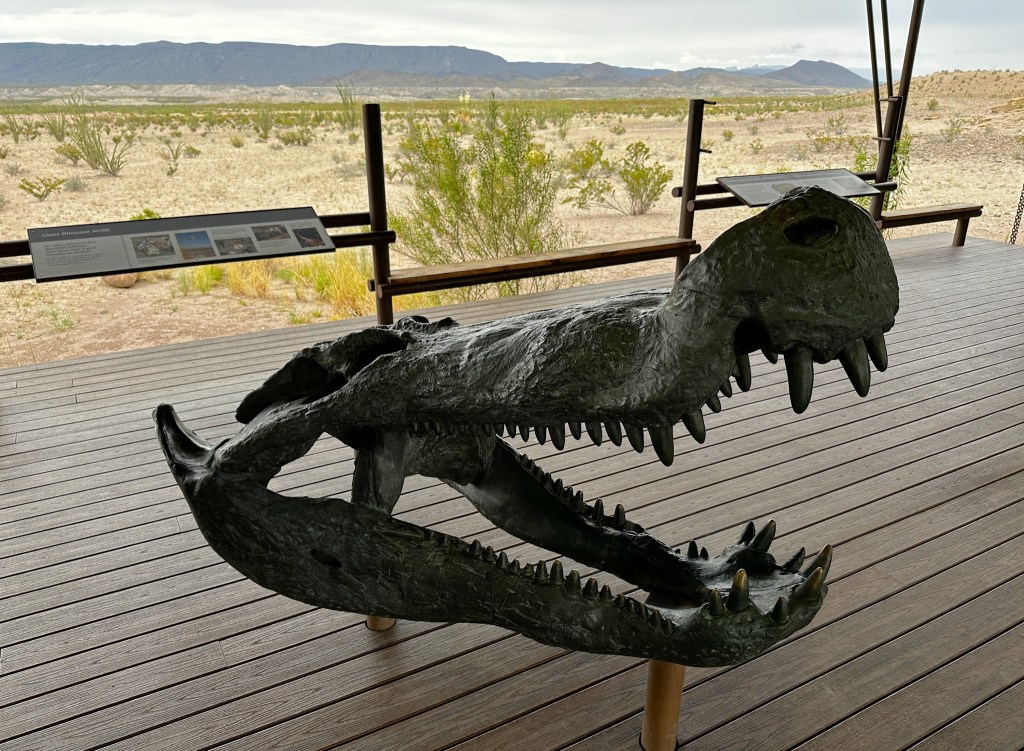
A replica of a gator fossil, located at the Fossil Discovery Museum. 
Love those prickly pear flowers and so do the bees. 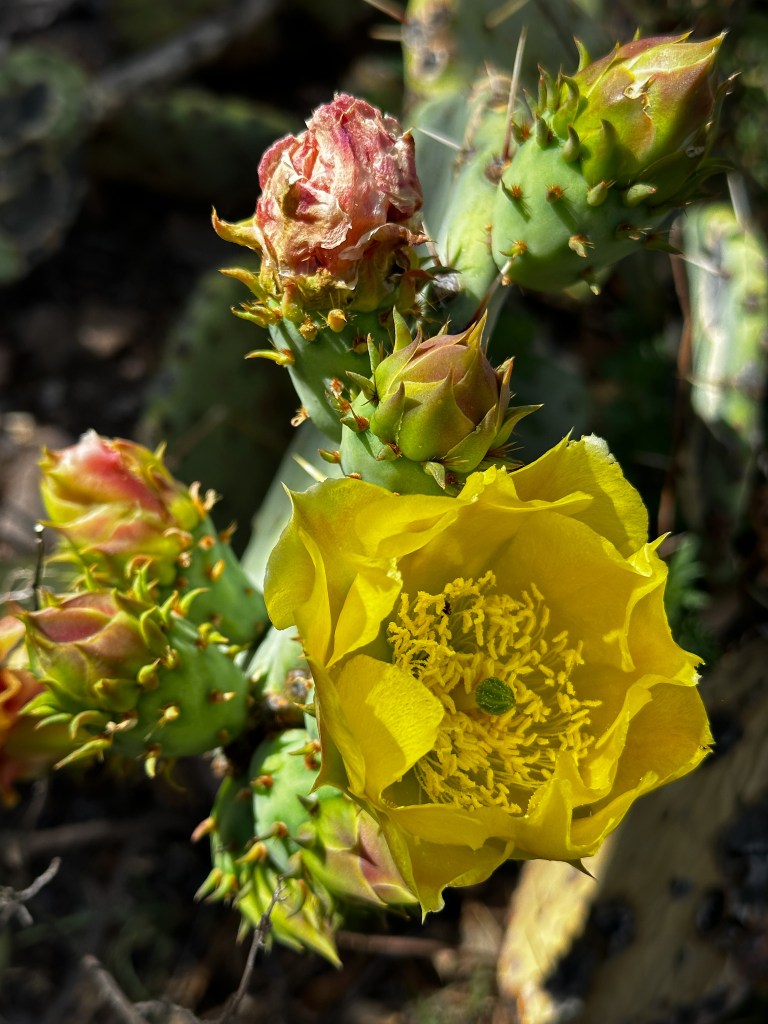
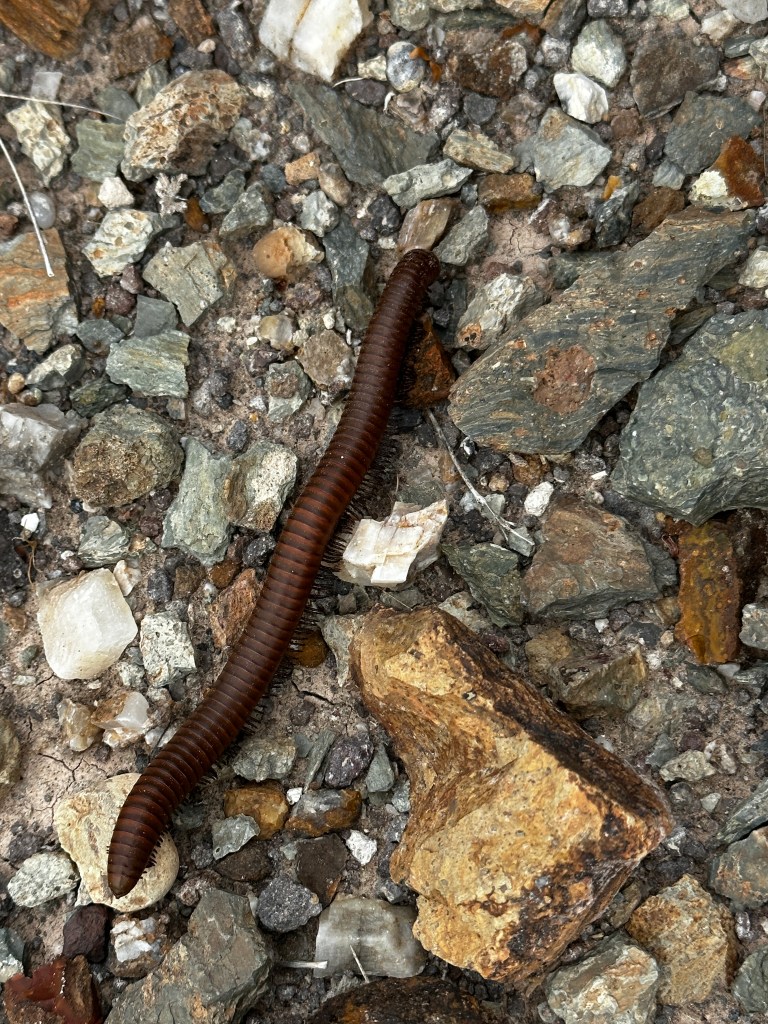
We saw dozens of millipedes crossing the roads. Seems the recent rains forced them out of hiding. 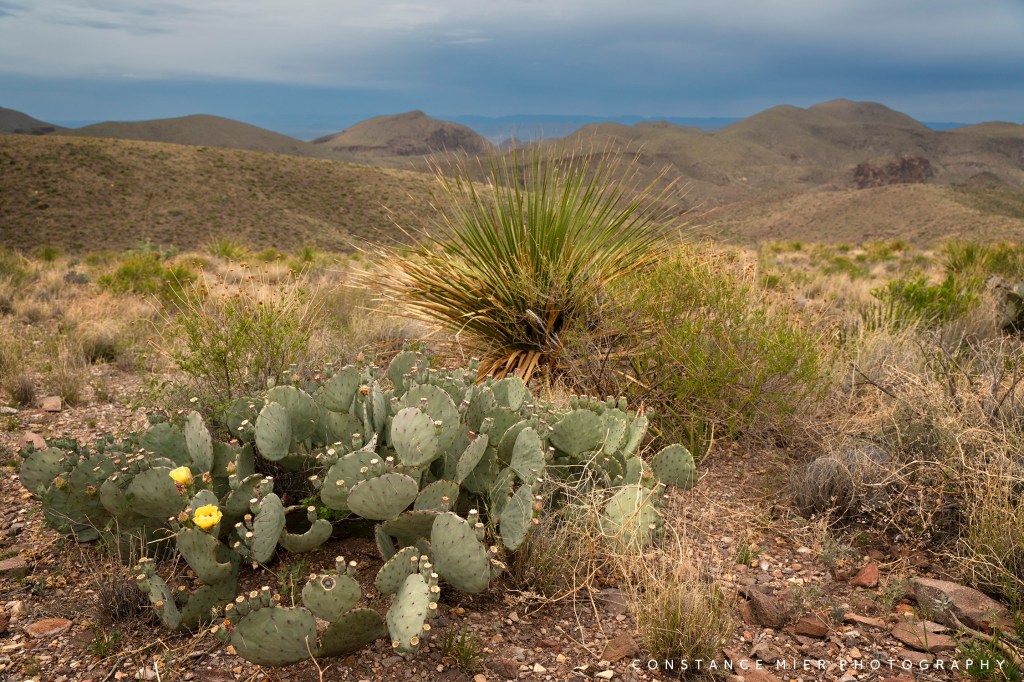
Another view from Sotol Vista. 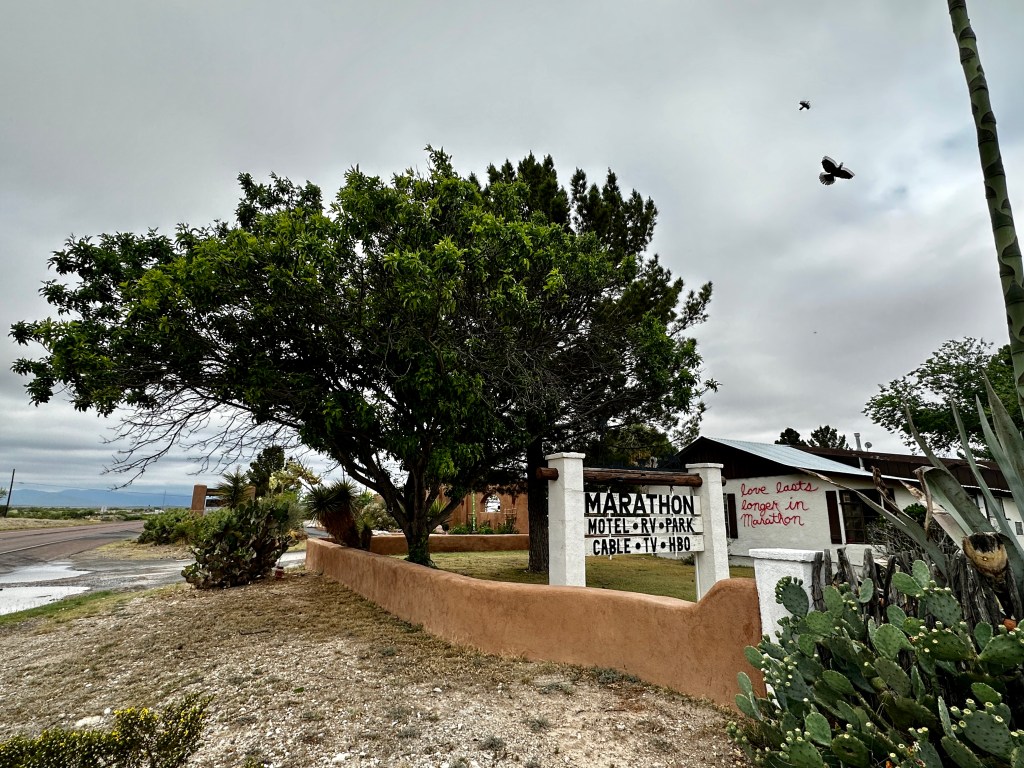
Our home in Marathon. It is designated as a dark sky observatory as one of the residents there has a telescope for guests to view. Unfortunately, skies were cloudy most of the time we were there! 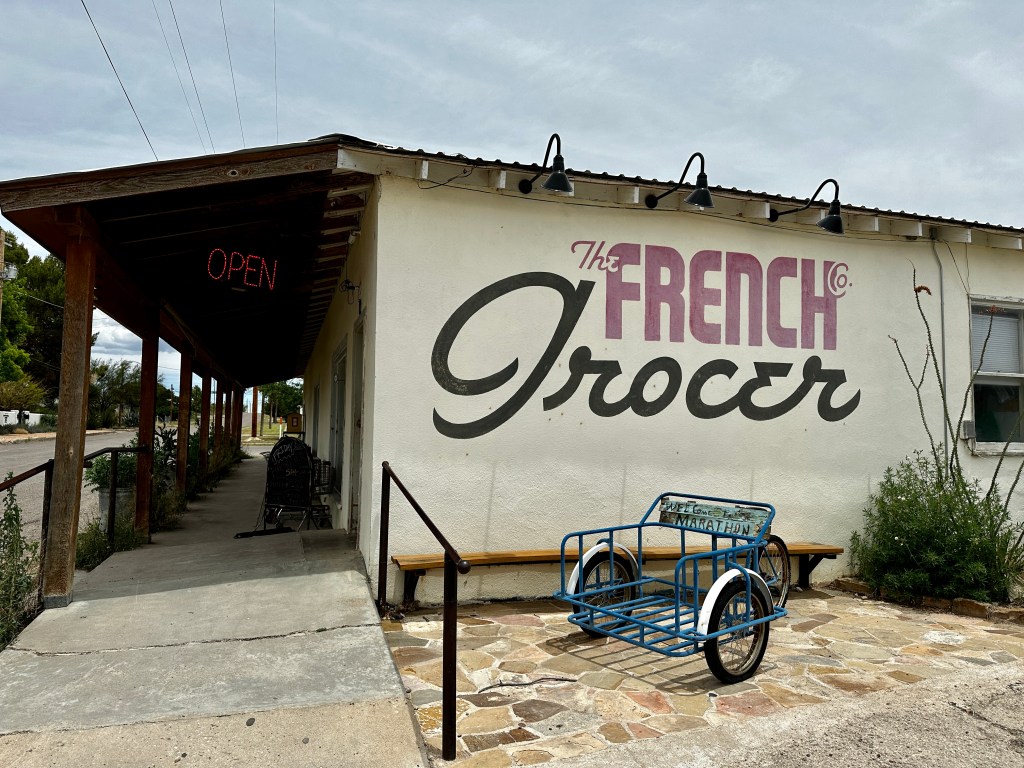
Downtown Marathon’s grocery store (and bar!) 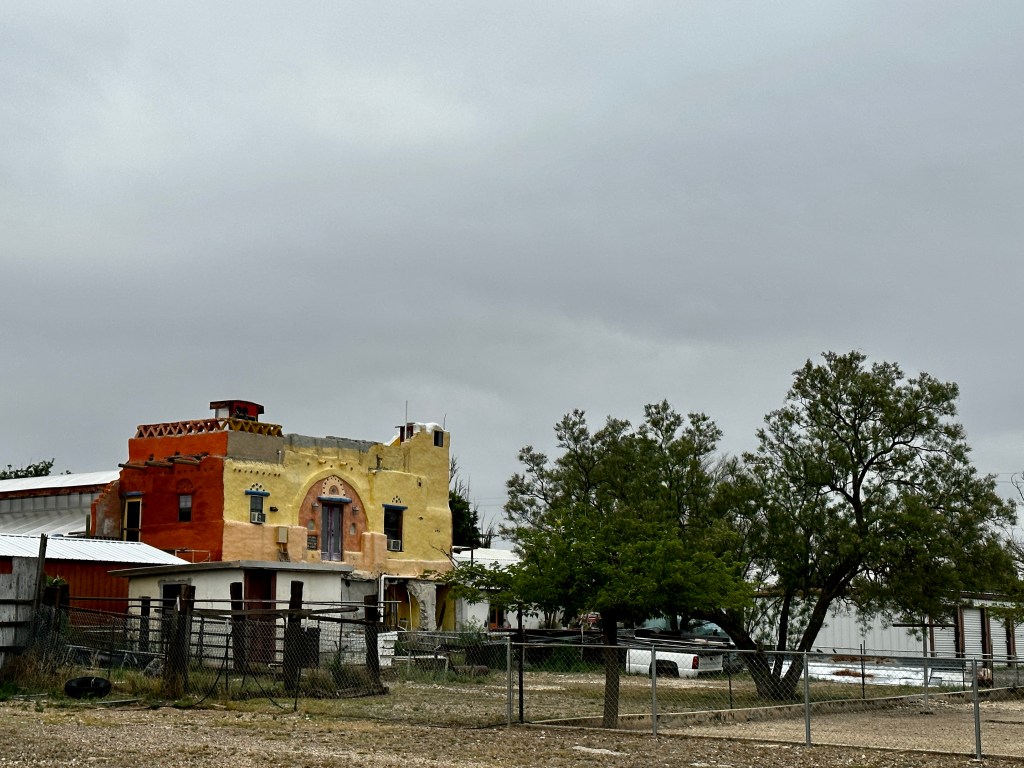
The backside of a Bed and Breakfast in downtown Marathon. 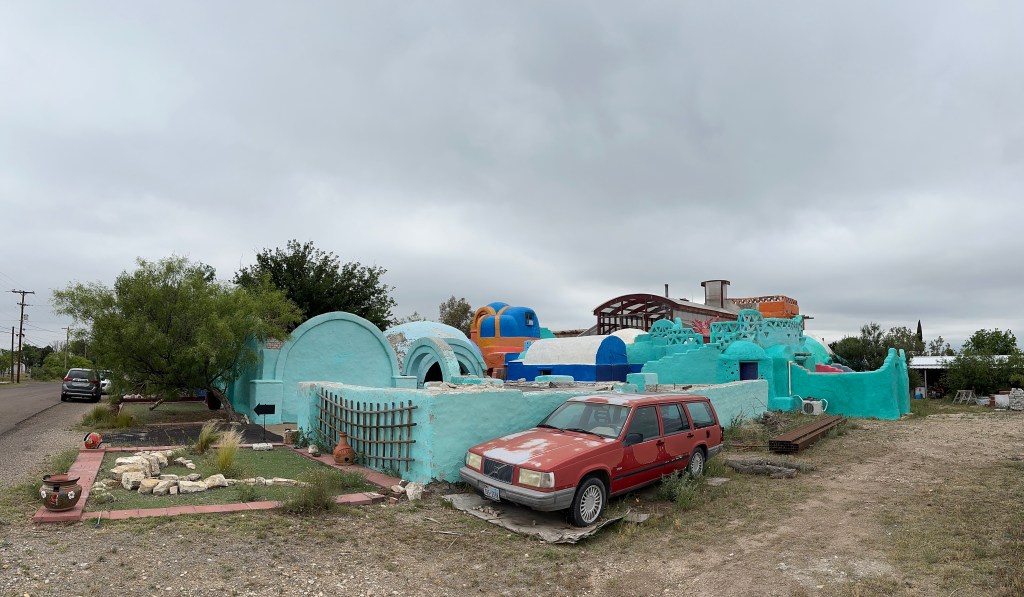
An addition to the Bed and Breakfast, not sure what is going on. 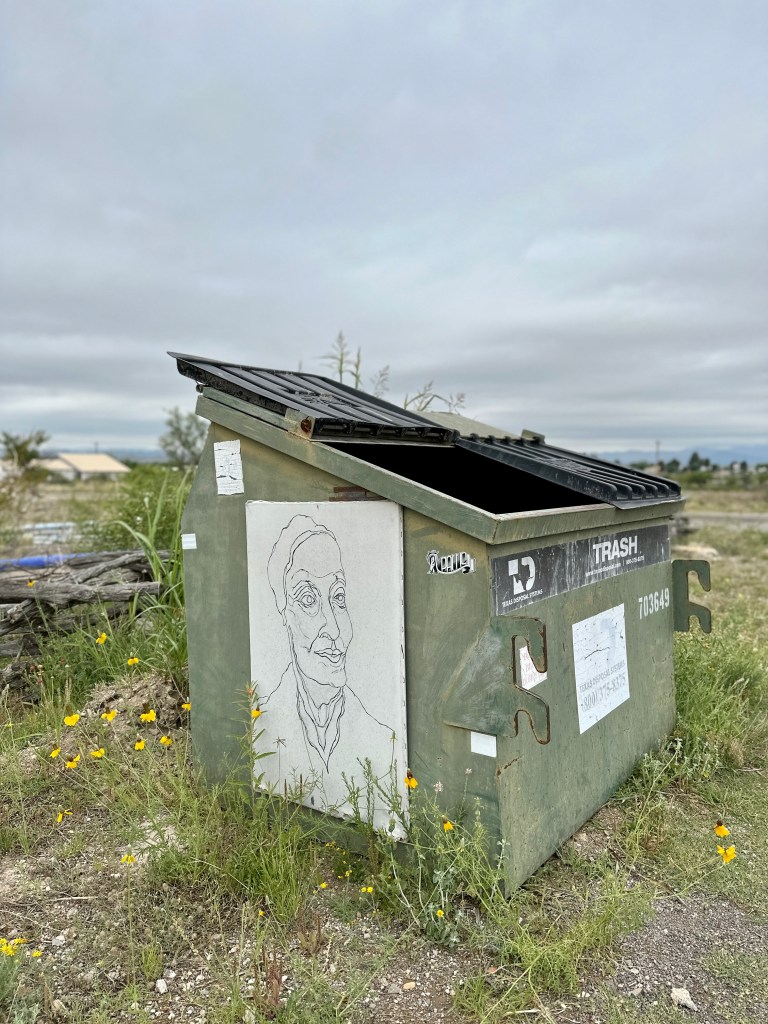
Art can be found anywhere in Marathon! 
The historic Gage Hotel in downtown Marathon pretty much takes up half the town’s real estate. It looks like a wonderful place to stay. 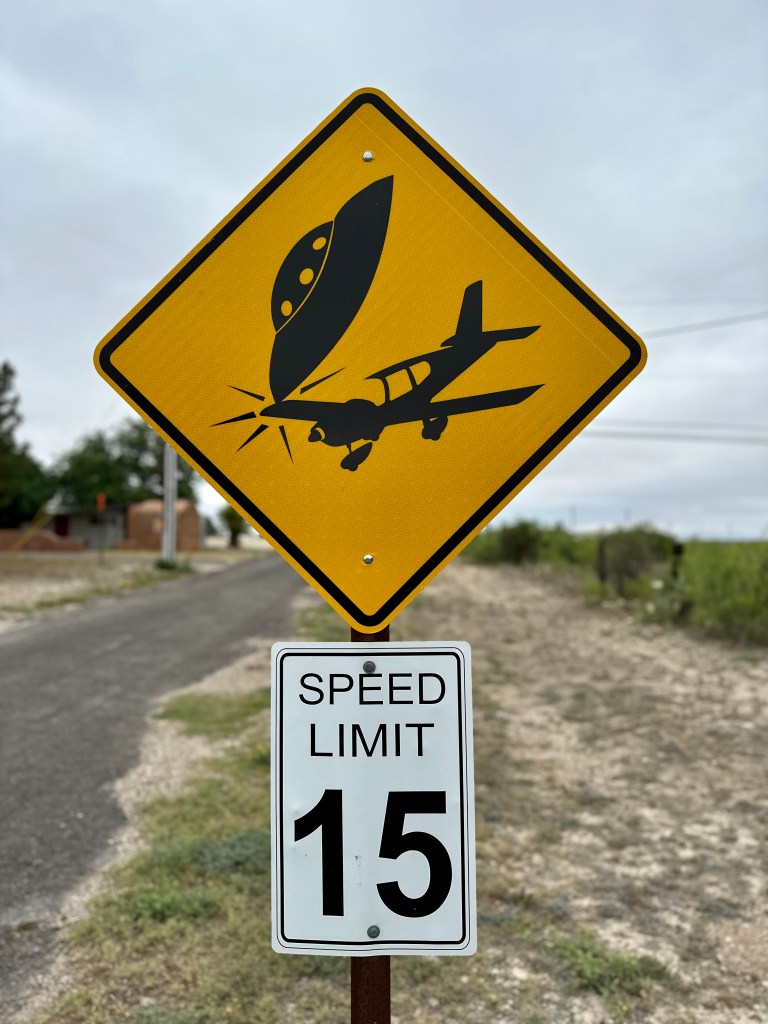
A little sense of humor in this desert outpost.

 Changing Views From Our RV
Wonderful post! The desert in May is when it is at its showy best. We loved Big Bend and climbed into the High Chisos for a great view. You manage to capture the scale of vast places beautifully!
LikeLike
We loved Big Bend, & would go back again. Maybe to paddle Rio Grande!
LikeLike
Big Bend was a mind-blowing experience for us. It’s too bad your campground was so far away. It’s a taxing drive from Marathon. Your pictures are amazing as always!
LikeLike
It is amazing, we actually enjoyed the long drive in, got my best photos on that drive. We missed out on some things though, but next time…
LikeLike