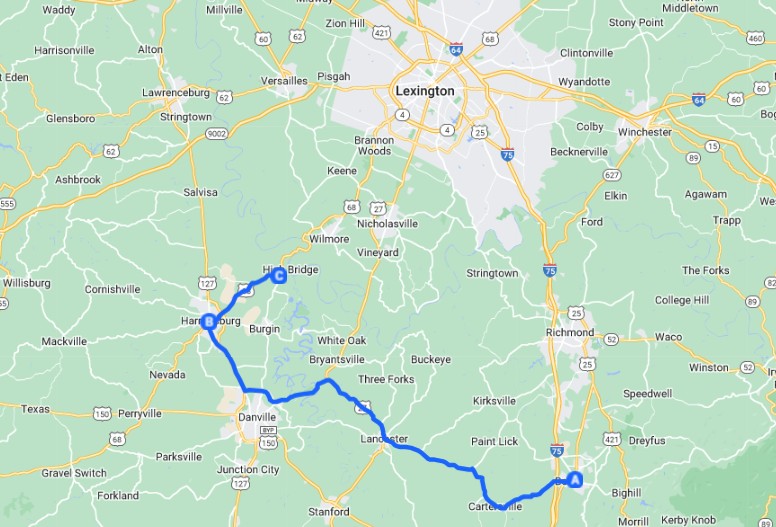
Road traveling has given Vivian and I the most valuable lessons in history, nuanced by the many stories told across the country. What strikes us most is the number of fascinating stories that can be gathered up while lingering in one place. Here are three stories from our time in Berea, Kentucky.
Berea College – The Good and the Ugly
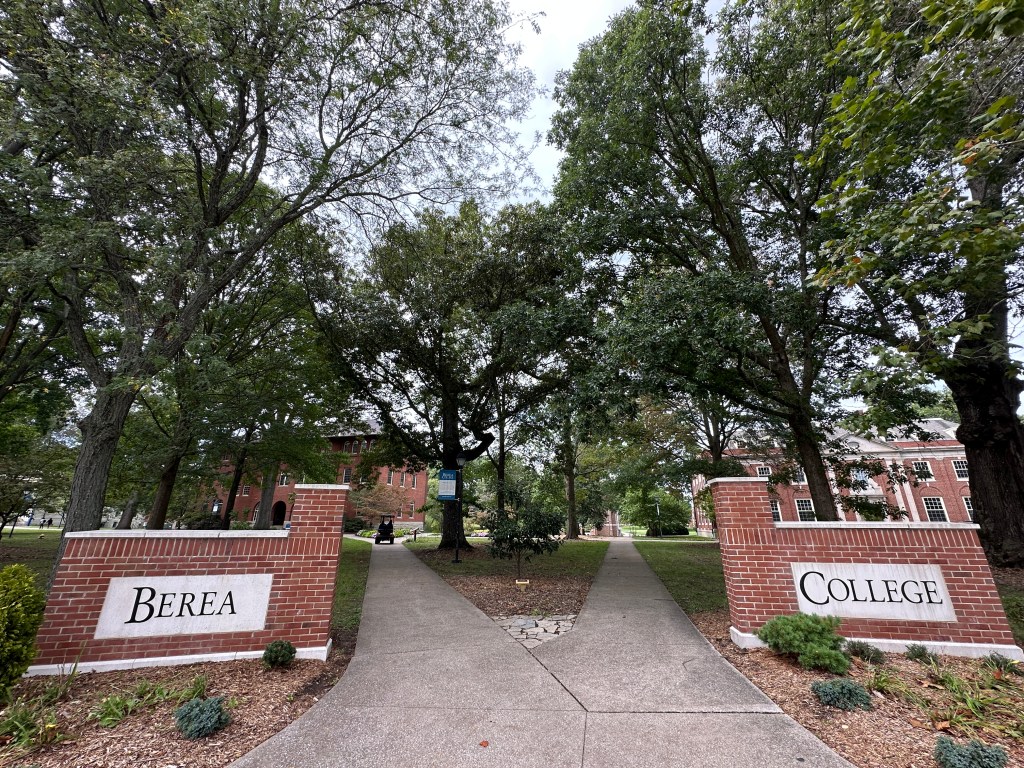
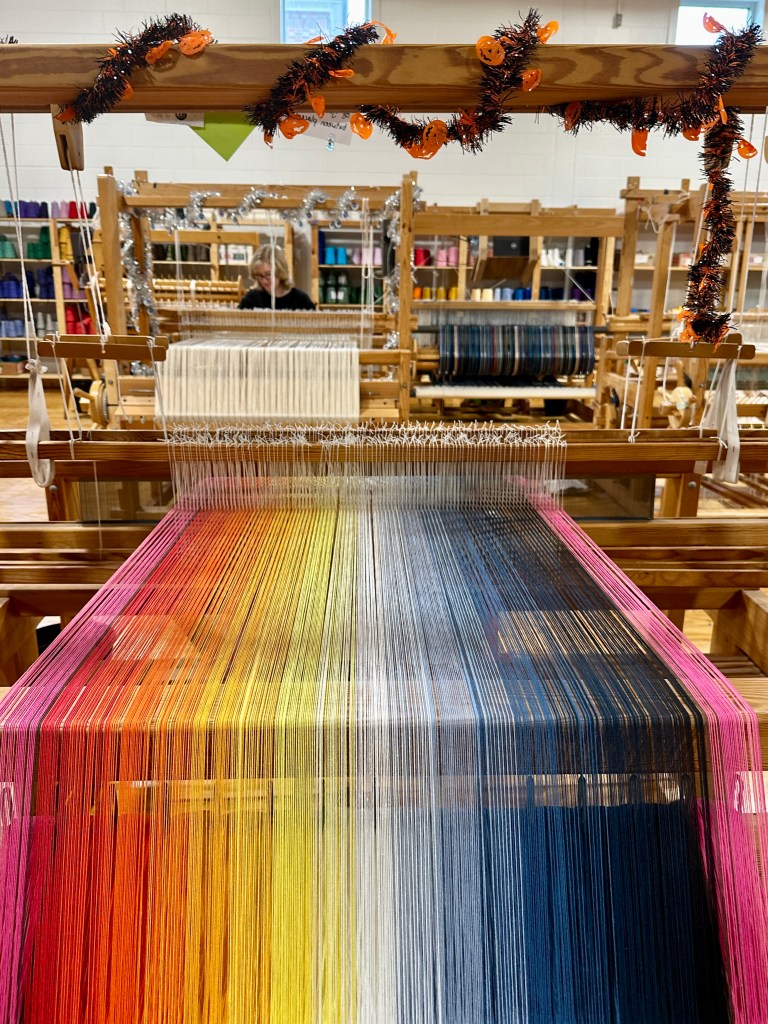
On the edge of Kentucky’s Blue Grass Region is Berea College, founded in 1855 by abolitionists and the first coeducational and racially integrated in southern United States. While this is an interesting fact about Berea College, it is its connection to Appalachian Mountain culture, particularly its family-oriented craft industry that gives the college’s story a twist.
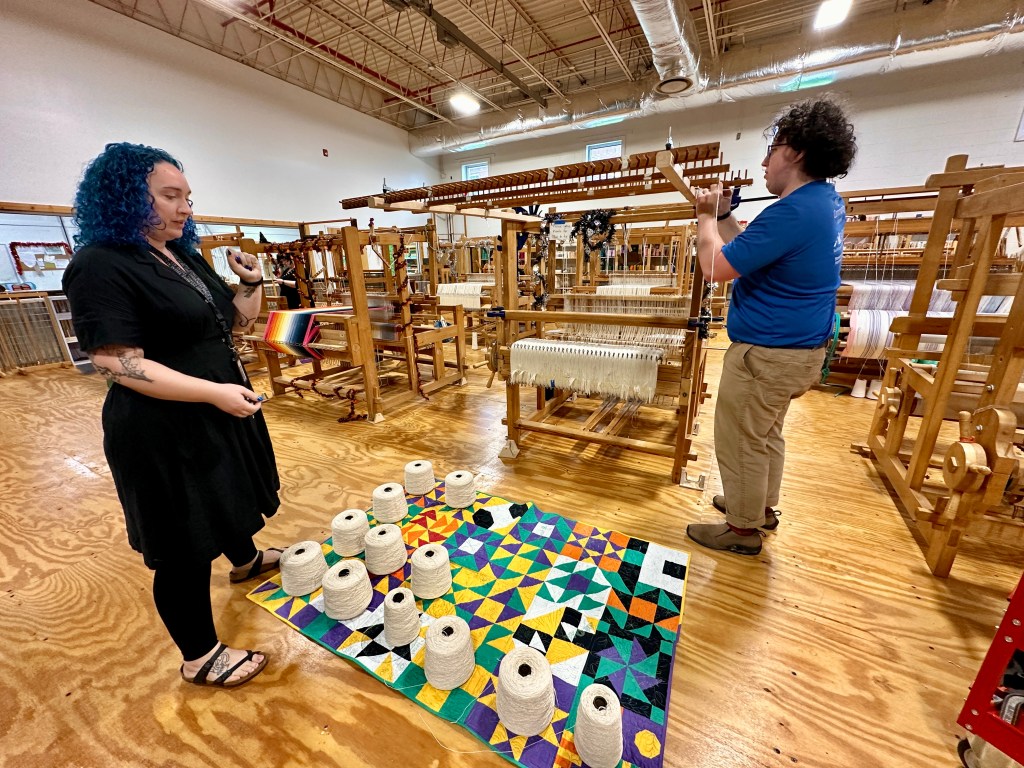
The crafts program began in 1893 when the college president, William G Frost got inspired by a student from the Appalachian Mountains who offered a handwoven coverlet as payment for tuition. The cottage industry of weaving and woodworking soon became a labor program for students. While Frost, the president of a racially integrated college found inspiration in mountain culture, he took it further and made it the college mission to market a region that was geographically isolated and lacked economic opportunity – thus creating a fascination for its culture and a market for its crafts.
Here’s where the story takes an ironic turn. To Frost, the Anglo-Saxon mountaineers were “our contemporary ancestors”, thereby ignoring the region’s multi-racial history and appealing to people’s fear of immigrants. With Jim Crow prevailing in the south, Berea College became a target as Kentucky Representative Carl Day introduced the Day Law, a segregation bill signed into law in 1902. With the rising tide of segregation around the country, Berea gave up its initial mission to welcome ‘all peoples of the earth’ in 1904. Only after the Brown v Board of Education Supreme Court decision in 1954 were blacks readmitted.


Abolitionists founded the college in 1855 to create a school that welcomed ‘all peoples of the earth’. 
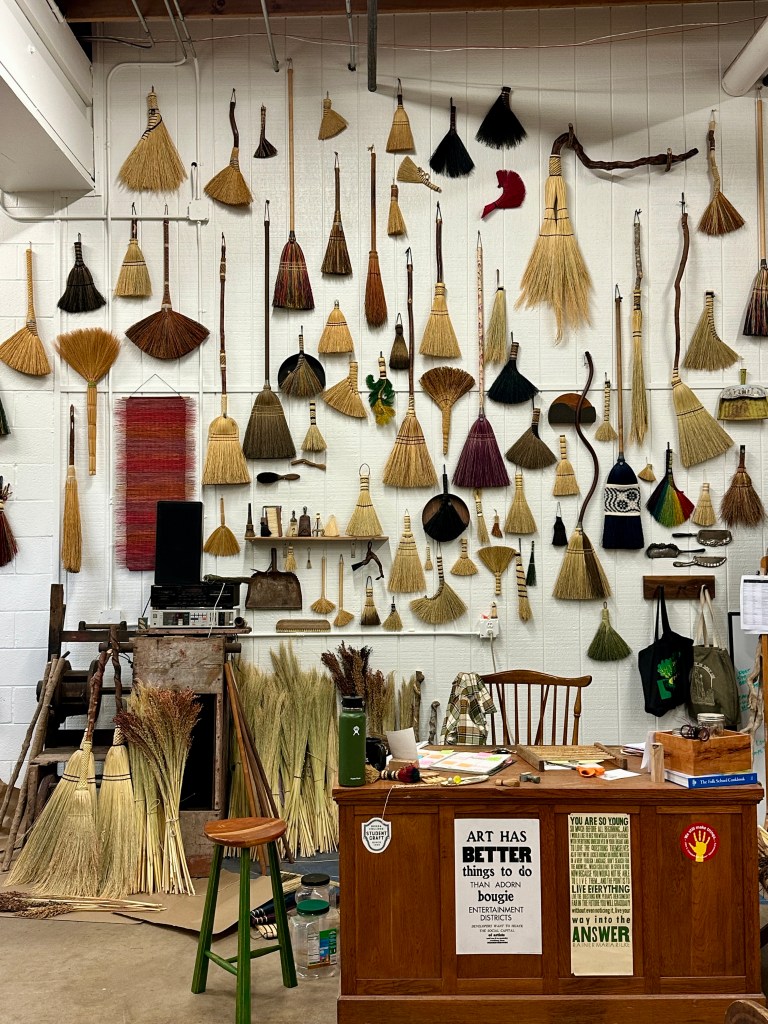
Where brooms are made by hand. 
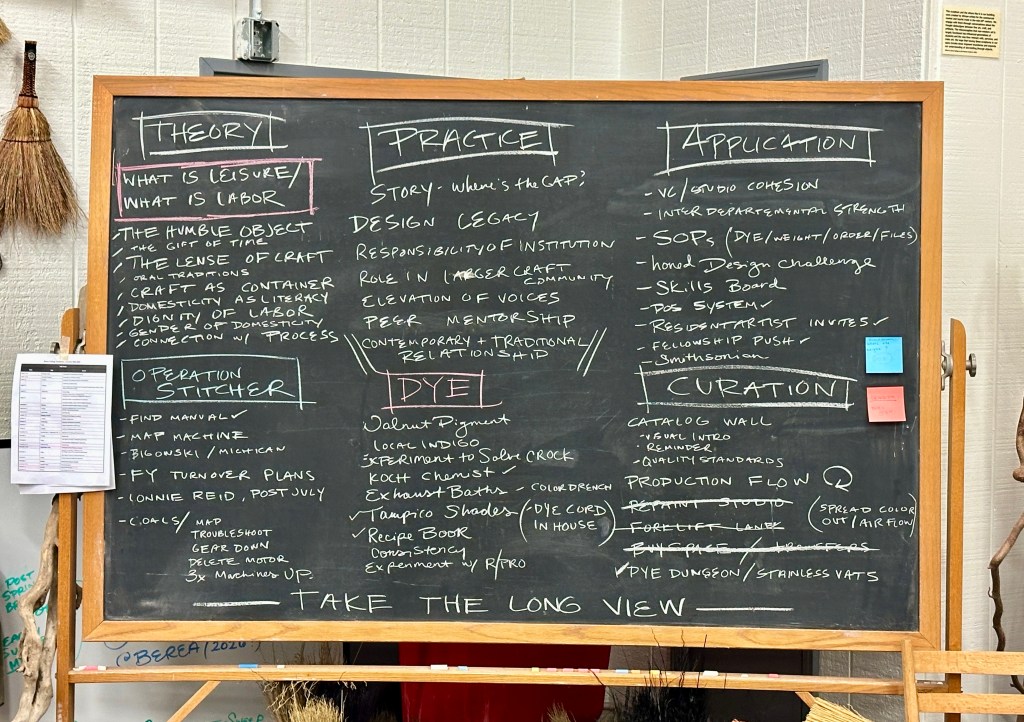
Some thought went into this. 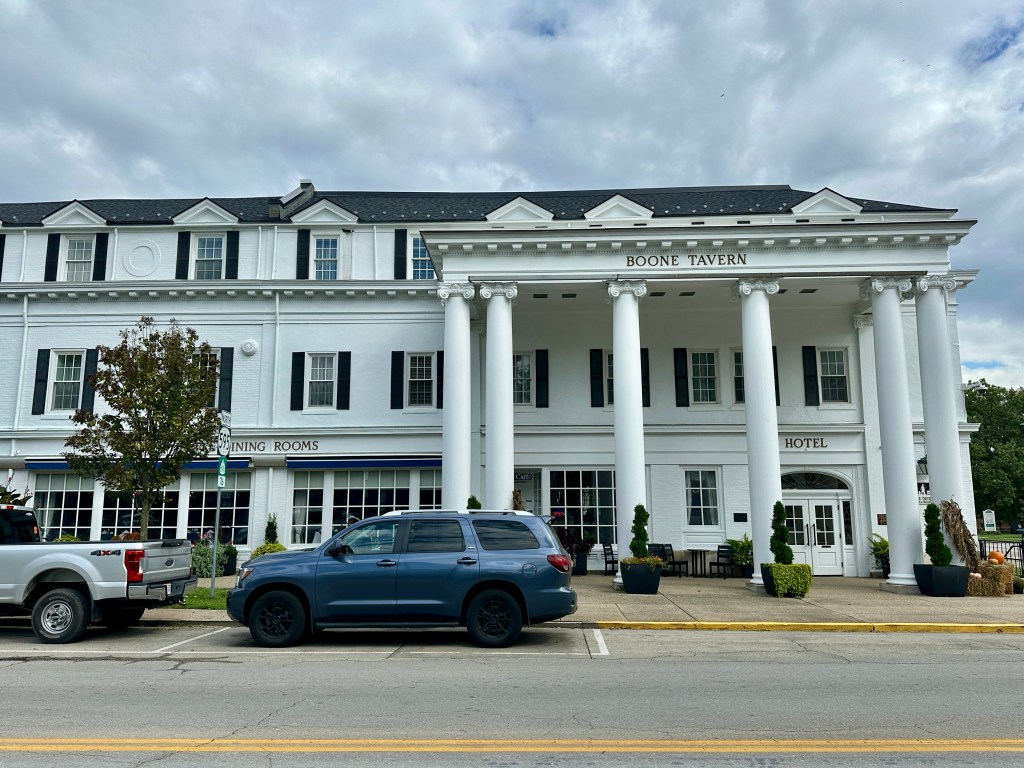
Downtown Berea, the historic Boone Tavern. 
The lobby of the hotel. 
I haven’t seen one of these in decades! 
Found this on our campus tour, thought I’d share it here.
Fort Harrod – You Do What You Have To Do
Not far from Berea is Kentucky’s oldest permanent settlement, Harrodsburg founded in 1774. No longer exclusive hunting ground for Native Americans, the settlement of Harrodsburg prompted waves of pioneers to Kentucky territory, which soon became a state in 1792. Among those pioneers that came to Harrodsburg was Ann Kennedy Wilson Poage Lindsey McGinty.
Migrating from Virginia, McGinty brought the first spinning wheel to Kentucky (carried on the back of a horse, leaving her without a ride). Her second husband, William Poage was killed by Indians in 1778, but not before he built her a loom (the first in Kentucky). With that loom, McGinty wove into cloth the first linen in Kentucky and from that, carried on a fabric business inside Fort Harrod.
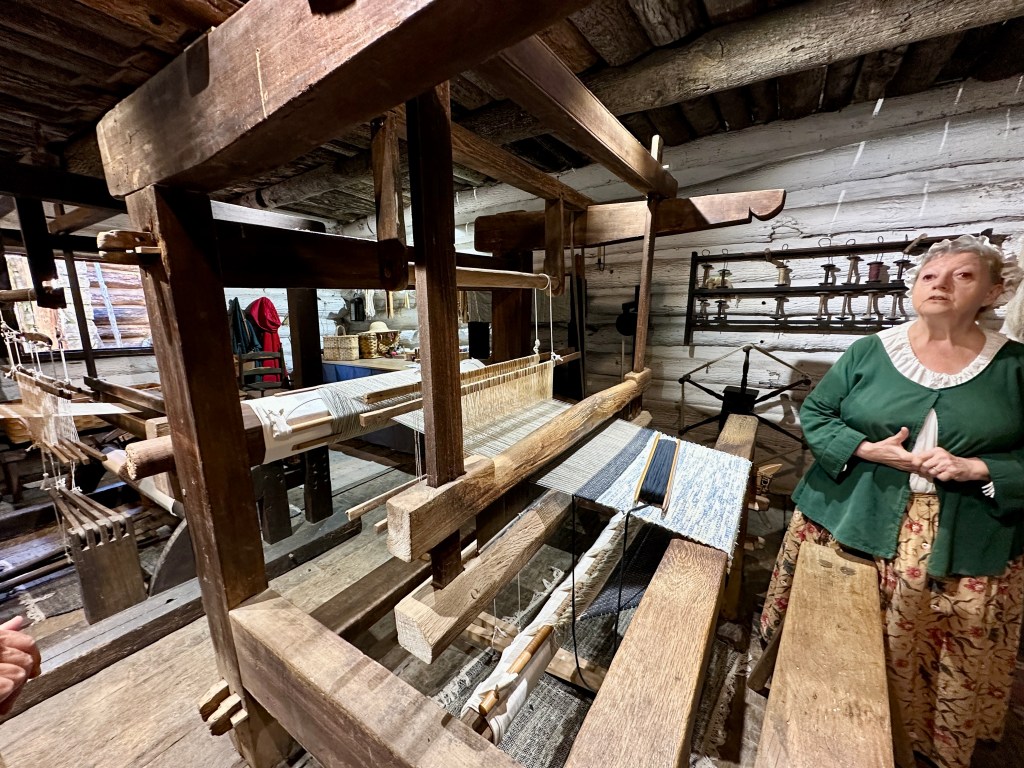
It must have been a thriving business because each time McGinty lost a husband, she remarried. Why? Because she herself could not own the business – but her husband could. McGinty died in 1815, apparently before her fourth husband passed. And as a point of interest, McGinty would be what Berea College’s President Frost would call a “contemporary ancestor”.
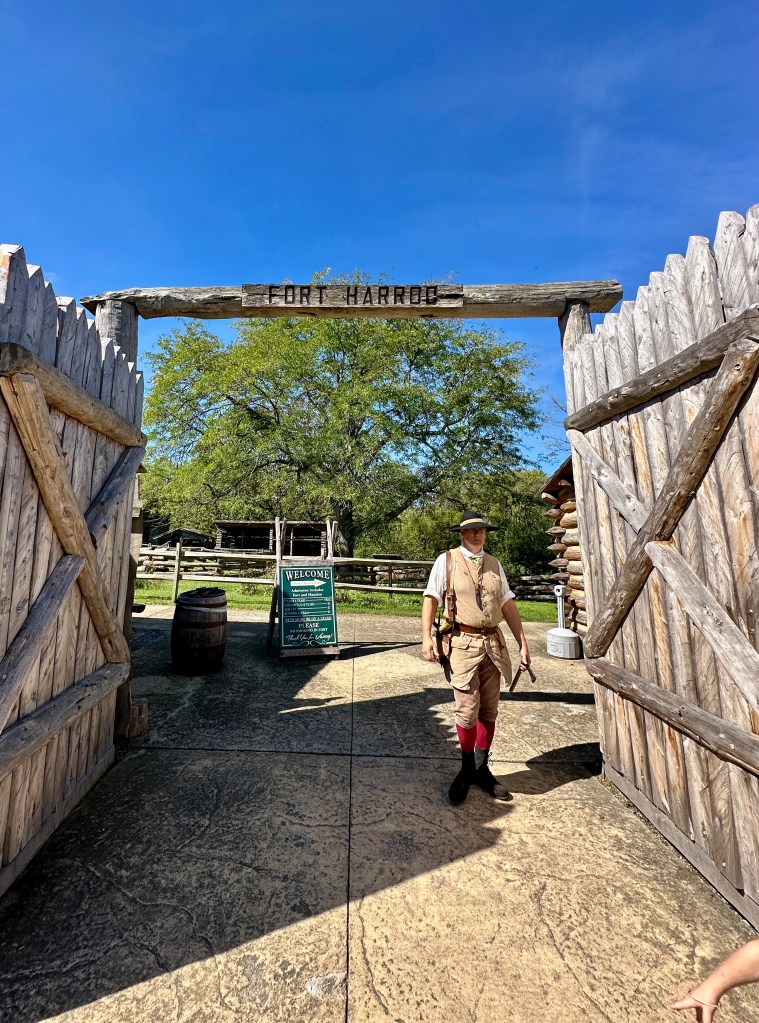
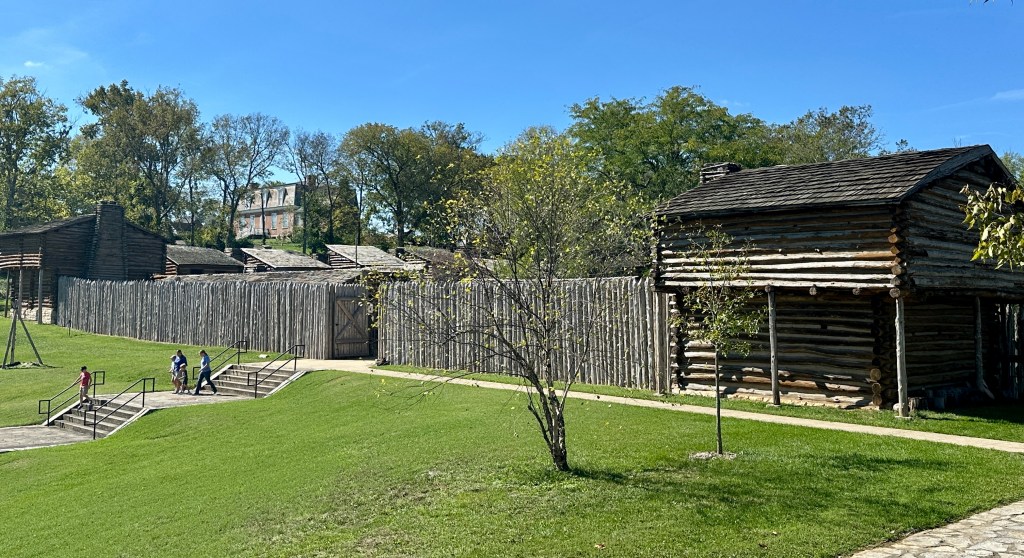
Old Fort Harrod State Park does a great job bringing the old fort to life. 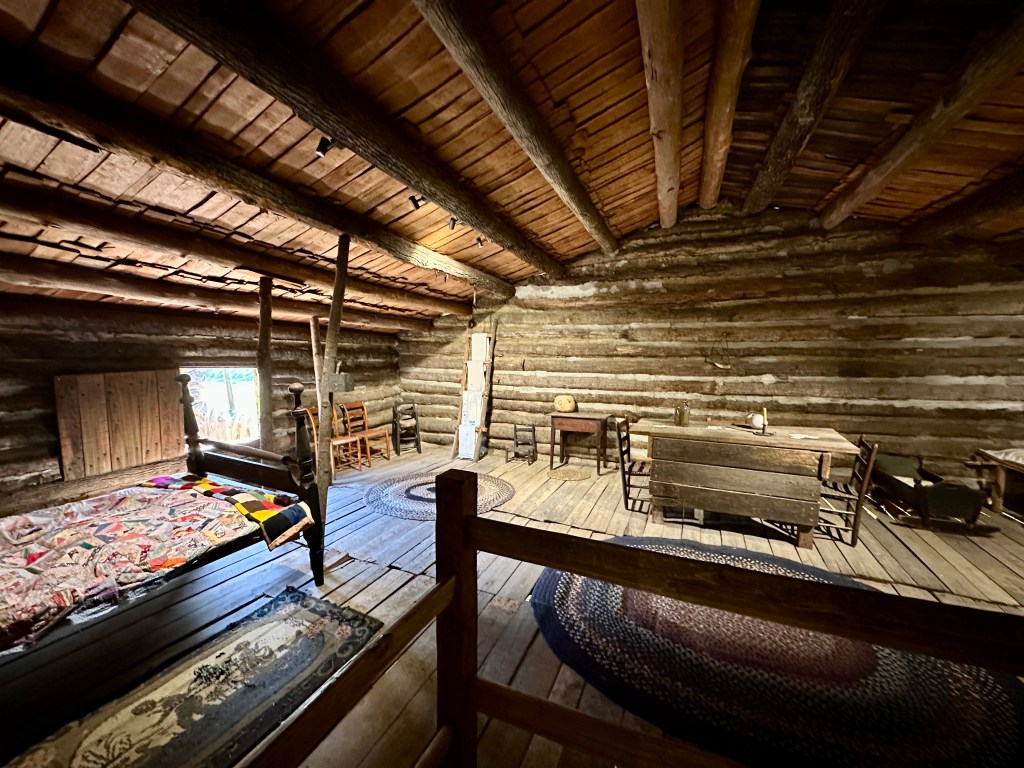
In the fort, cabins and blockhouses are furnished with handmade utensils, furniture, and tools used by the pioneers. 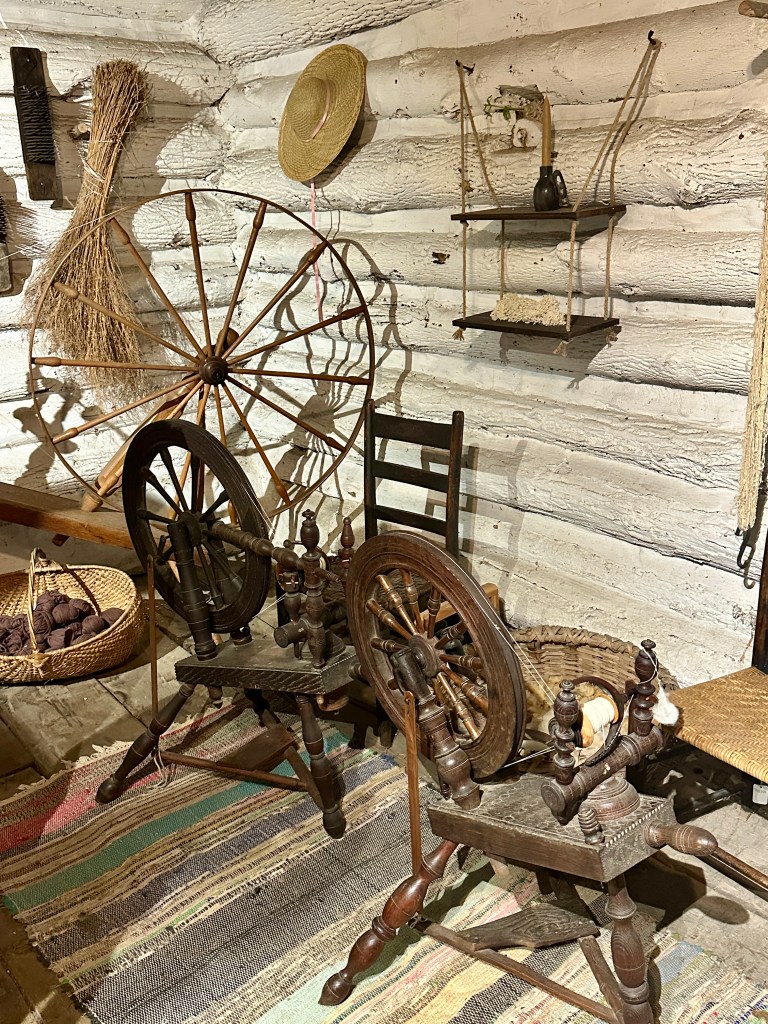
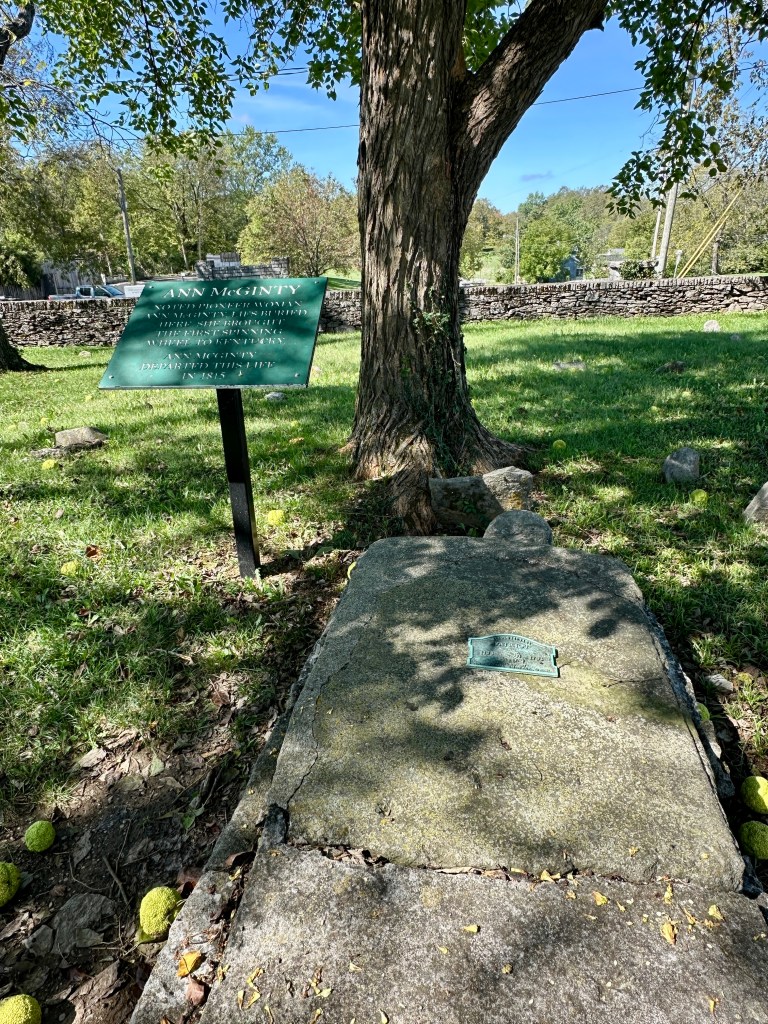
Ann McGinty grave under an osage orange tree. 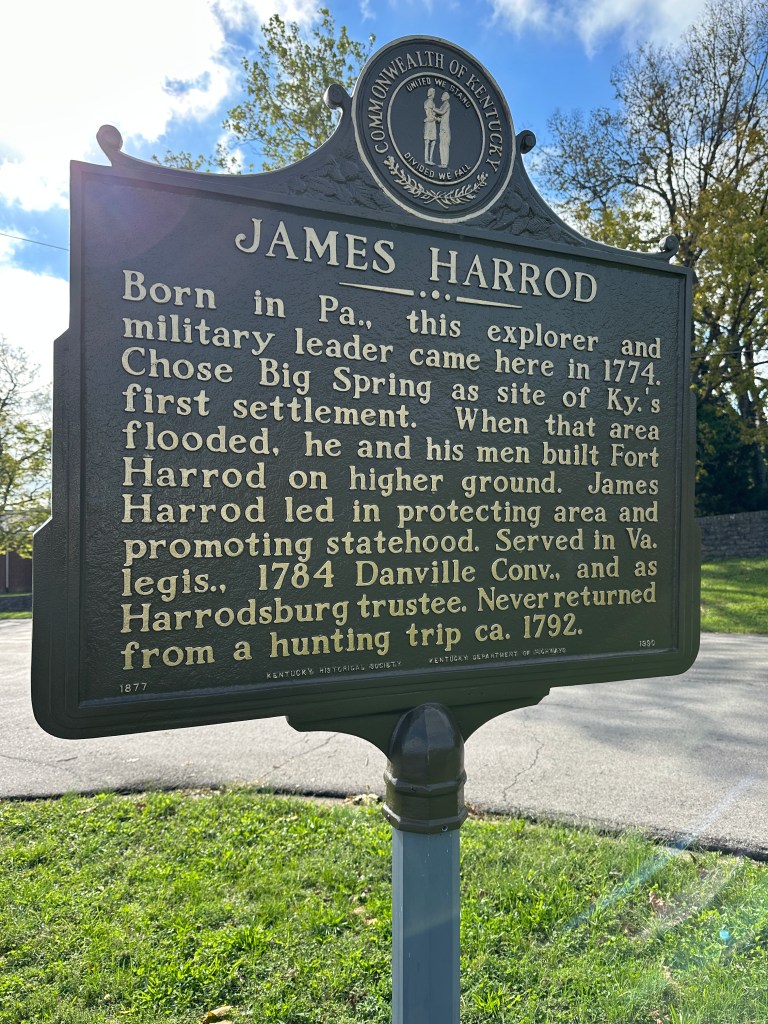
The founder of Harrodsburg is not buried here. 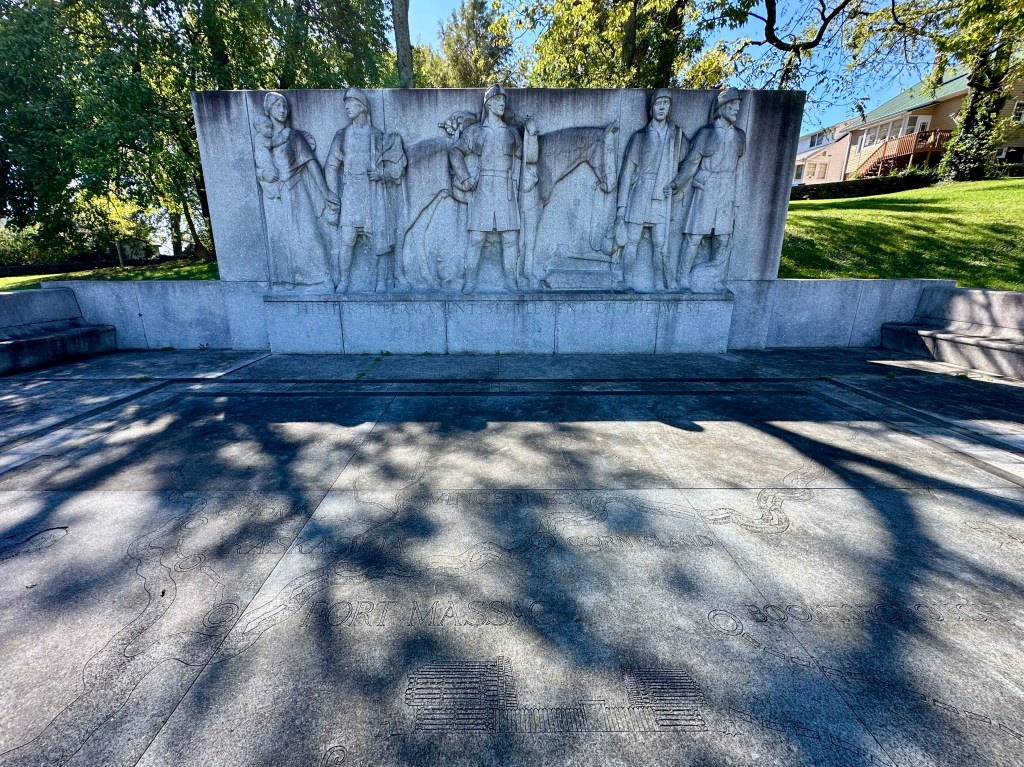
A monument to the Harrodsburg pioneers. 
The largest osage orange tree in the U.S. 
Old Fort Harrod State Park is worth a visit. 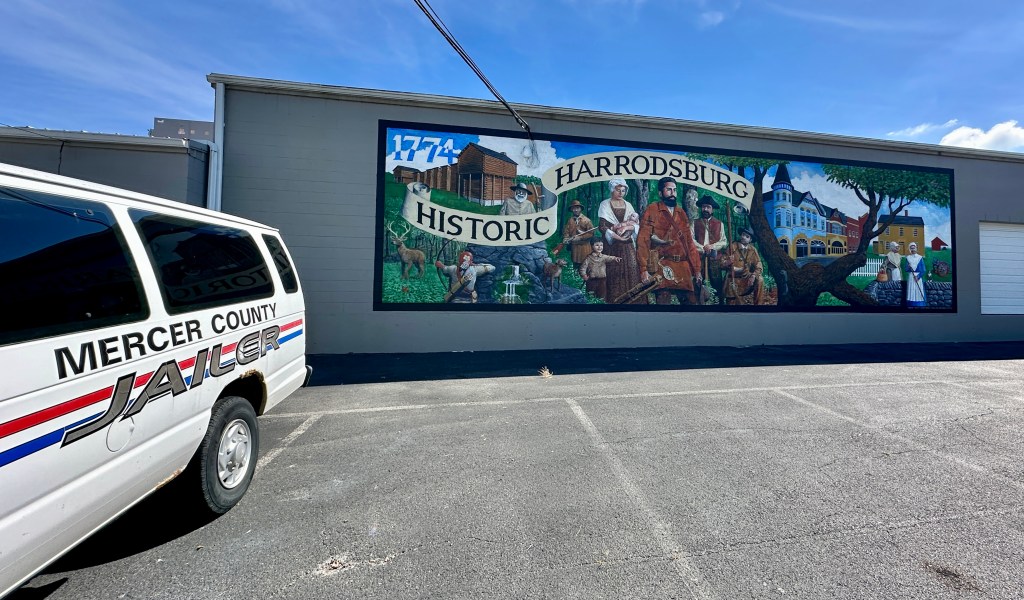
Pleasant Hill – A Quest for Simplicity and Perfection
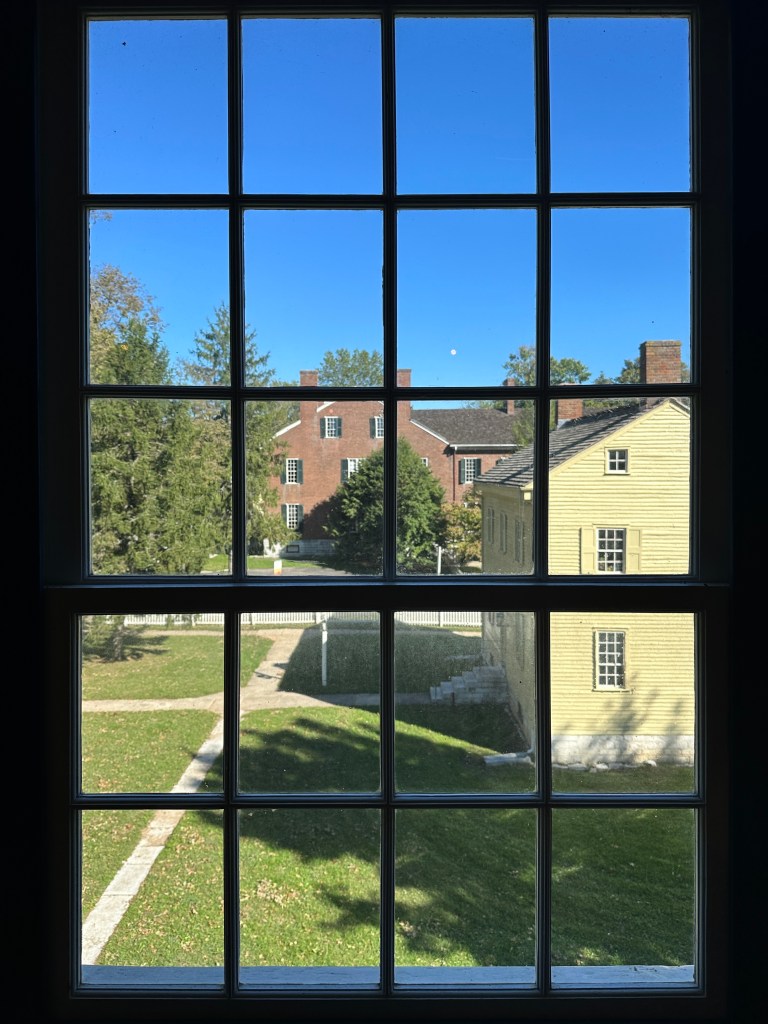
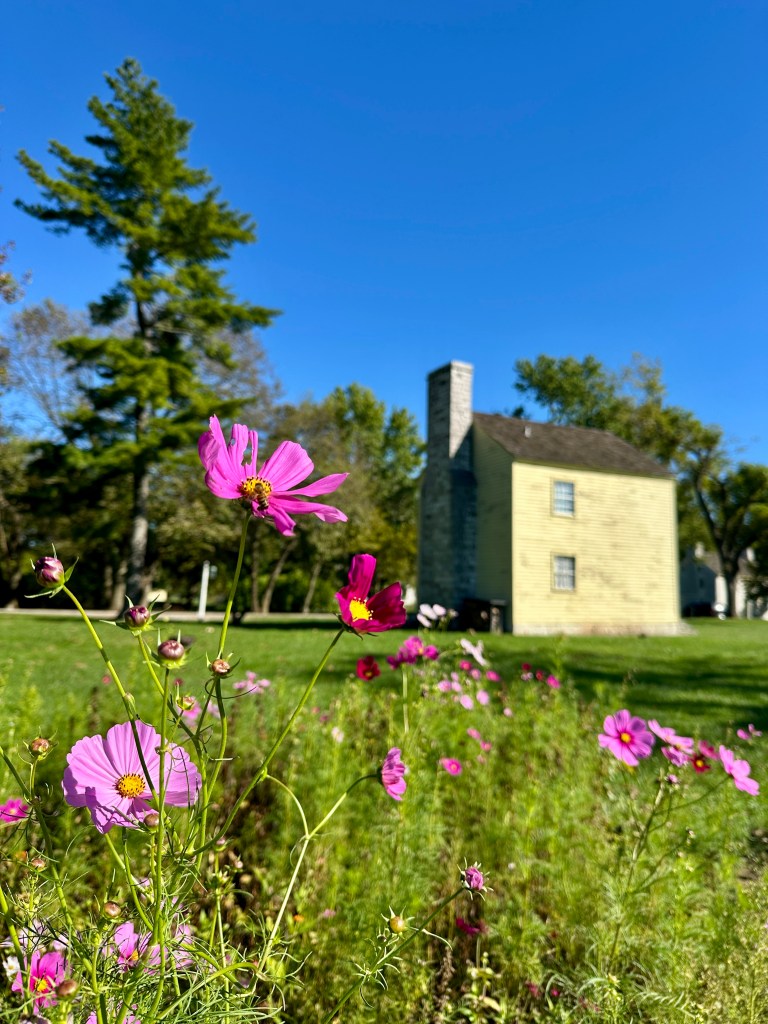
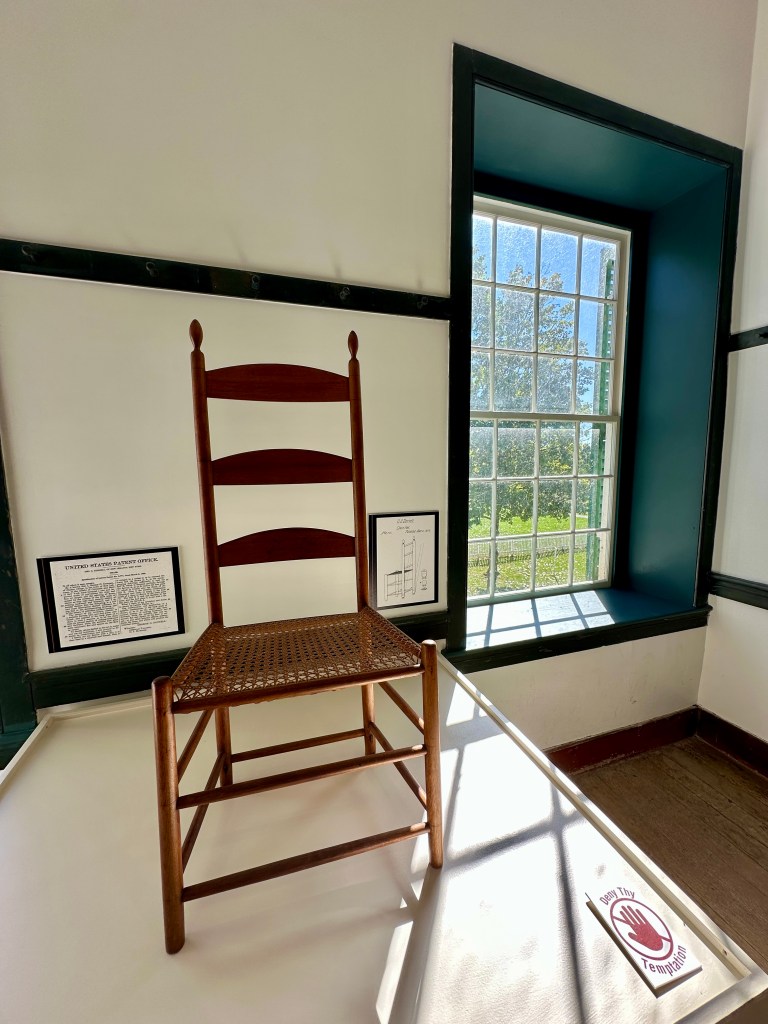
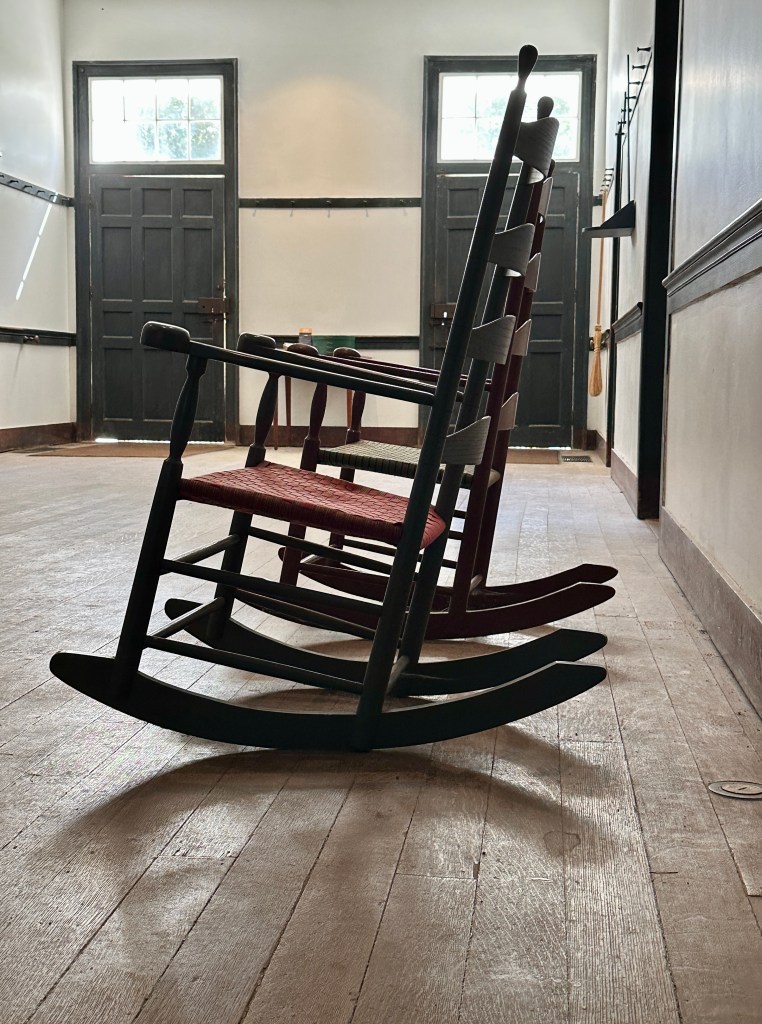
Just up the road away from Harrodsburg was a farming community called Pleasant Hill. As we hear more stories from around this country, what strikes us is that so many of them began with religious persecution toward a dissident group of people in another country that ultimately led them to this country. In 1774, a rag tag group of nine members of the United Society of Believers in Christ’s Second Appealing came here from England to begin a new life in the New World. Their leader, Mother Ann had a vision of Christ’s second coming in the form of a woman.
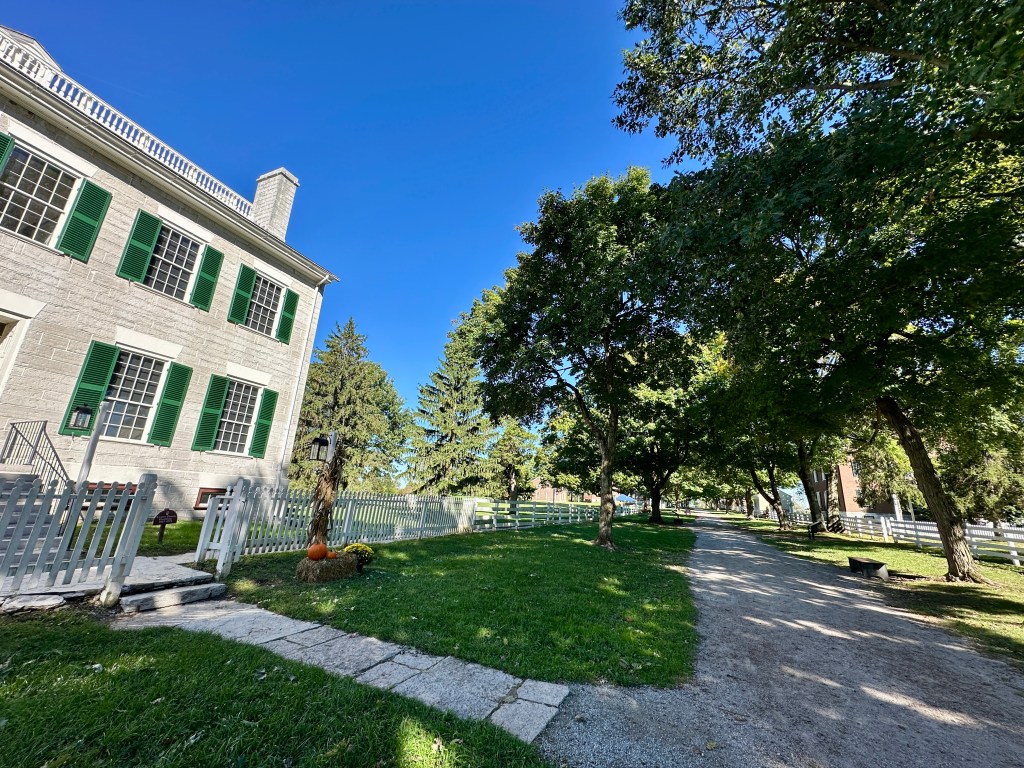
The group grew in number and spread out to New York, Ohio and eventually Kentucky. They were given the name ‘Shakers’ because of their ecstatic and spontaneous movements performed during worship. That’s not what makes the Shakers such an intriguing community, rather it is the contrariness of their erratic gyrations to the simplistic and orderly life they led.
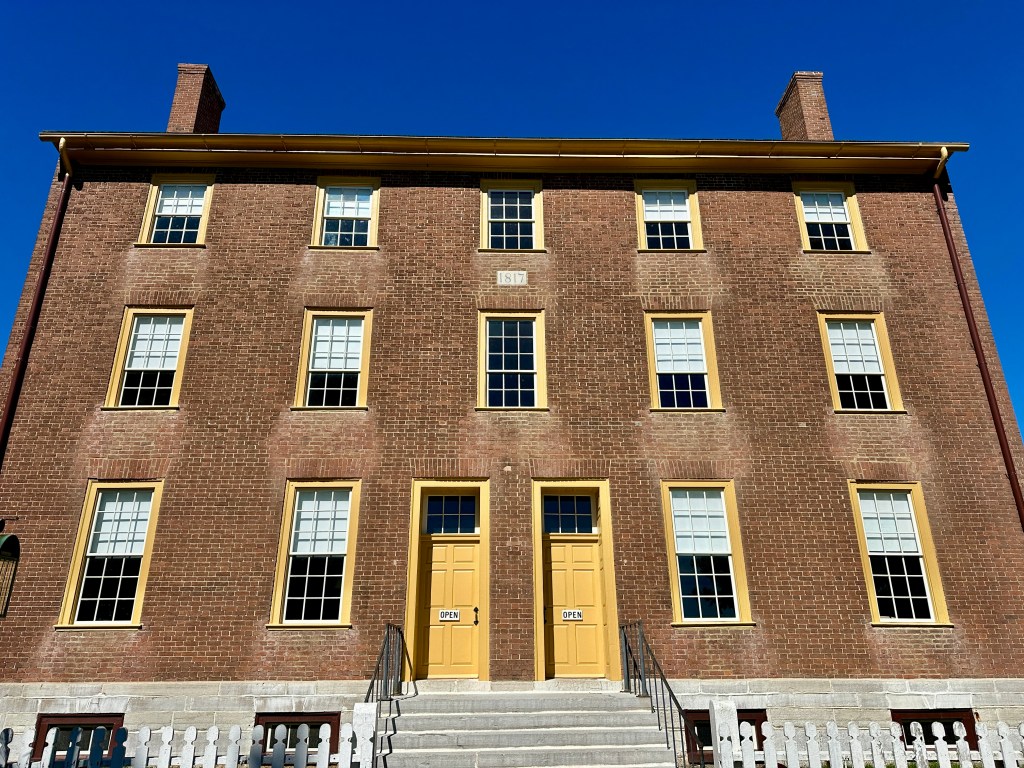
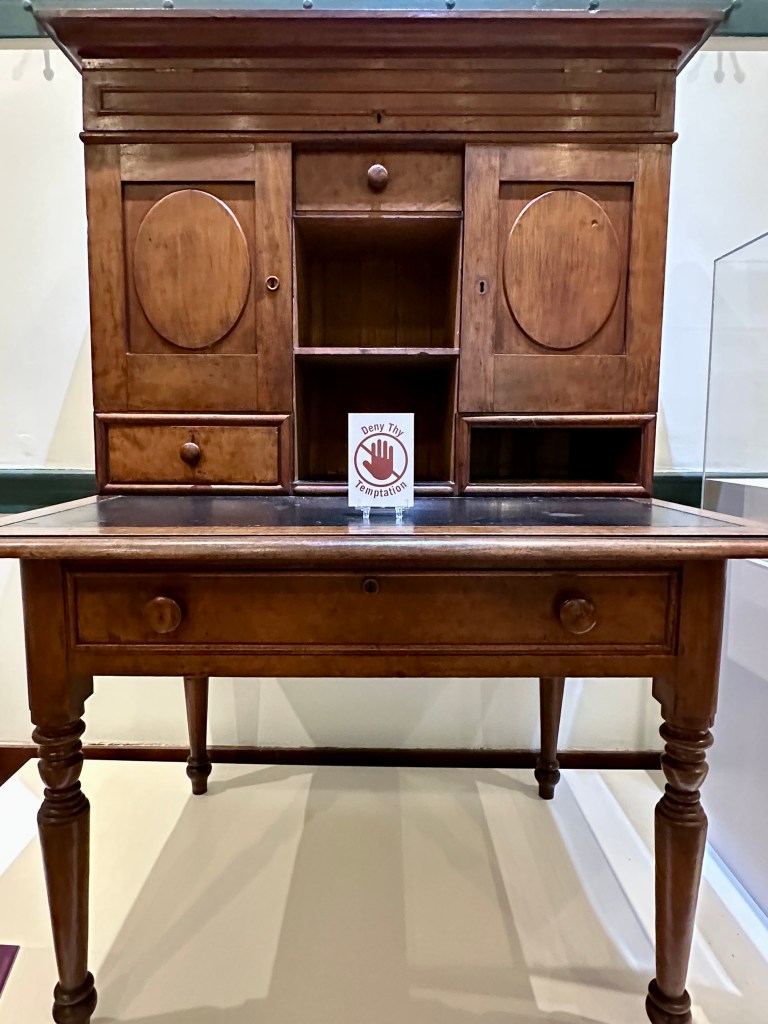
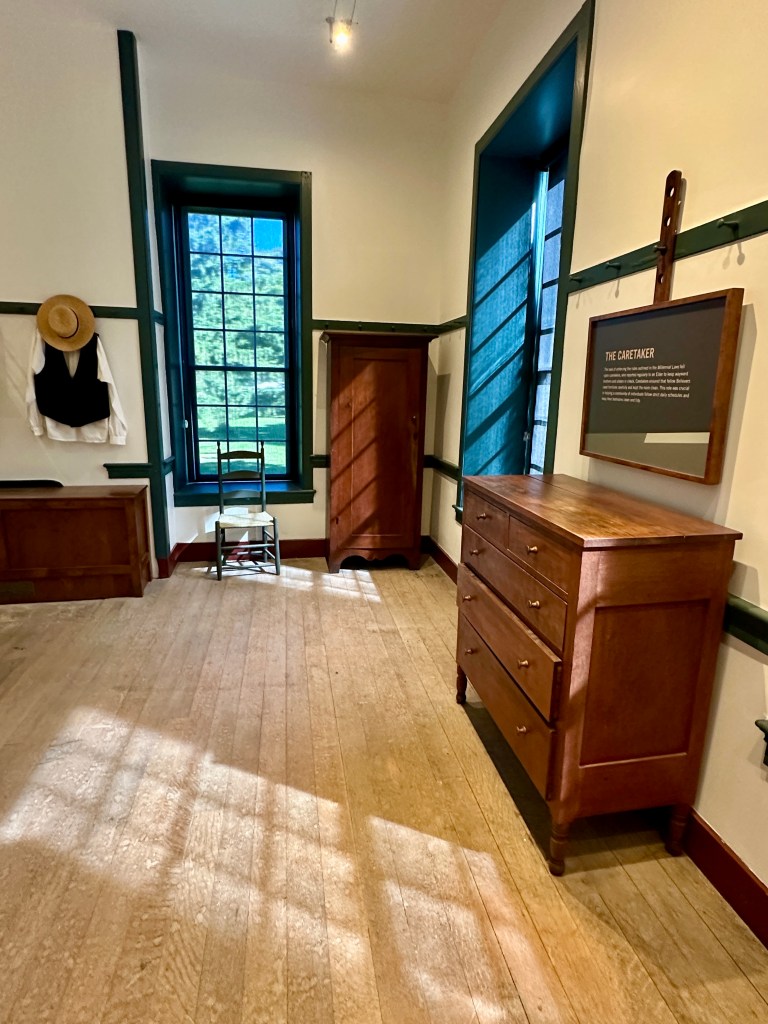
One could argue that the celibate life of the Shakers contributed meaningfully to the innovativeness and sustainability of their community. Women lived on one side of a building, men on the other – and together they were leaders, teachers, builders, craftsmen and women, and artists. Today, the term ‘Shaker’ is synonymous for excellence in craftsmanship.
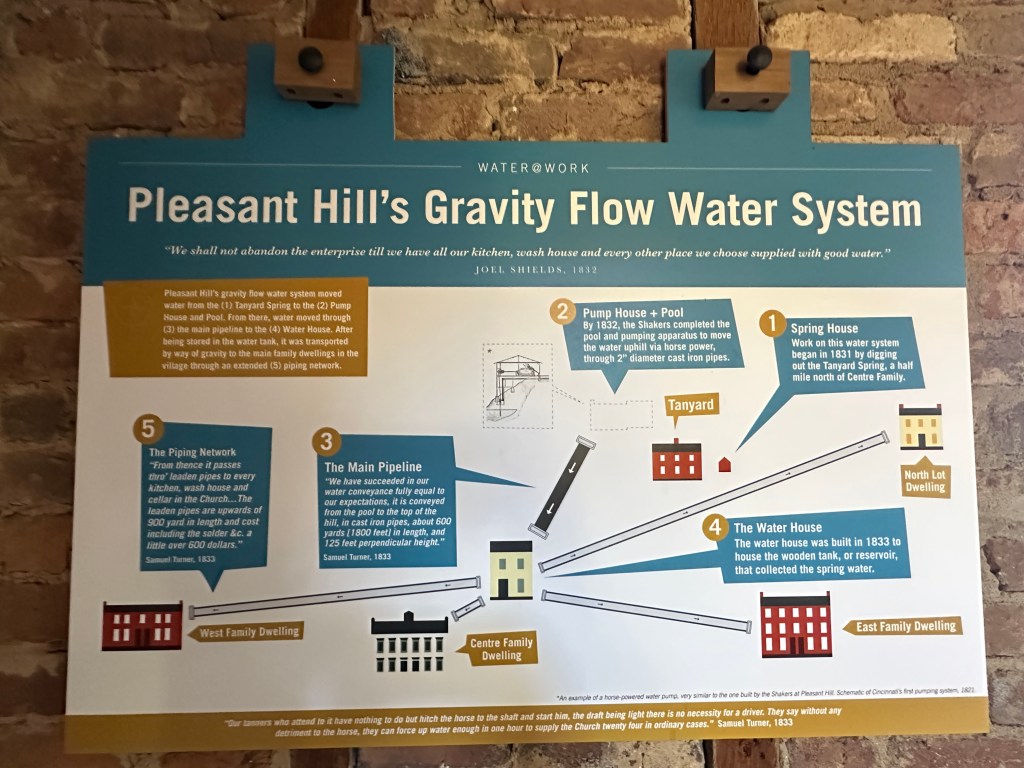
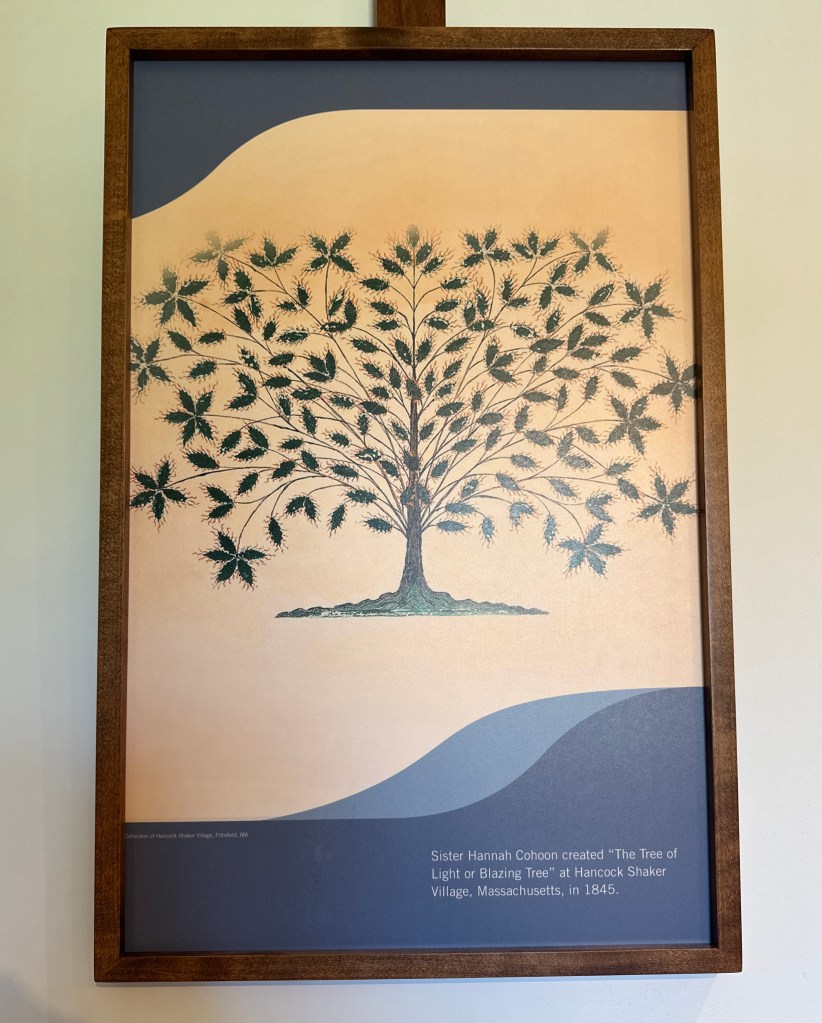





There you have it – three distinct stories from Kentucky’s central region. Well worth your time to visit!


 Changing Views From Our RV