
Bucked off a horse many years ago, I have a healthy fear of the large animals. But over the years, my respect and admiration for them has grown. In fact, one of my most memorable and profound wildlife encounters as a photographer occurred in Theodore Roosevelt National Park where I spent a few hours photographing a herd of horses, including a day-old filly named Oakley.

Horses exude a powerful beauty and for that reason hold a high position of symbolism from the beginning of recorded history. And it is not an understatement to say that the domestication of the horse contributed greatly to the progress of many societies as well as the demise of others. Mankind’s relationship with horses is a complex one and even though our dependence on them is not as great as it once was in this country, the horse remains essential to many.
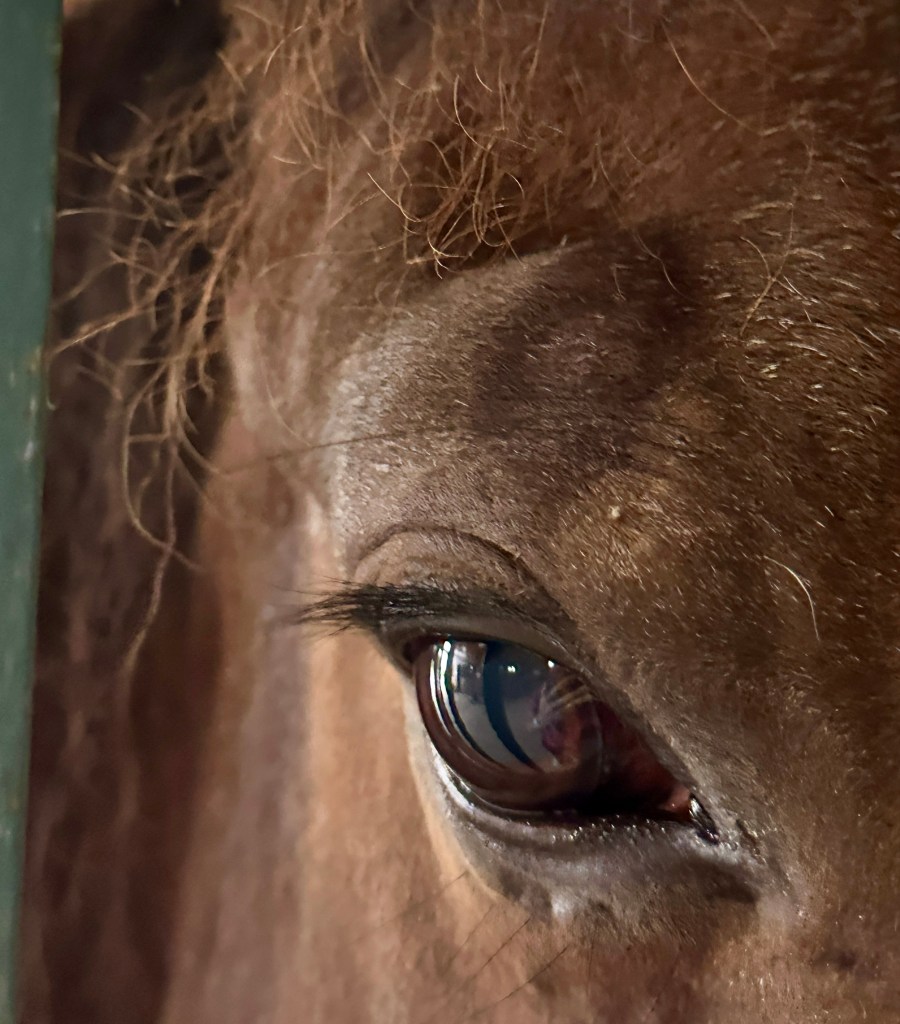

Which brings us to Kentucky’s horse country. Except for driving through it, Kentucky has been largely ignored when we create our travel itineraries. This year we decided to fix that and spend some time in the bluegrass state beginning with the Kentucky Horse Park “dedicated to man’s relationship with the horse”.

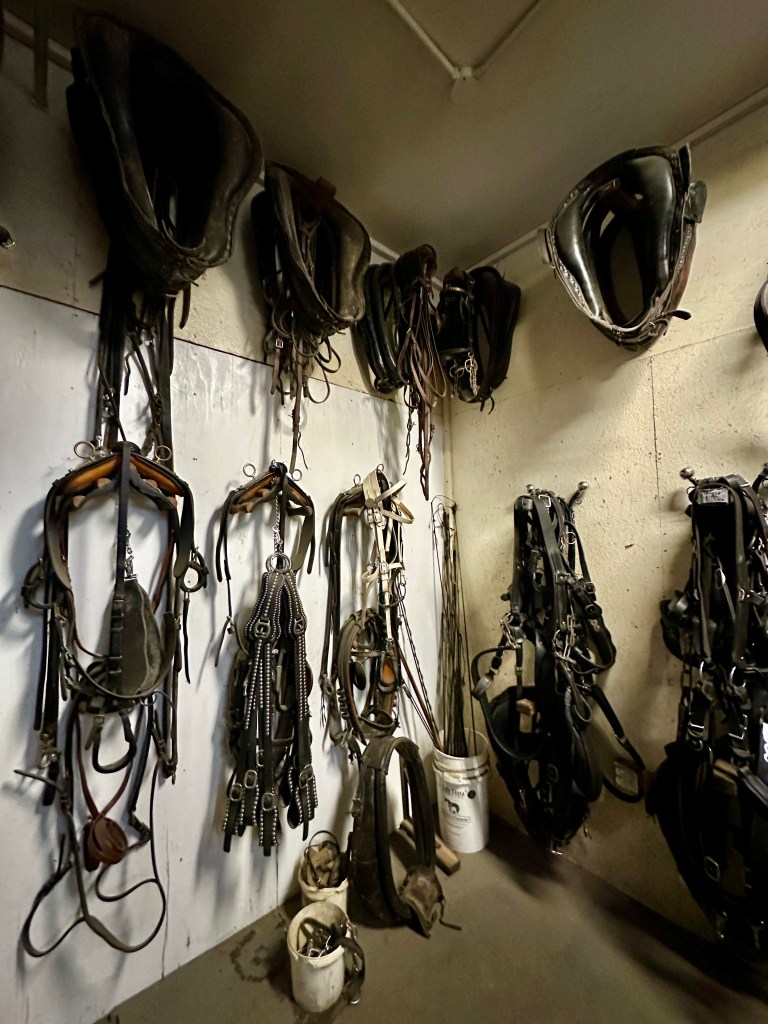
Even if you are not ‘a horse person’, it is quite likely you have respect or fascination for horses, domesticated and wild. And even if you can’t muster a stirring emotion toward the animal, you may at least find Kentucky’s horse country worth visiting for its bucolic farmland and its history. And that’s really what brought us here – it is an interesting part of our country’s history. Which begs the question – how did central Kentucky become renowned for its horses?


Probably the most logical reason is that Kentucky’s climate and limestone-filled hills provides plant foods rich in calcium. Horses thrive on that (and so does bourbon made from spring water, by the way). Another reason is that some of the early pioneers that settled in Kentucky were wealthy landowners that imported racing horses from England. One of them built Kentucky’s first racetrack and to protest England, ran the horses counterclockwise because in England horses ran clockwise.

And yet another reason horses became so important to Kentucky was the big push in the Northeast states (where horse racing was popular in the early 19th century) to make betting on horseraces illegal. While many states began banning horse races, Kentucky did not. Consequently, millionaire gamblers came to Kentucky, built mansions in the central area and brought major horse breeders with them. The first Kentucky Derby was held in 1875 at Churchill Downs.


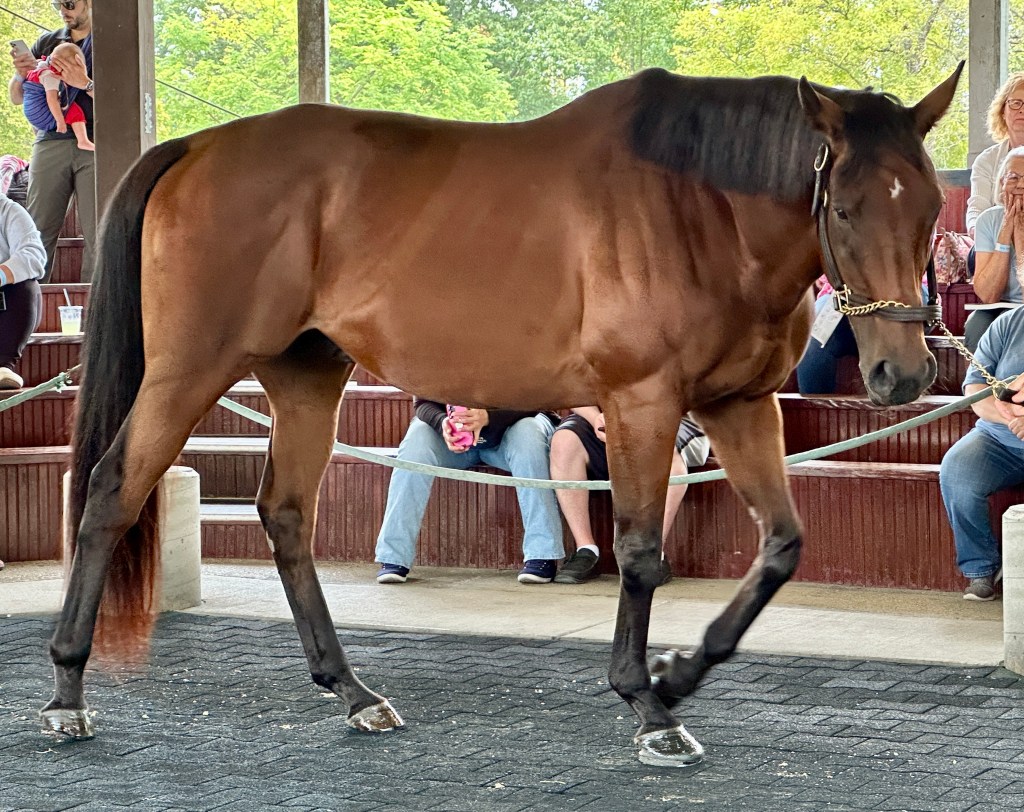
Our campground was located within the Kentucky Horse Park which made it convenient for us to spend a day around horses. On any given day, several events are scheduled including the Walk of Champions, Parade of Breeds Show, Draft Horse demonstrations and a tour of the park on a horse-driven trolley. Horses were on display everywhere and we could visit many of them in the stables. And at the end of the day, all the horses are let out into the surrounding pastures where they can enjoy the release from humans after a long day of work. Well trained, well kept, well loved.

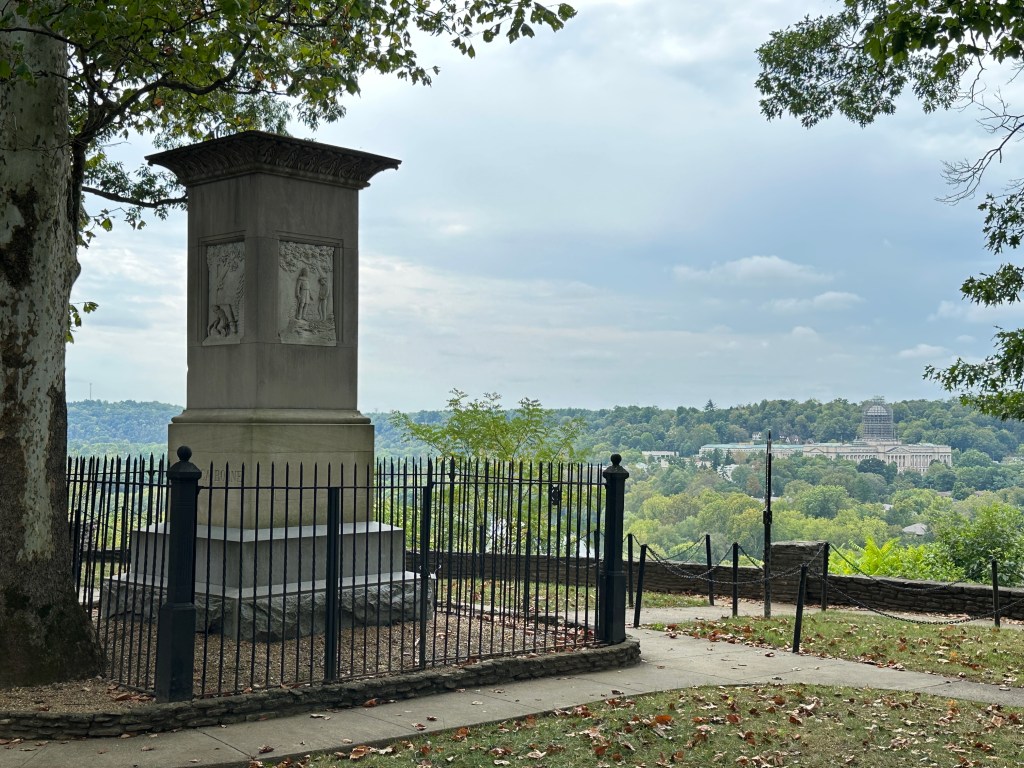
Our short stay at the Kentucky Horse Park also gave us the opportunity to visit Frankfort, Georgetown and Lexington, all within short driving distances from our campground. Frankfort is Kentucky’s capital city, and if you have been following our travels, you know we can’t pass up a state capitol building. A day in Frankfort gave us a chance to cross another capitol building off our list, and visit Daniel Boone’s burial place for the heck of it.
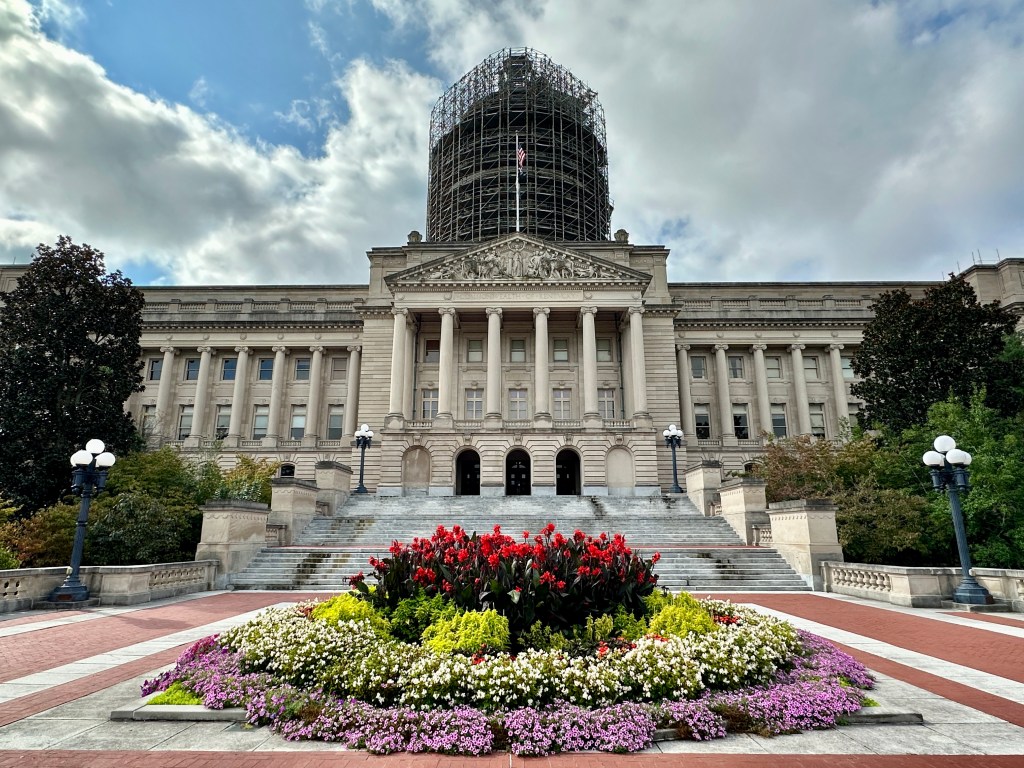
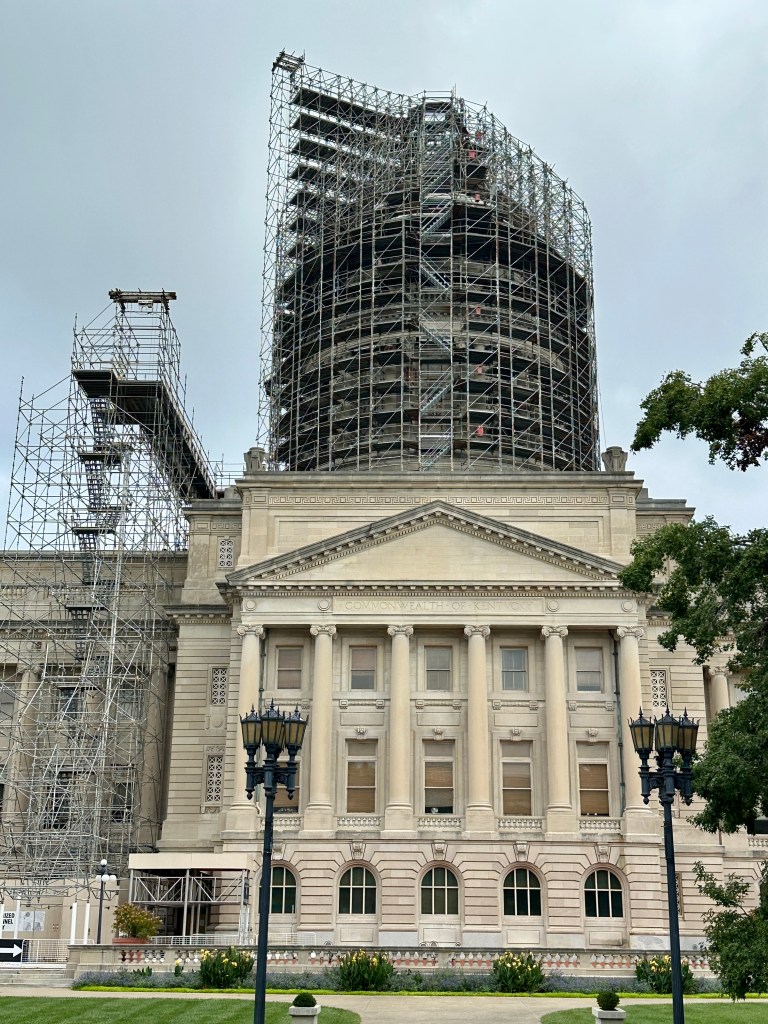

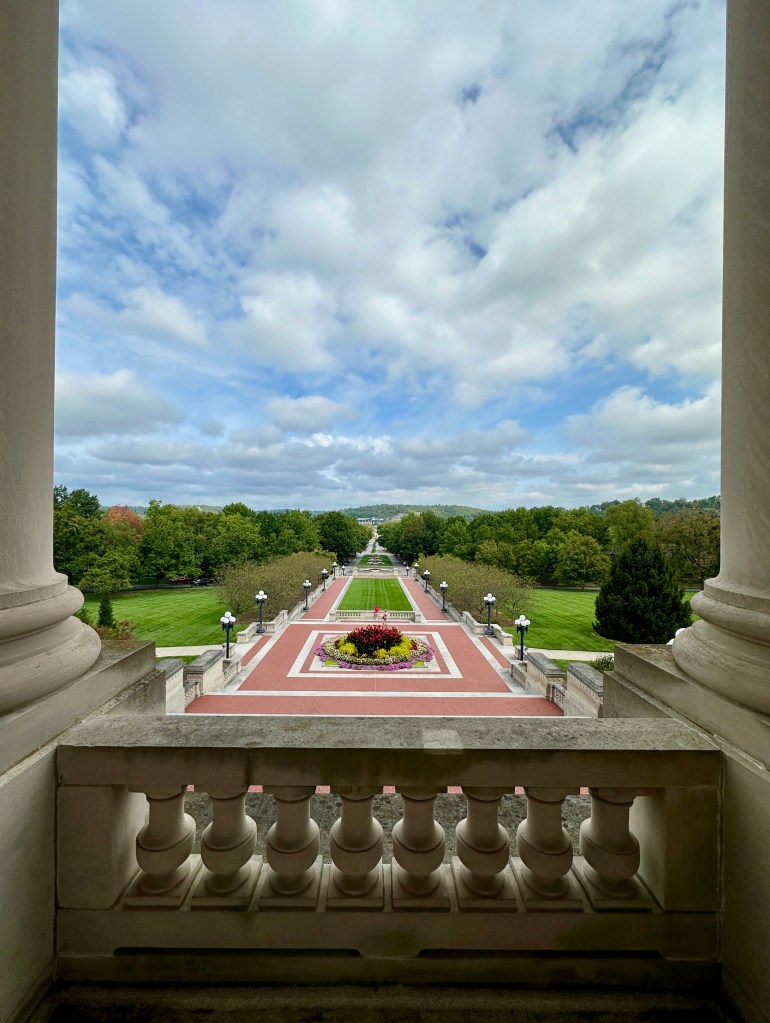

The grand corridors feature 36 imposing columns of Vermont granite and delicate art glass skylights. 
The Supreme Court room is noted for its solid Honduras mahogany paneling. 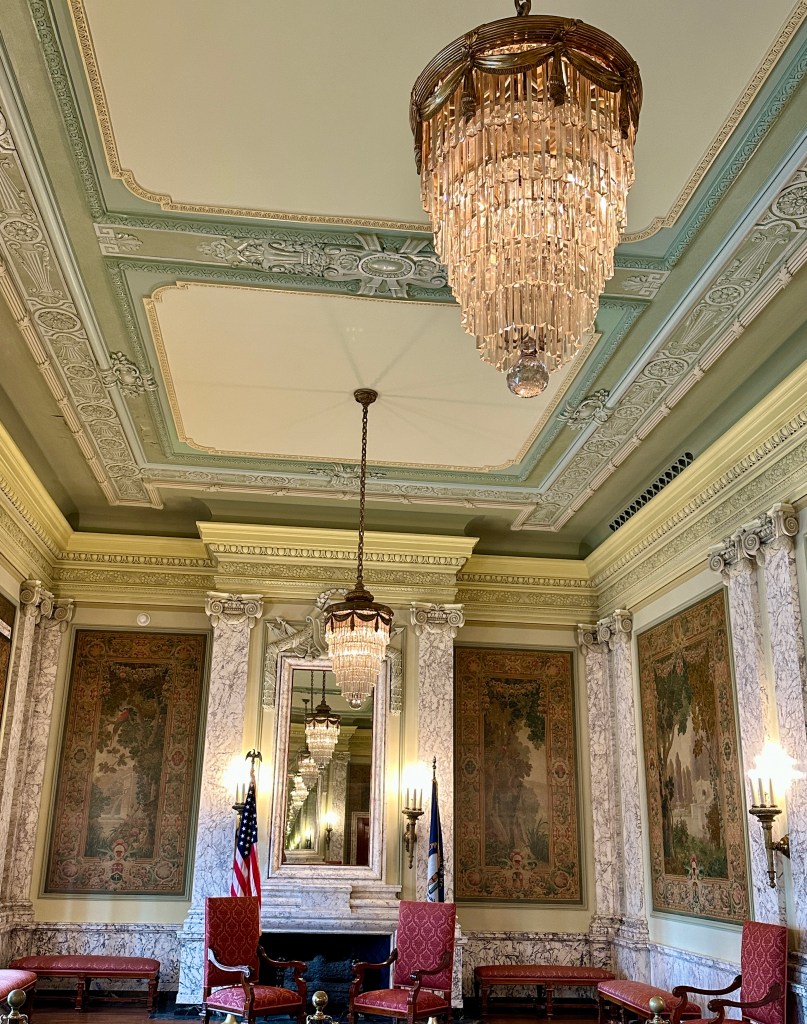
The walls of State Reception Room are decorated with murals, hand painted to resemble tapestries from the Gobelin Tapestry Guild. 
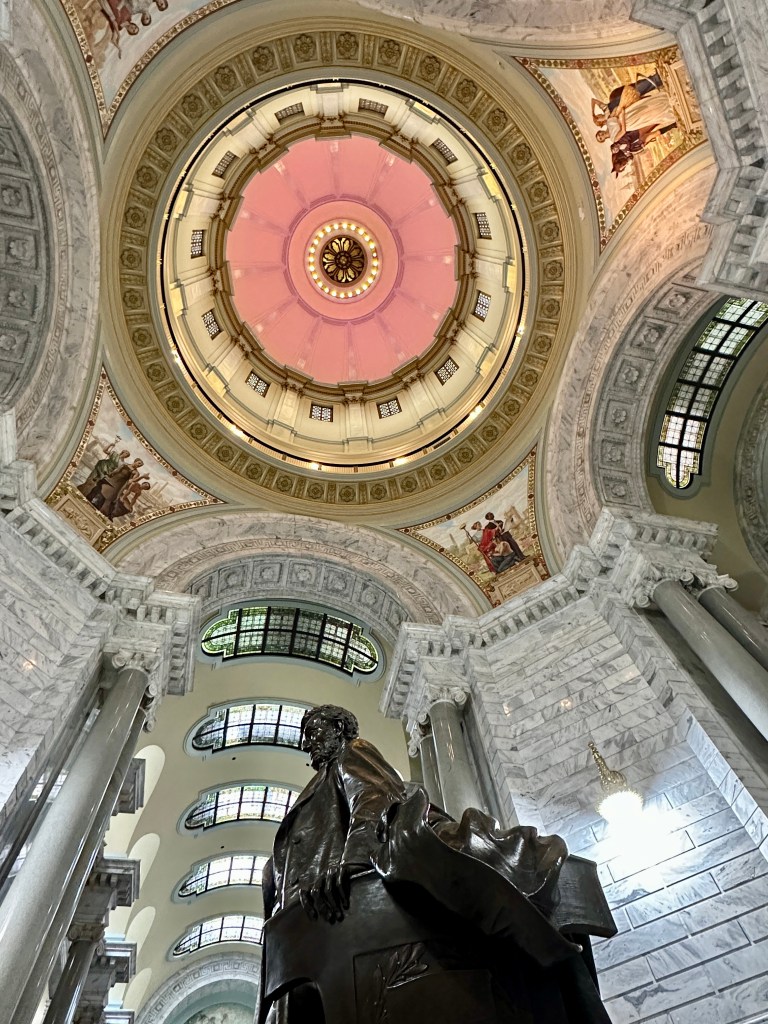
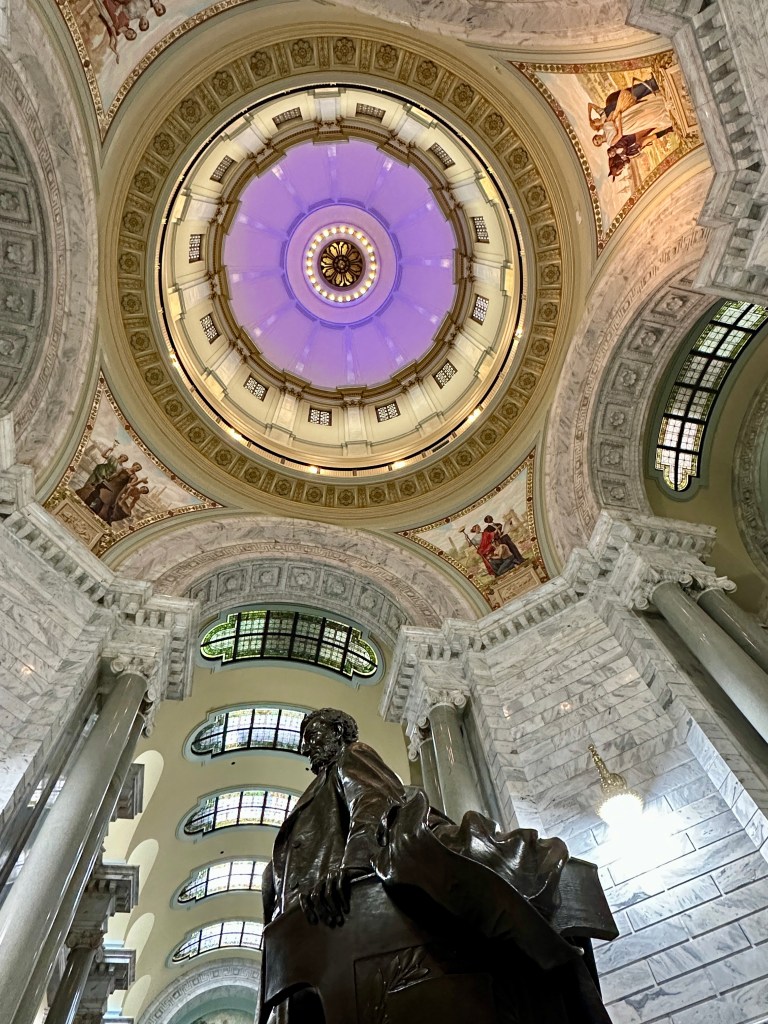
In the center of the rotunda is a bronze statue of Abraham Lincoln. 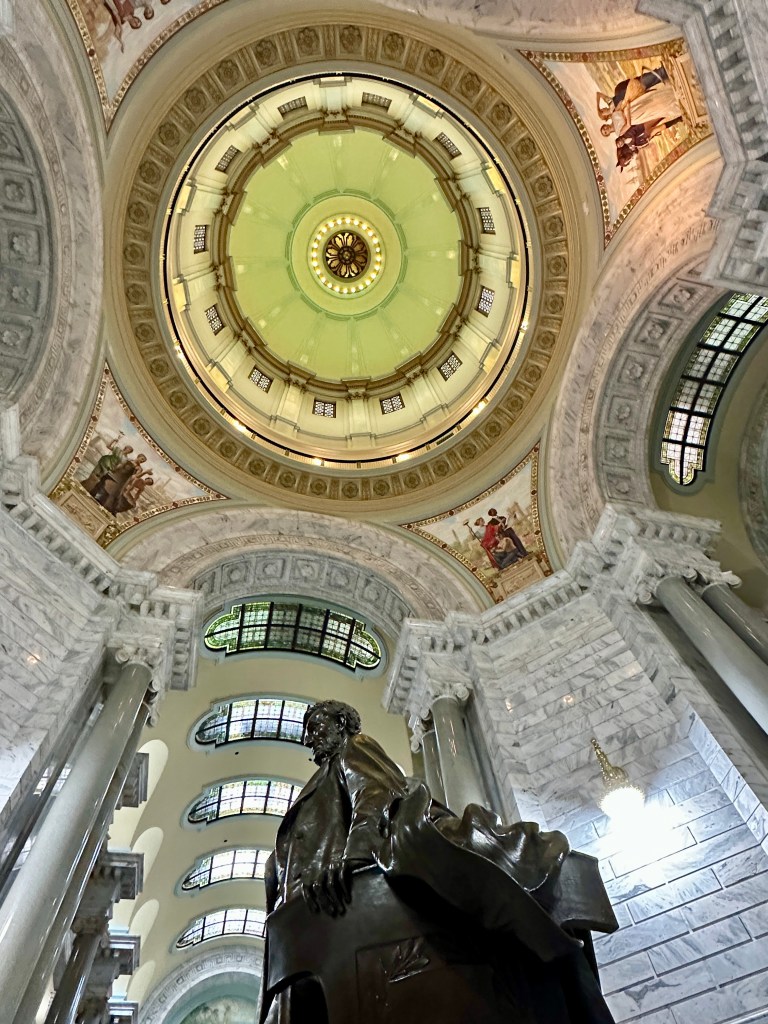

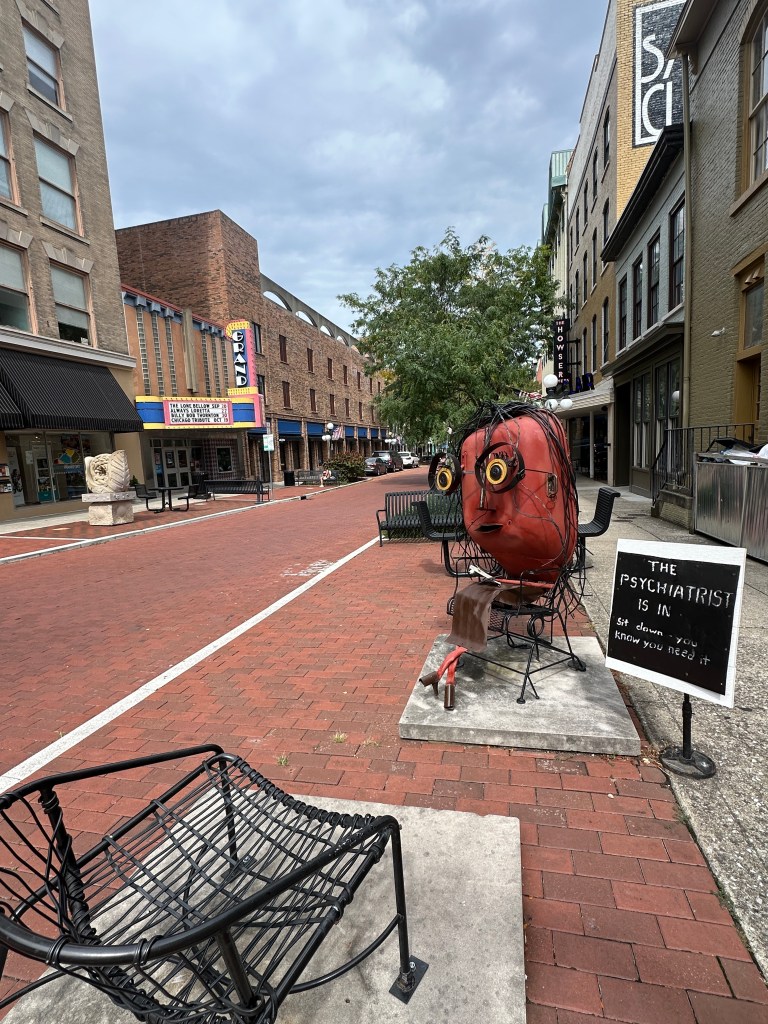
Rain kept us from spending much time in Lexington, but we did get to the downtown Central Library. Throughout our travels, we sometimes take advantage of community public libraries that provide reliable WiFi, but this time, we came to the Central Library for something different. In the library’s spectacular rotunda is a Foucault pendulum and equine frieze by Adalin Wichman. Above is the world’s largest ceiling clock.
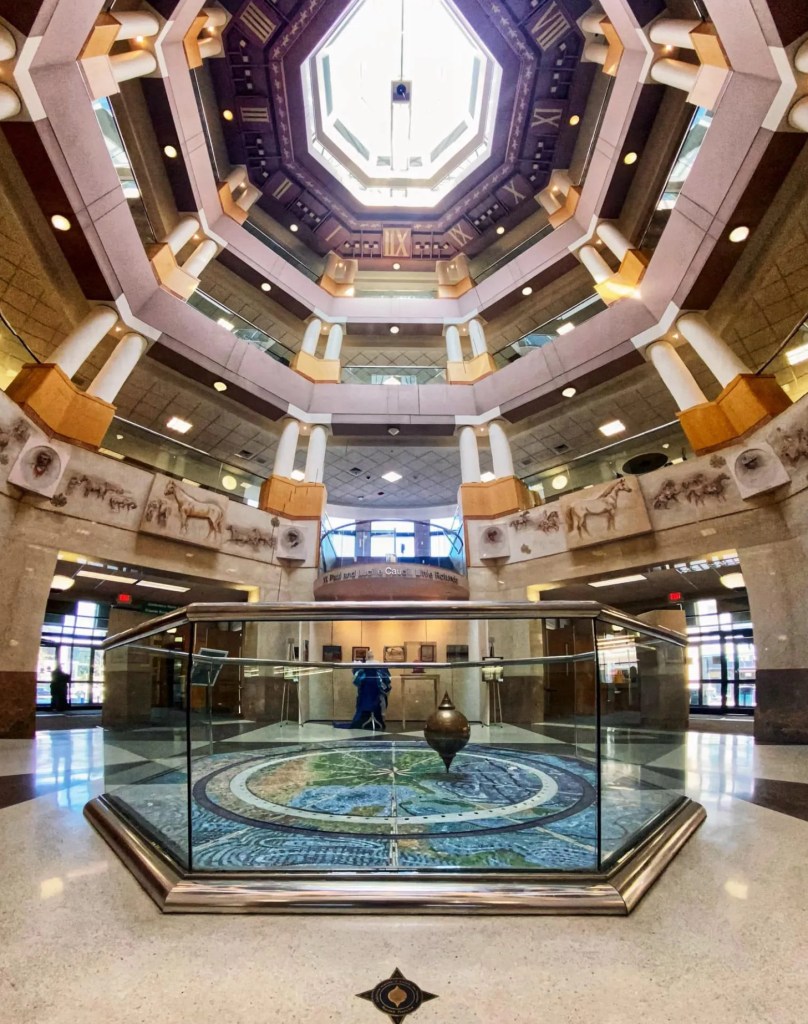

Unfortunately, weather factors into everything when traveling. On the day we arrived at Kentucky Horse Park, a low pressure system was forming in the Caribbean Sea. Before we left on September 26 to head south, Hurricane Helene had formed. Would this storm affect our travels? Hopefully not as we have more Kentucky to explore. Stay tuned.

Check out our blog about my encounter with the horses in North Dakota and see many more photos of the herd.

 Changing Views From Our RV
Horses are such majestic creatures: such power and such restraint. They are to be feared and awed (although, like you, I tend to have more fear than awe). Did you make it out to the Old Friends horse sanctuary? They house (and bury) old race horses. Many interesting stories there. As a side note: not that I am a “flat-earther”, but my recollection is that the Foucault pendulum is designed to show the rotation of the earth around an axis (that’s why the pendulum spins in the same direction as the rotation of the earth), it doesn’t necessarily prove the overall shape of the earth (but I could be wrong).
LikeLike
Good points, the pendulum may not prove earth is round, but the earth photos from space prove Foucault got it right! But then again, were those real earth shots? Maybe the earth is cylindrical, like a tic tac. 🤔😆
LikeLike