
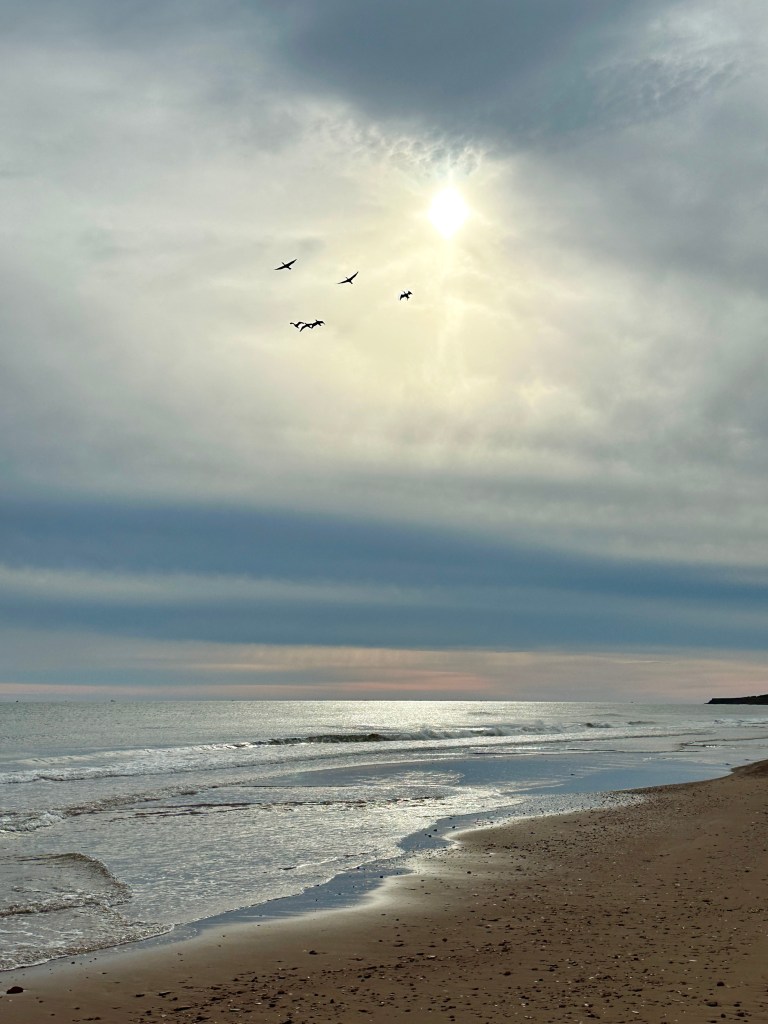
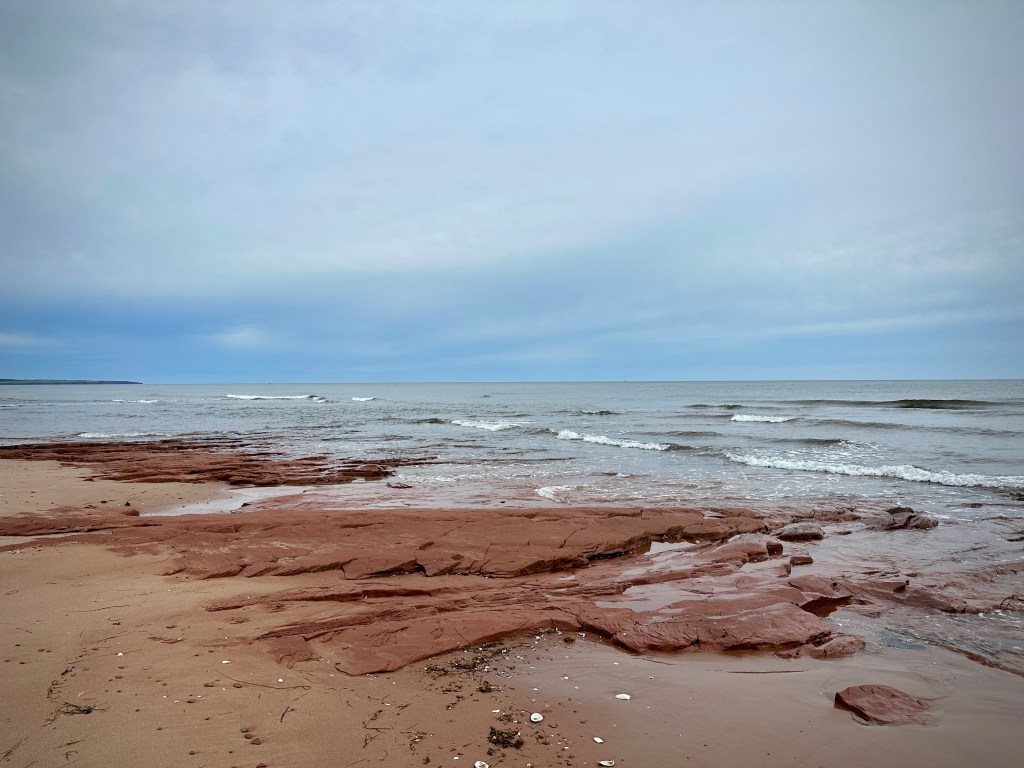
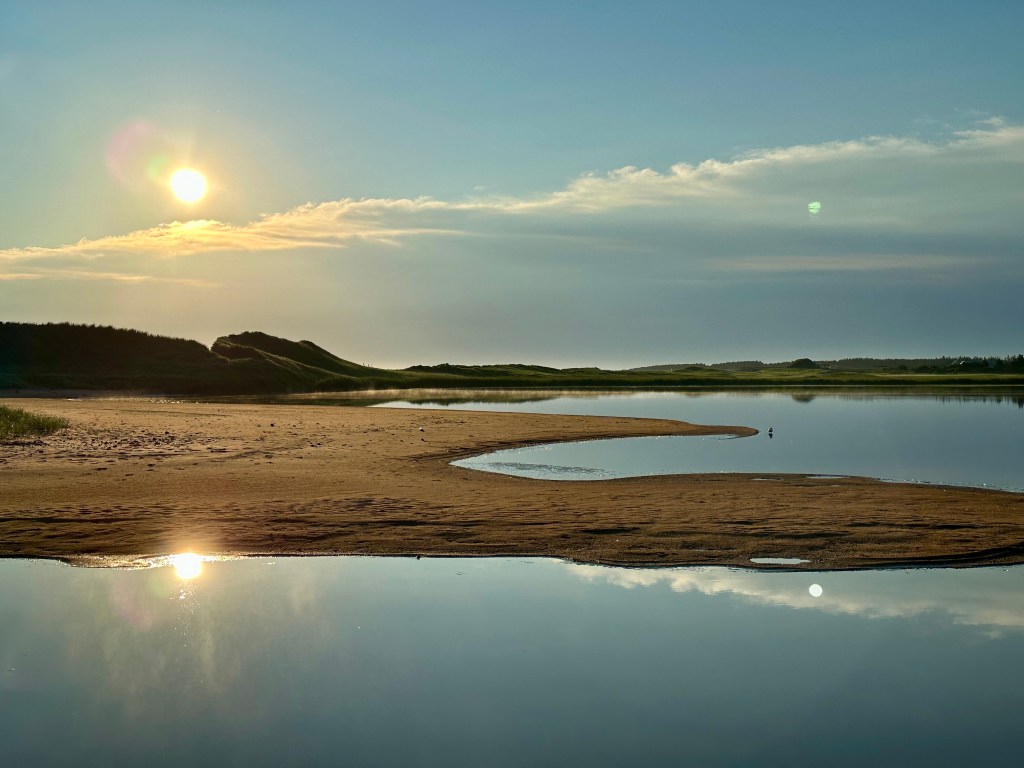
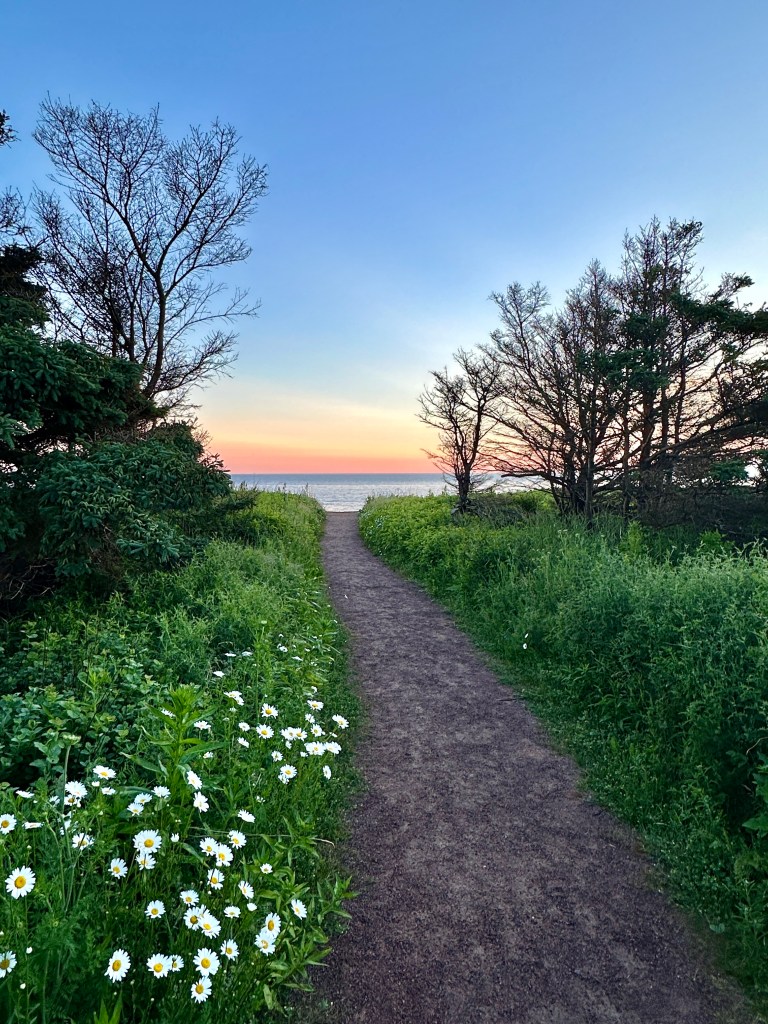
Upon arriving at our campsite in Cavendish National Park, we walked a short distance to the shoreline before the sun disappeared below the horizon. Having recently read the book ‘Anne of Green Gables’, I thought how perfectly the words of Lucy Maud Montgomery’s describe the coast of Prince Edward Island as I gazed over the Gulf of St Lawrence.
“Down at the base of the cliffs were heaps of surf-worn rocks or little sandy coves inlaid with pebbles as with ocean jewels; beyond lay the sea, shimmering and blue, and over it soared the gulls, their pinions flashing silver in the sunlight” L. M. Montgomery from Anne of Green Gables.

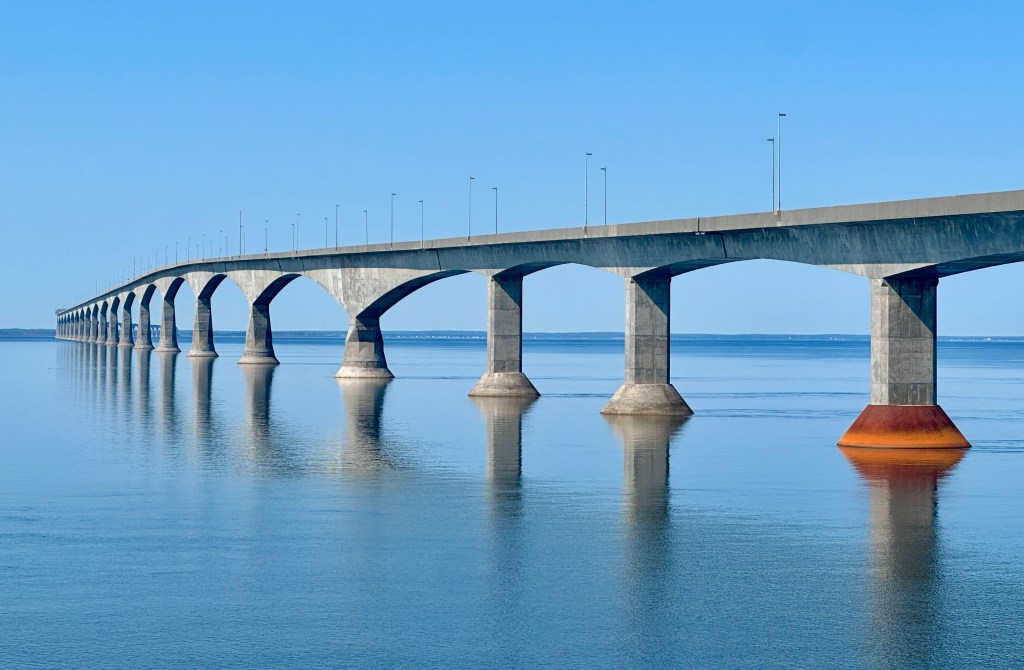
Adjacent to our campground is the village Cavendish, the largest seasonal resort town on Prince Edward Island. Even in the waning days of June when the Canadian summer reluctantly begins, the little community is a busy place full of visitors and seasonal residents. It is a popular vacation destination for Quebec and New Brunswick Canadians, especially following the completion of the Confederation Bridge. Prior to that, vacationers ferried over to ‘The Island’.
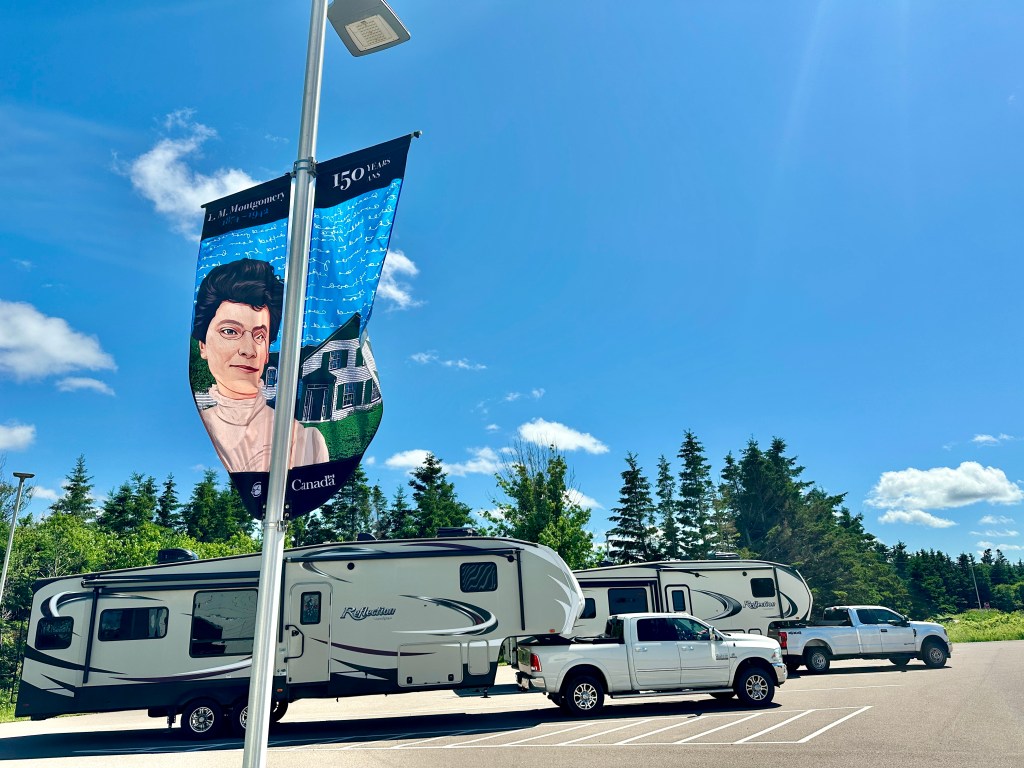
Cavendish was not always that way. Lucy Maud Montgomery wrote her critically acclaimed novel in 1905 while living in Cavendish. Montgomery’s extraordinary talent for describing her bucolic surroundings on the island with such vividness comes out through the mind of Anne Shirley, Montgomery’s beloved protagonist. It took three years before Anne of Green Gables was published, but it was an immediate best seller (and became the most widely read book on the planet), marking the beginning of Montgomery’s outstanding career as a novelist and Cavendish as a resort destination.
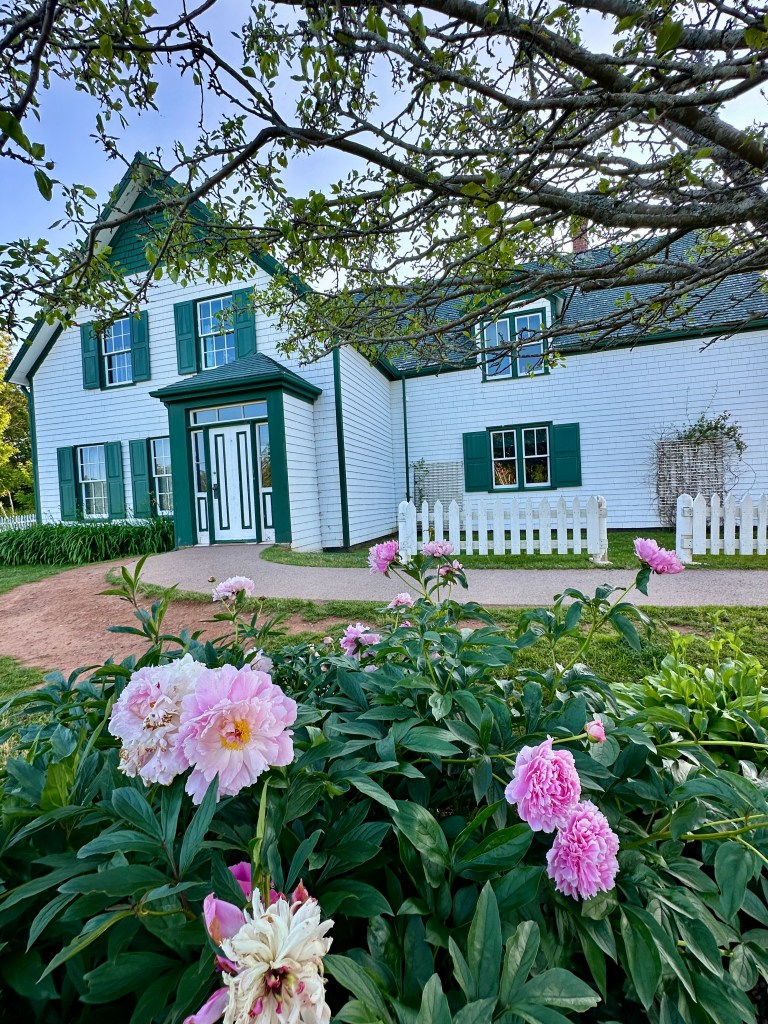
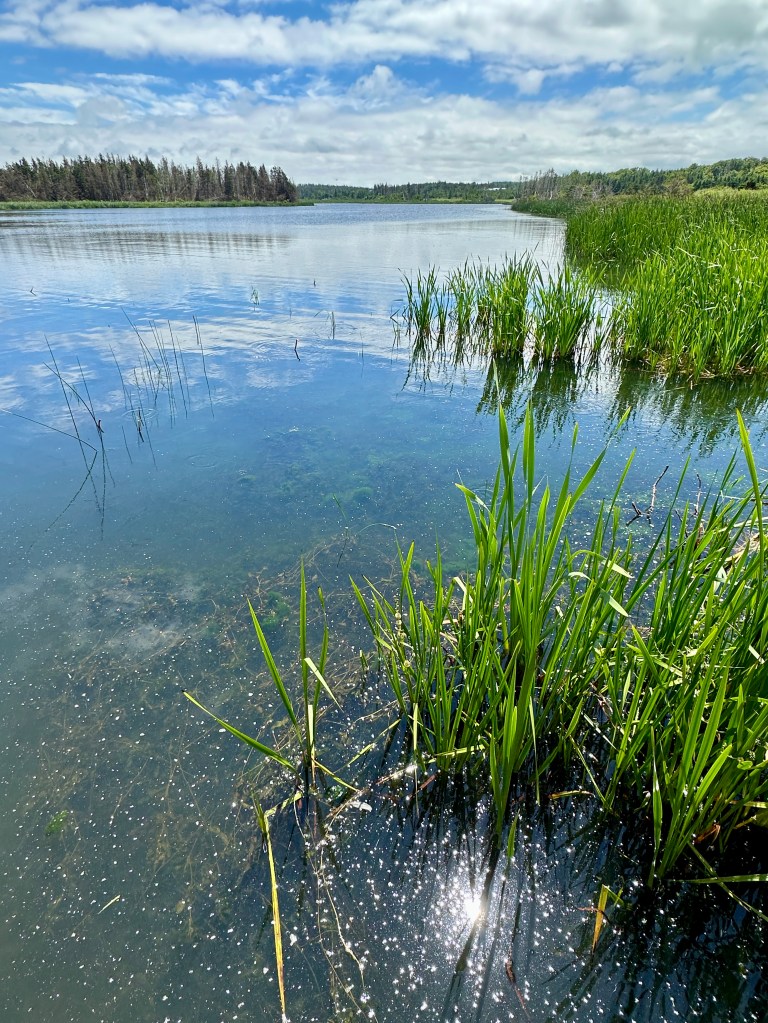
Anne Shirley’s description of ‘The Lake of Shining Water’: “The water was a glory of many shifting hues – the most spiritual shadings of crocus and rose and ethereal green, with other elusive tintings for which no name has ever been found.”
The tourist traps in Cavendish that capitalize on Anne of Green Gables did not appeal to us, although I enjoyed seeing references to the book and the author. If you ignore the souvenir shops, touristy restaurants and the water park, you’ll find the history of Cavendish as the home of one of the world’s most popular novelists to be of interest. The best part of it was the National Park, which thankfully preserved a large section of the coastline.
“Don’t you think it would be nice to wake up at sunrise and swoop down over the water and away out over that lovely blue all day.”



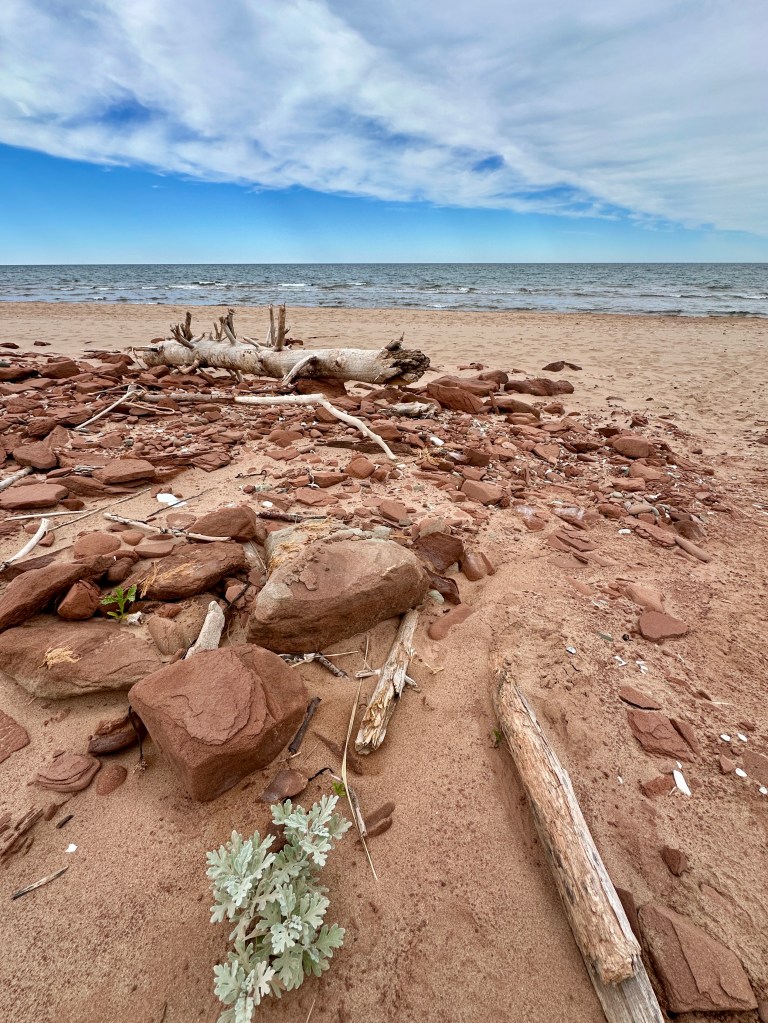
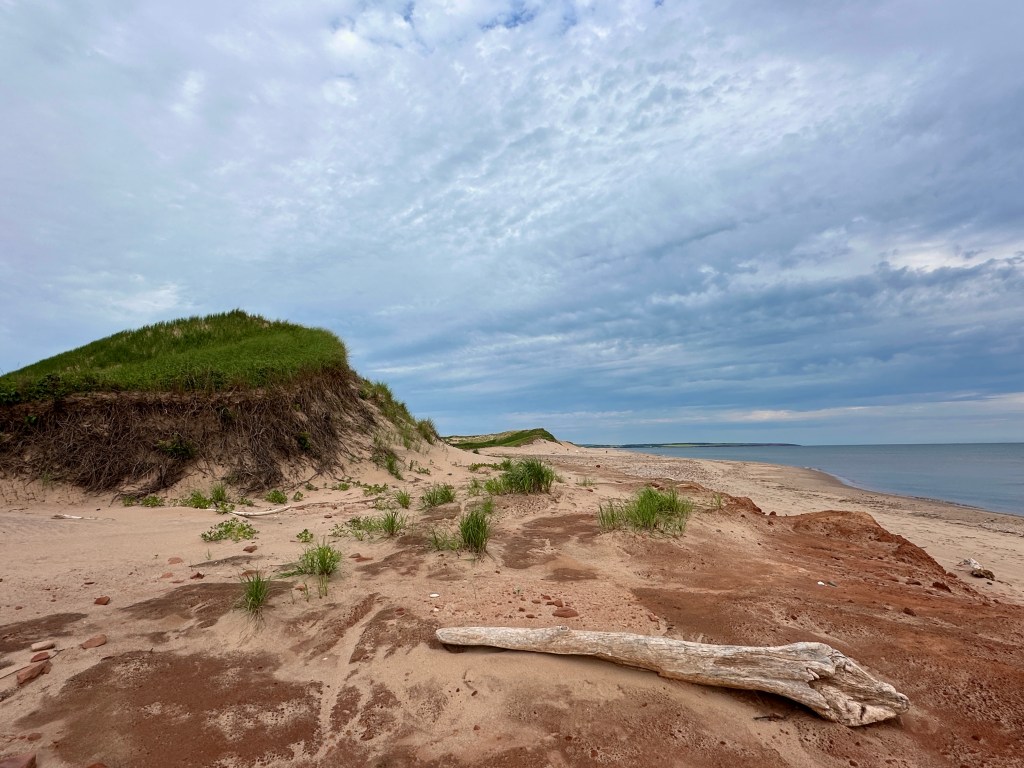


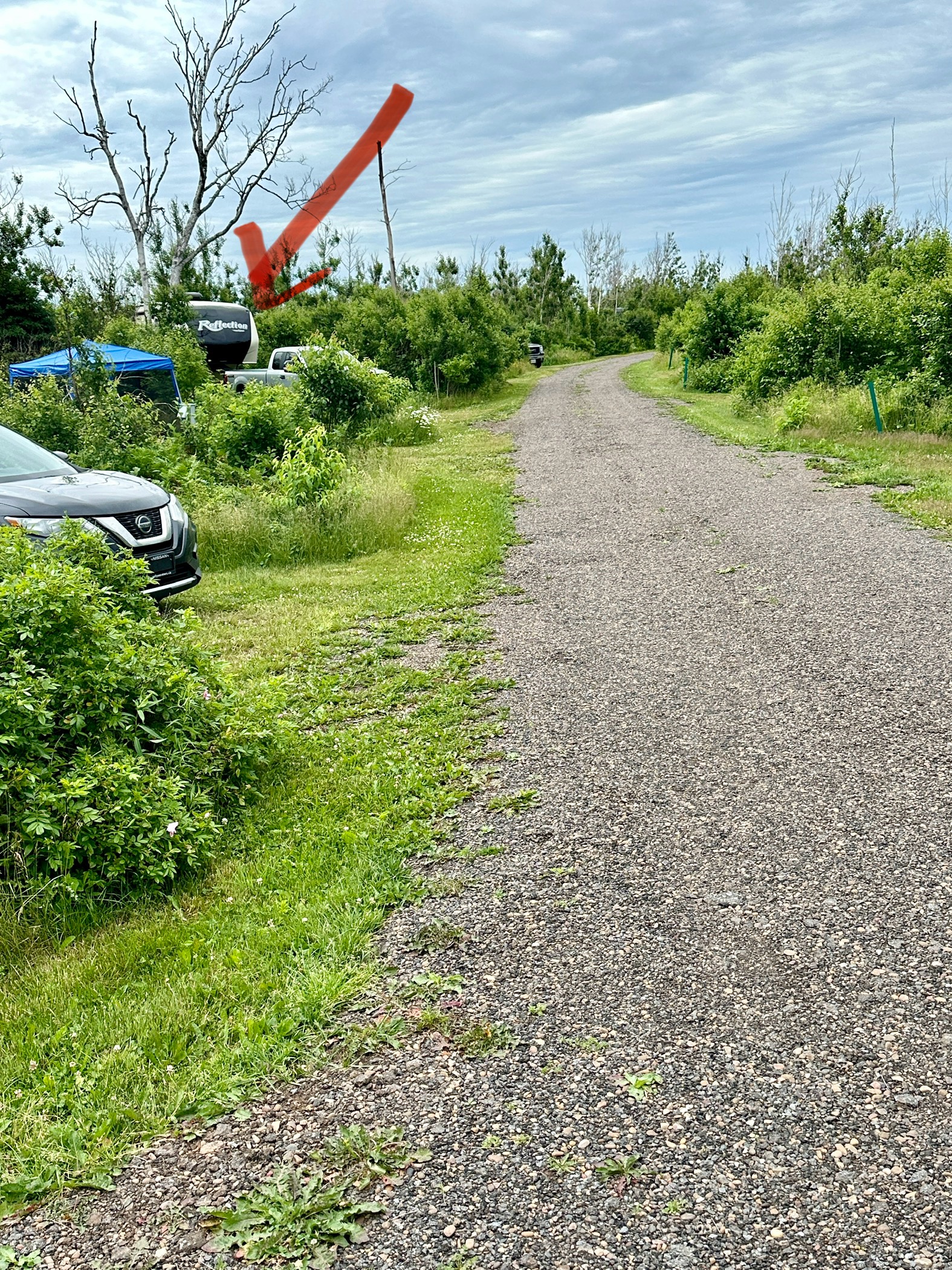
We were also reminded that this is an island that experiences Atlantic storms. After devastating the Bahamas in September of 2019, Hurricane Dorian turned north and continued into Nova Scotia and Newfoundland. In between, it left its mark on PEI as a tropical storm on September 7. Parks Canada evacuated 31 people from the campground due to the storm surge, and later reported that the surge and wind (nearly 100 mph) damaged 80% of the trees and caused 6.6 feet of coastal erosion. The destruction was evident in our beautiful campground on Cavendish Beach that had reopened in 2021. Check out the before and after photos of our campsite.

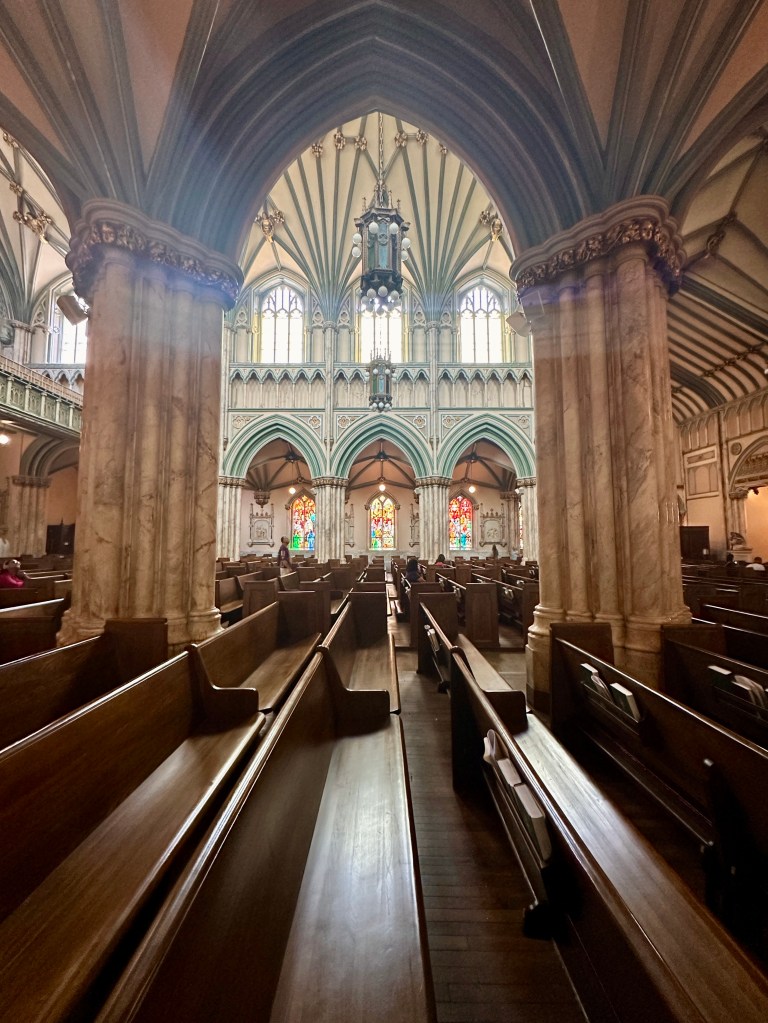
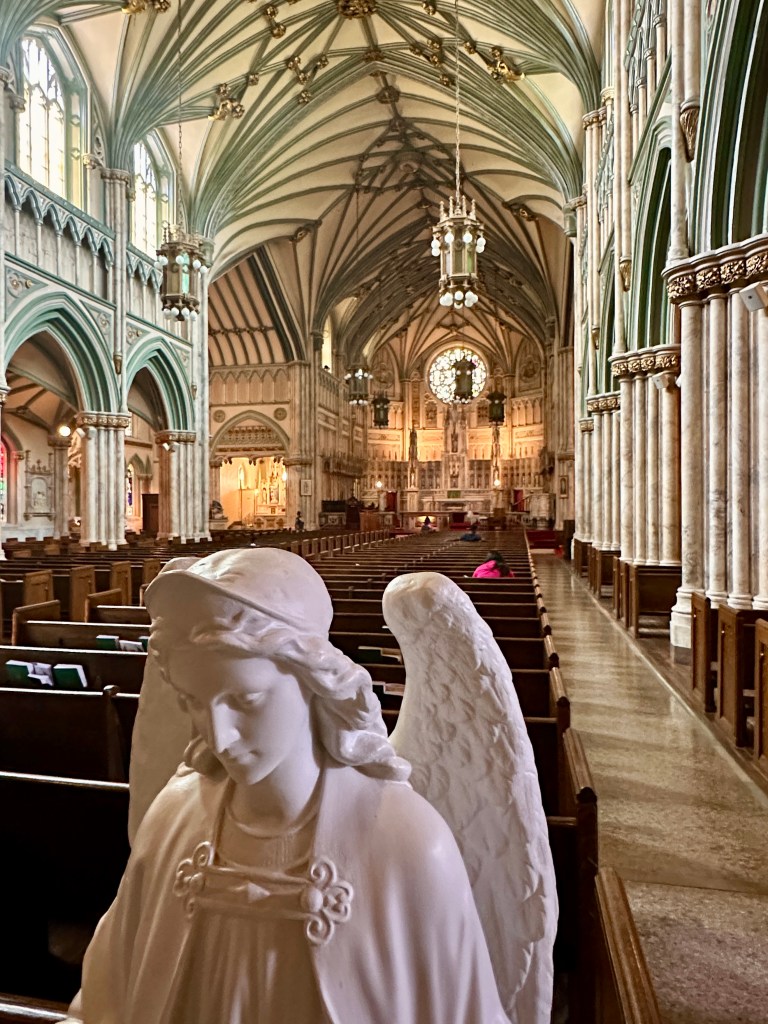
Something that we could not ignore were the numerous churches on the island, many of them photogenic cathedrals. It’s no coincidence that the highest church attendance of any Canadian province is PEI, comprised mostly of Roman Catholics. Three quarters of current residents on the island are descendants of early settlers from the British Isles – Highland Scots, English and Irish. Some descended from British loyalists who settled there after the American Revolution and still, there are 30 Acadia families living on the island, leftover from the earlier French settlers.

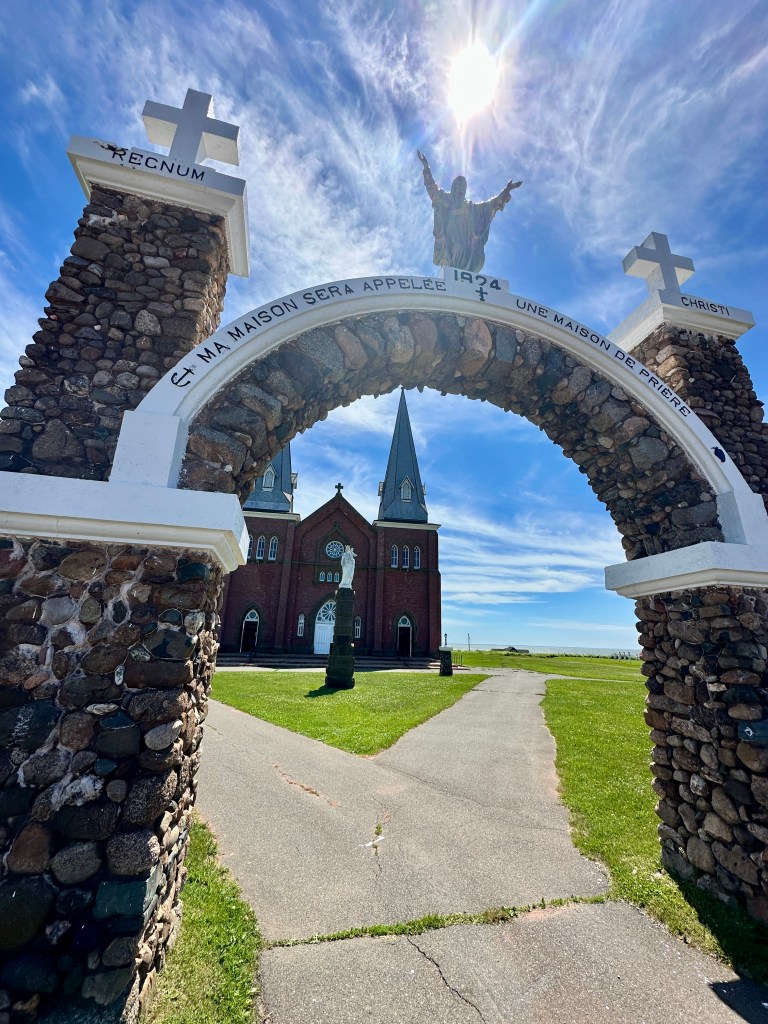
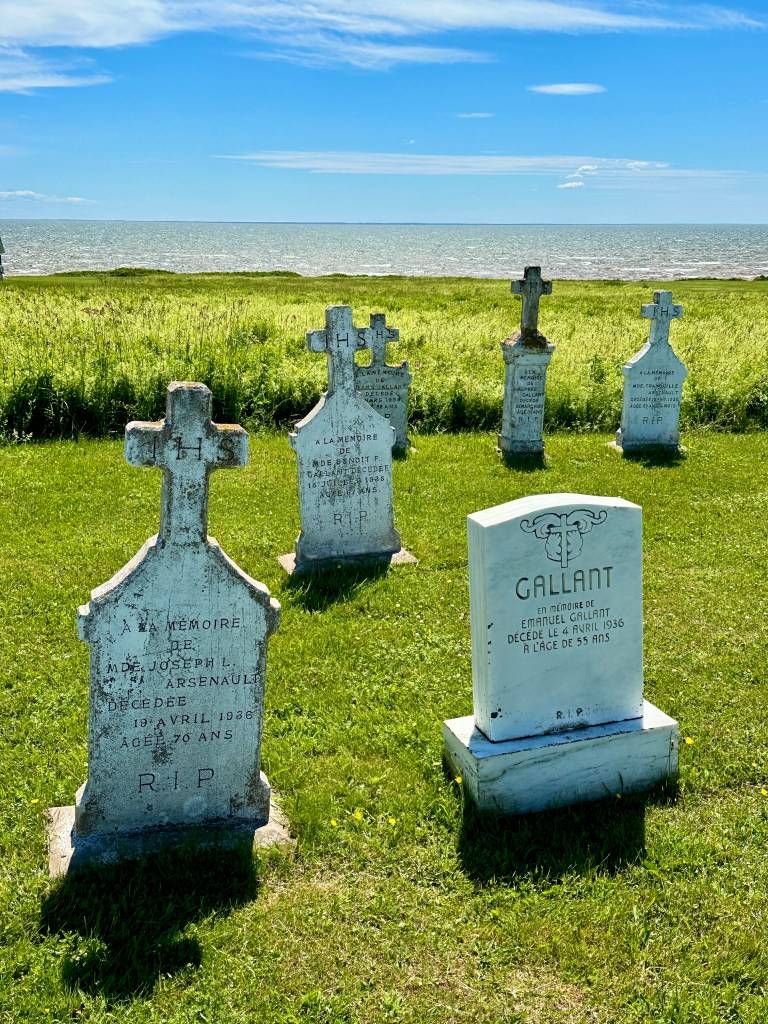
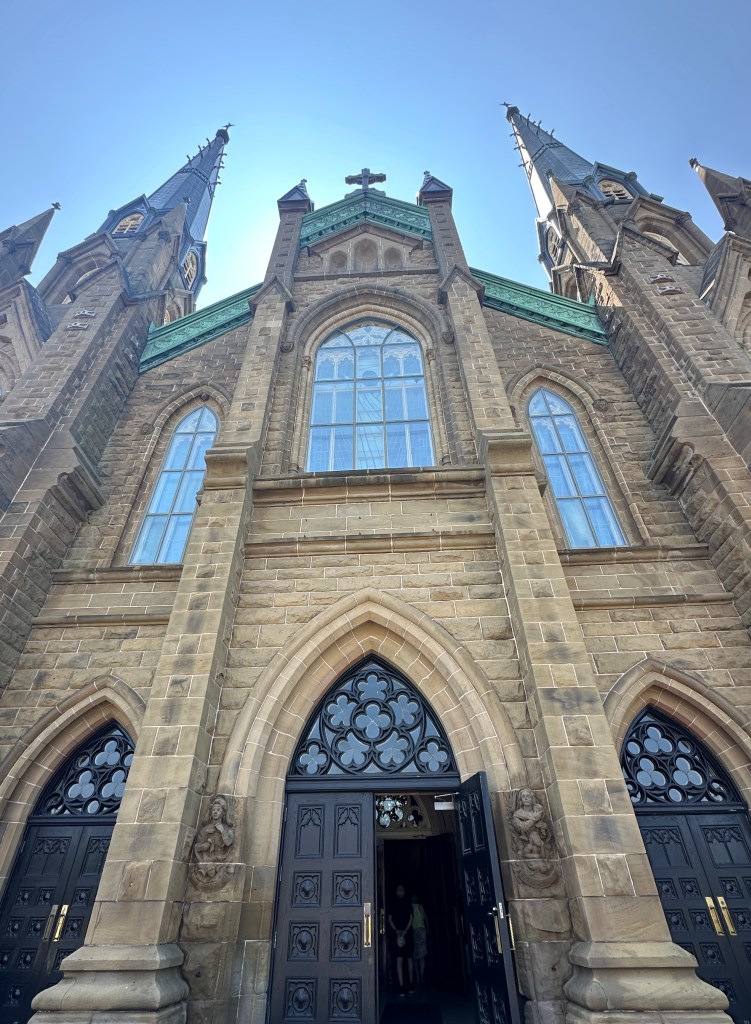
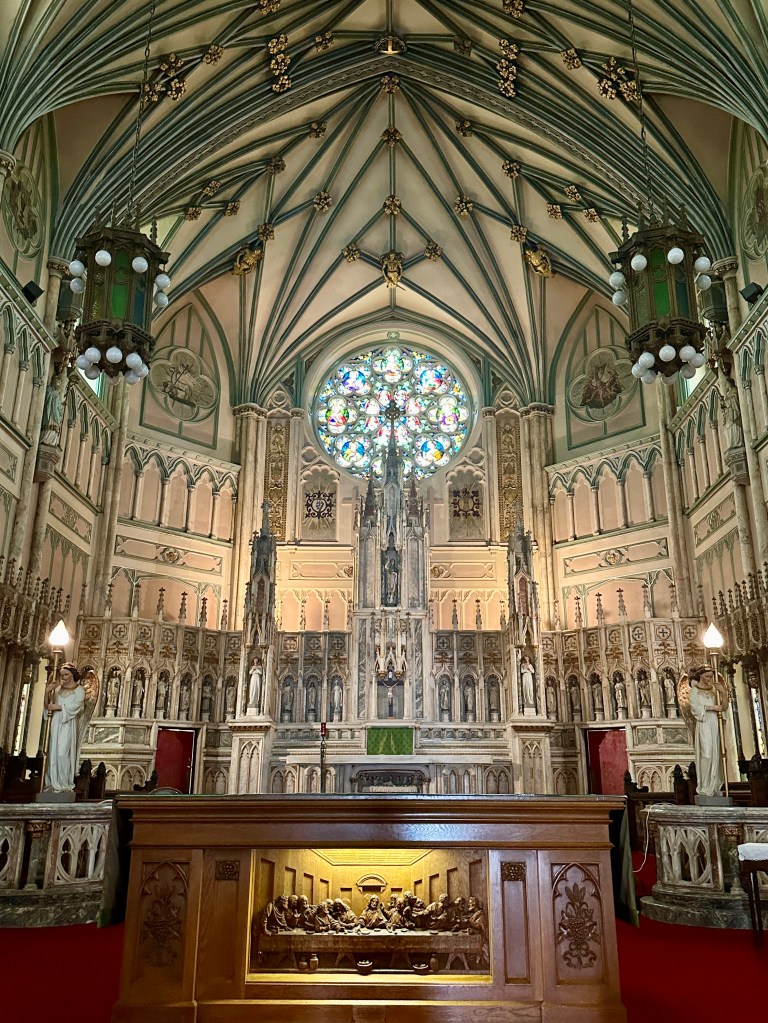


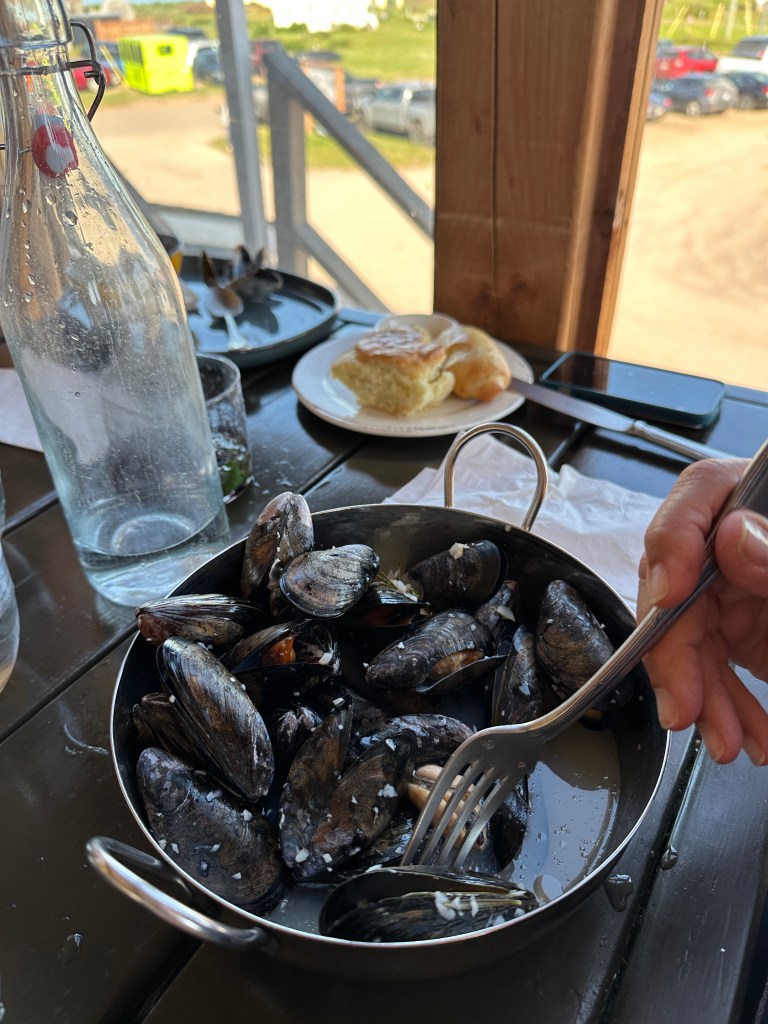
With 1100 miles of shoreline and no spot more than 10 miles from salt water on the island, it is no surprise that commercial fishing is a large part of PEI’s economy in addition to tourism and agriculture. Along the northside shoreline are sandy dunes while the east and south portion of the island have good natural harbors. It is in this area where the greatest concentration of the population can be found, including PEI’s capital city and its largest, Charlottetown.

I will remember the island as an easy place to explore through its rolling hilled farm lands, especially the sparsely populated west side. Along the way, we visited the Bottle Houses & Gardens and the Potato Museum.


The 6-gabled house at the first ever Bottle Village 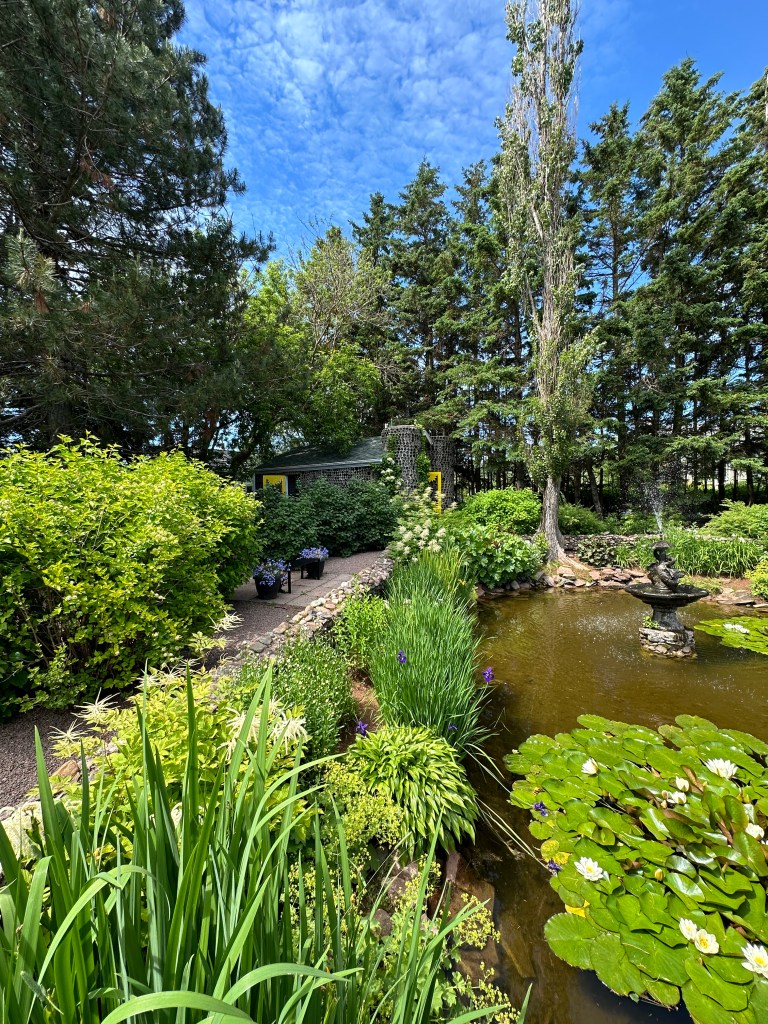
The Bottle Village’s beautiful garden 
A tribute to the Bottle Village’s builder, Édouard T. Arsenault. 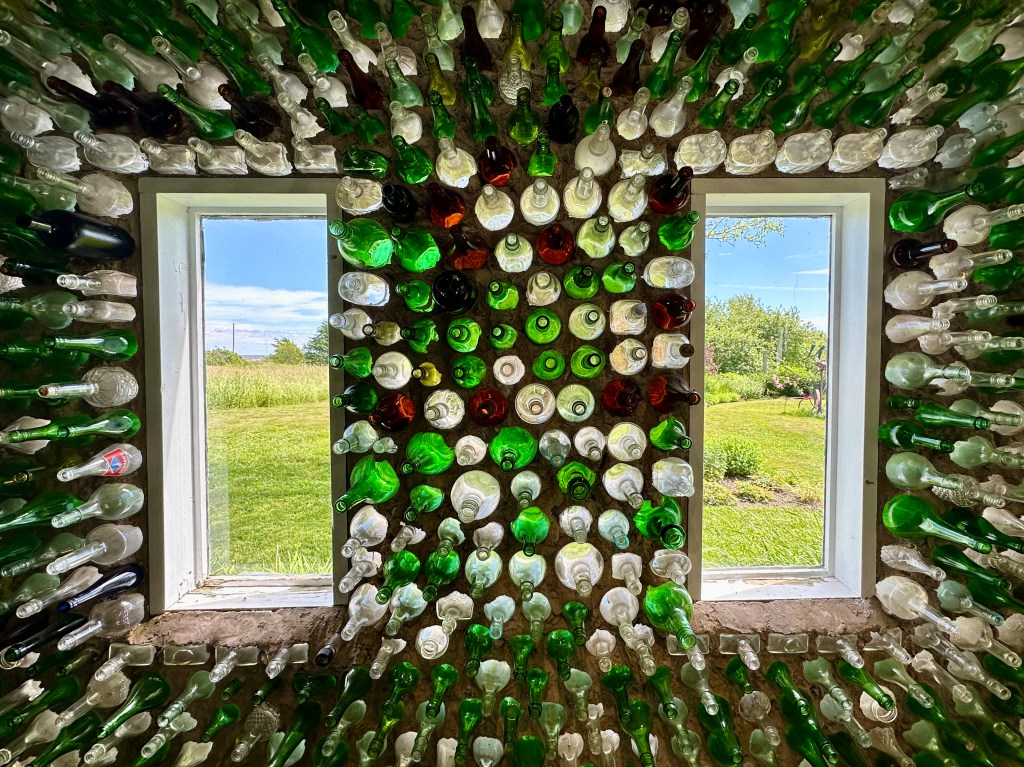
Arsenault had received a postcard of a glass castle from his daughter in 1979 after she had visited it on Vancouver Island, the inspiration for the bottle houses. 
Over 25,000 recycled bottles went into building the village. 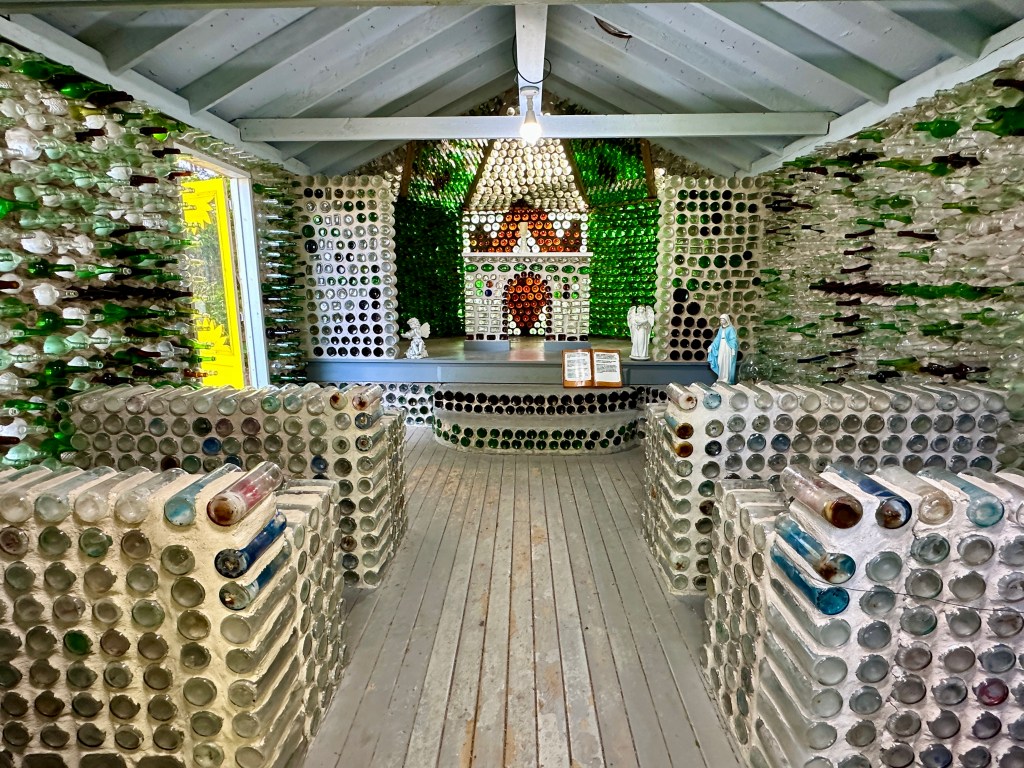
After collecting bottles and cleaning them in his basement, Arsonault began construction in 1980. 
After a week in Cavendish, we headed to the east side of the island where we stayed at the Brudenell River Provincial Park. While there, we explored the Greenwich Sand Dunes and enjoyed one of Canada’s lovely provincial parks.
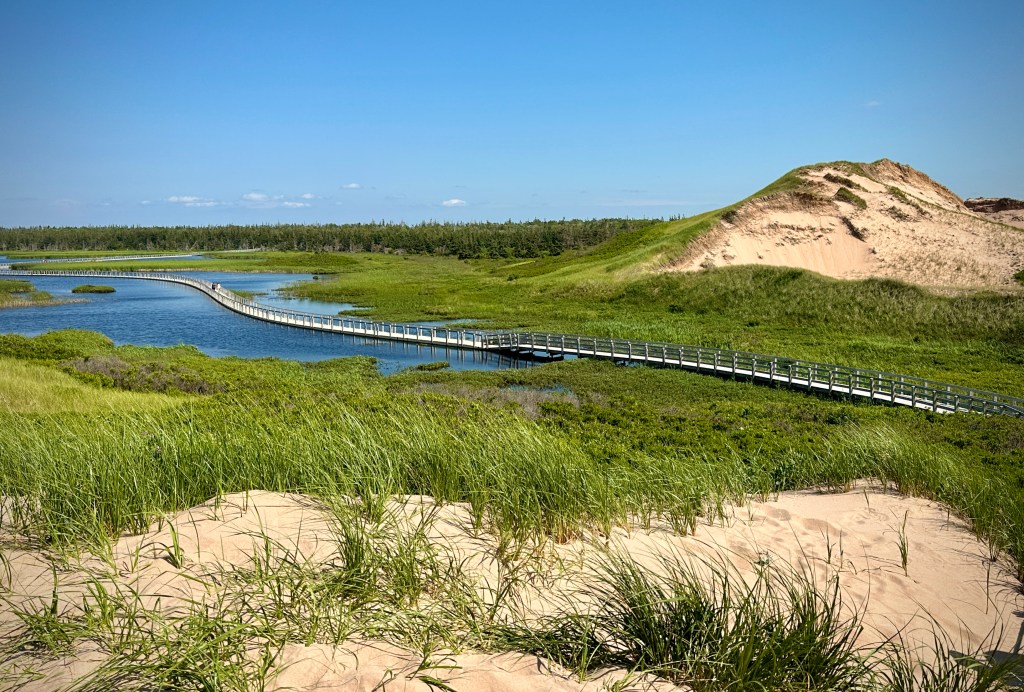

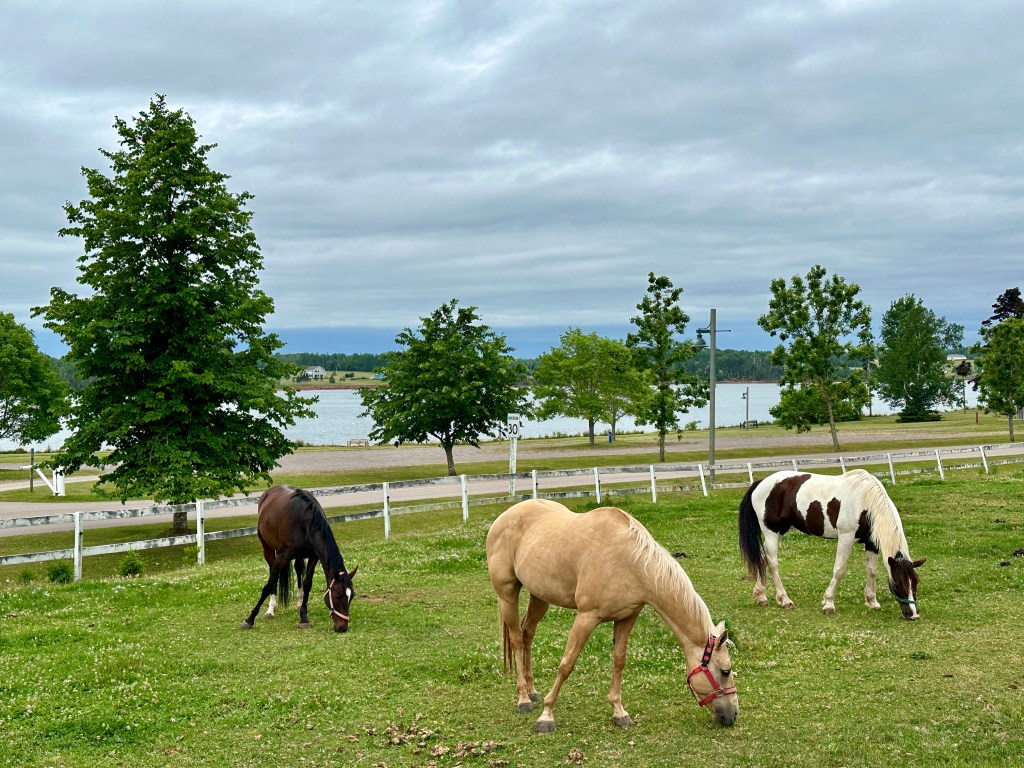
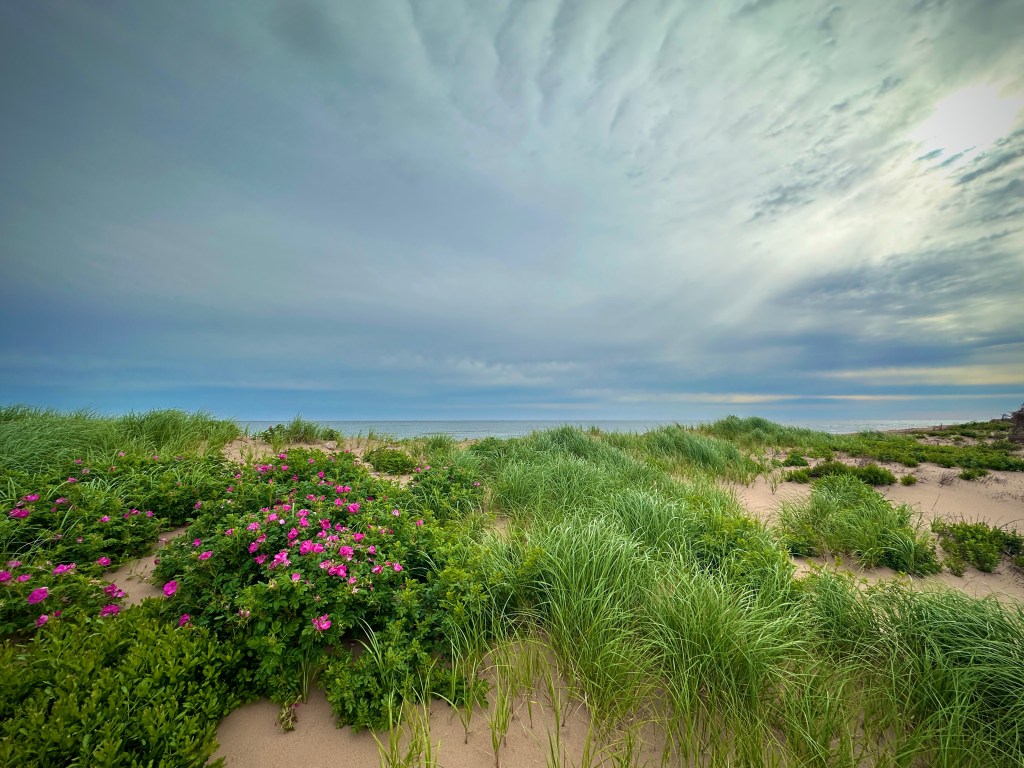
But mostly, we spent time on Cavendish Beach, which is how I like to remember PEI and Anne Shirley’s description of it.
“Below the boughs the air was full of purple twilight and far ahead a glimpse of painted sunset sky shone like a great road window at the end of a cathedral aisle”.
If you haven’t yet, check out our previous blogs from Fundy National Park:

 Changing Views From Our RV