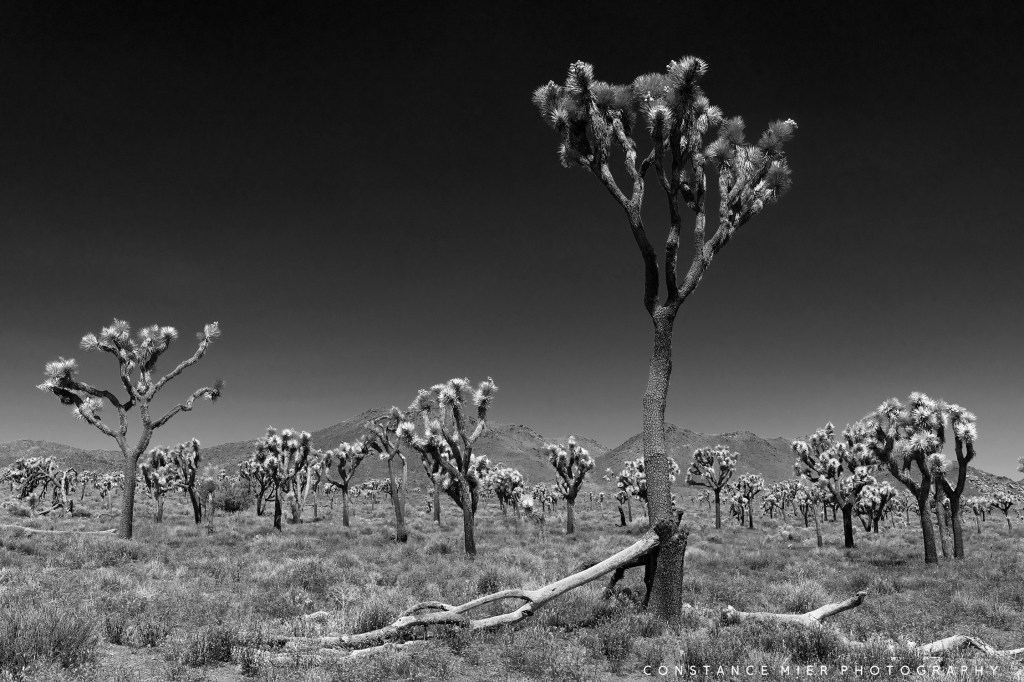
What resonates with us most as we pull our home around the country is the experience of a landscape so different from the previous one, and so strange from our normal surroundings that it challenges us to conjure new adjectives to describe its features. One unique landscape after another, the short distances between them never ceasing to amaze us. This blog is about one of those unique landscapes. It’s been several weeks since we were there, yet it sticks out in our travel memories like a tree with multi-directional branches silhouetted against the blue sky at dusk.

A while back, I was discussing our upcoming trip with our friend Jim who had recently traveled to Baja, Mexico from Michigan. My excitement of seeing a Joshua Tree triggered his response, “You’ll see them everywhere, you don’t have to go to a national park”. Jim’s facial expression gave his real thoughts away, “You’ve seen one you’ve seen them all and why would you make a big deal of seeing one anyway?” I don’t mean to put my friend in a bad light because he and his wife Denise, like me and Vivian, love to discover new places and have the same appreciation for the wilderness.

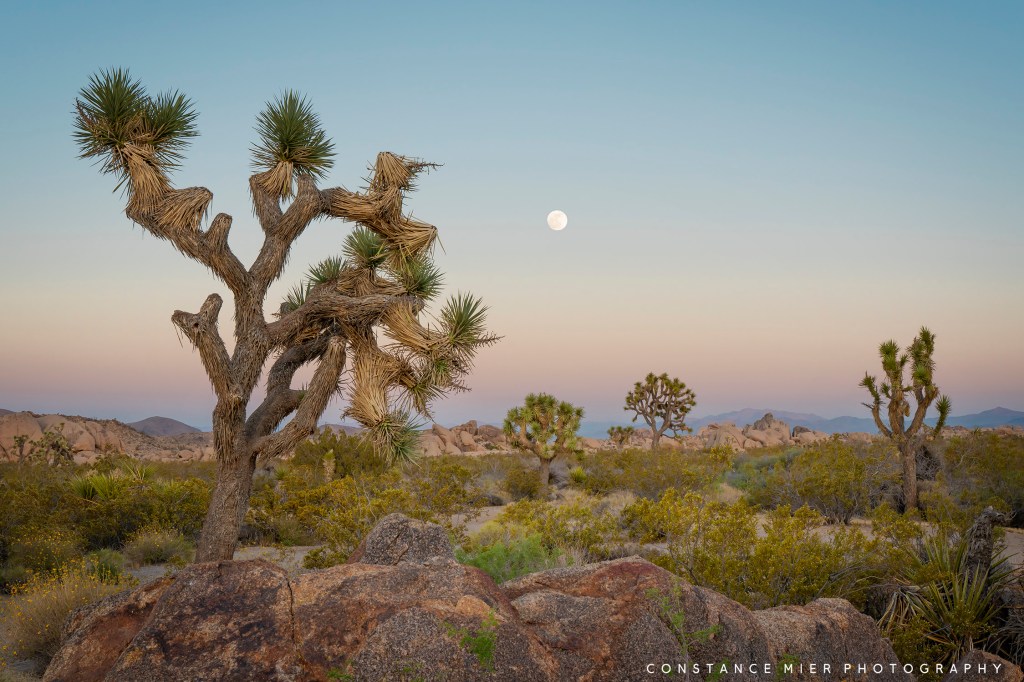
But that comment about the Joshua Tree just stuck in my craw because as a photographer, I have considered Joshua Tree National Park as one of those iconic photo opportunities. People have created intensely beautiful images of Joshua Trees. But the fact is, the strange tree is not typically described in flattering ways. To wit, in his classic book ‘The Right Stuff, author Tom Wolf describes them this way -“twisted freaks of the plant world” and “at dusk the Joshua trees stood out in silhouette on the fossil wasteland like some arthritic nightmare”.
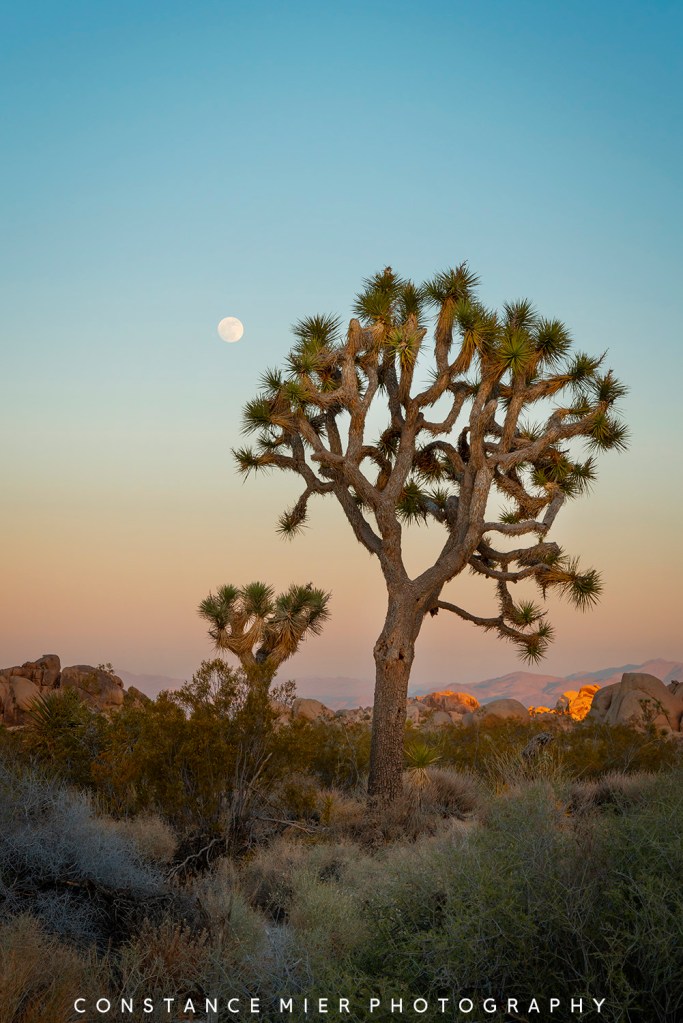
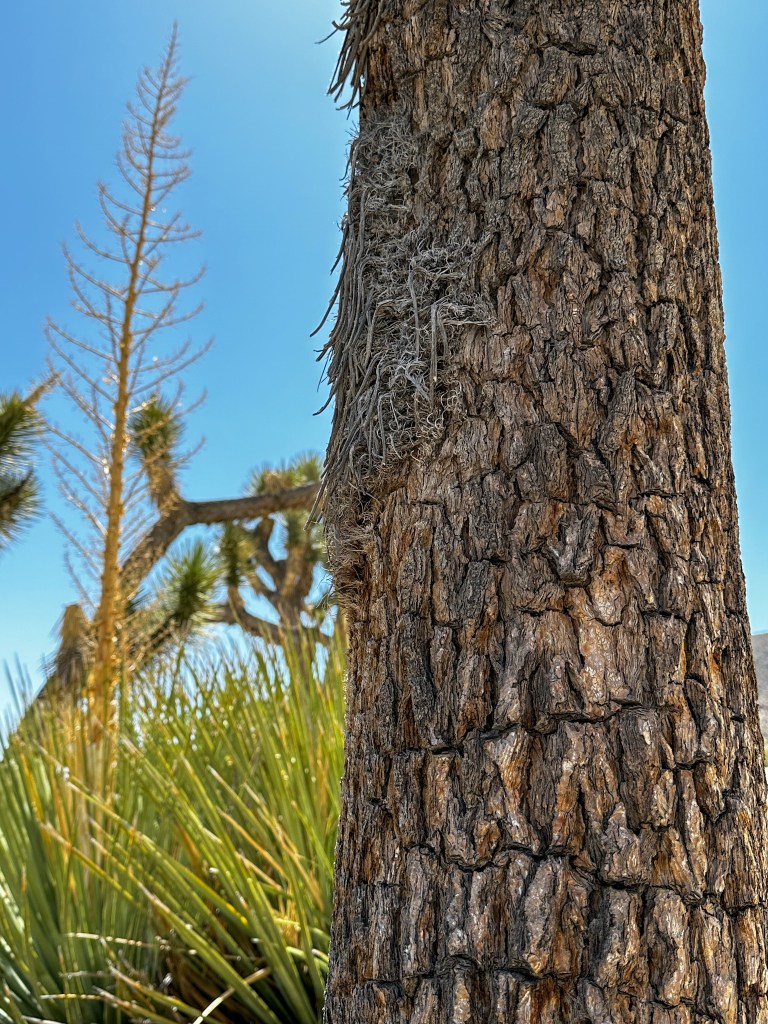
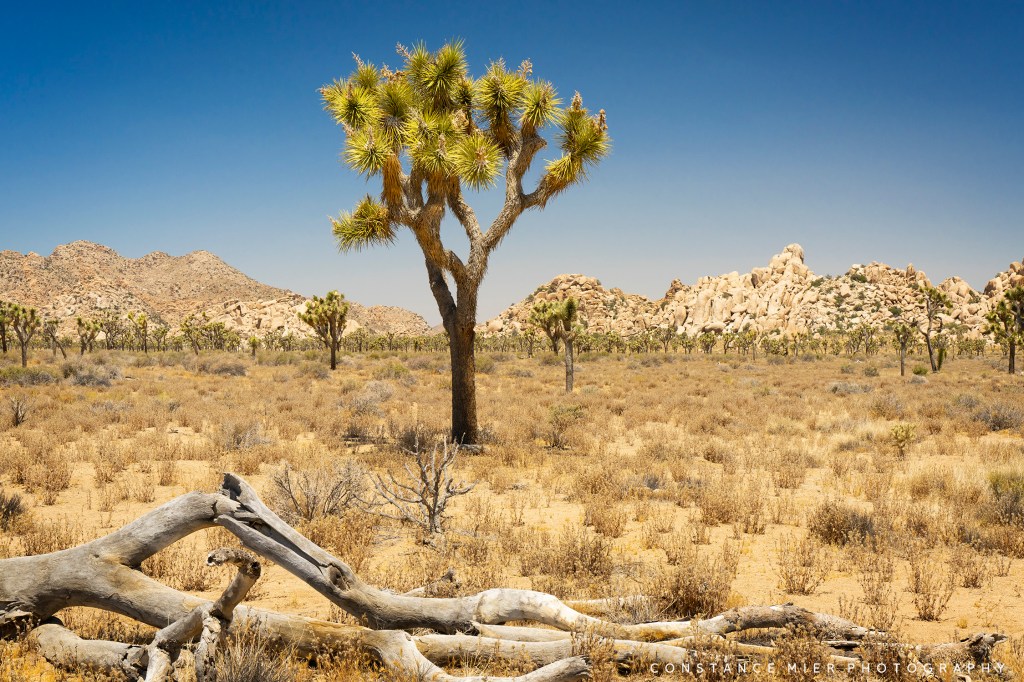
We entered Joshua Tree National Park having recently spent time in the Sonoran Desert which stingily grows the iconic saguaro cactus. Go to the Mojave Desert and you won’t see a single saguaro. But the Mojave Desert has its own – the Joshua Tree, and that alone is worth a photograph. Like the palm tree, the Joshua tree has taken the name ‘tree’ despite not being a tree, at least in the scientific meaning of the word. The Joshua Tree is a member of the agave family. It’s in a group of flowering plants, along with grasses and orchids.
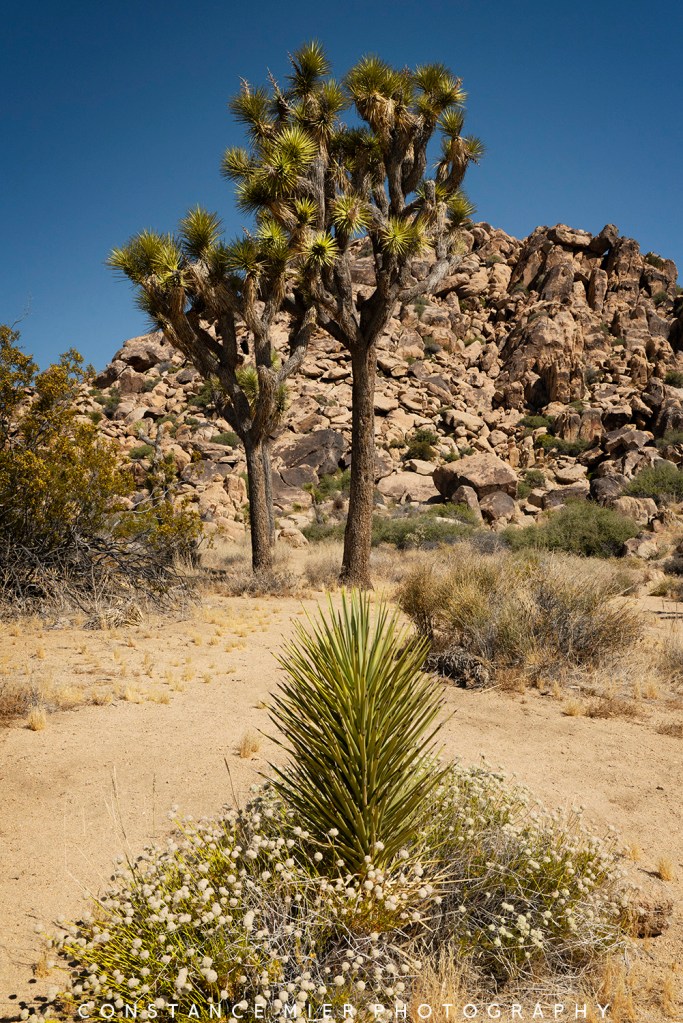
Tree or not, the Joshua Tree is the essence of two distinct desert ecosystems, the Mojave and the Colorado Desert coming together. You might think that the desert without the Joshua Tree would be so little as to be passed over for a wasteland. The fact is, this southern California desert supports a variety of plants and animals despite so many contrary attributes. The best example is the Joshua Tree with its whimsical display of adventure in the way of forming branches, defying any typical tree design. But just as striking about this desert is its exposed geologic features that are a flipped version of what might be expected. And there is a lot of rock in this desert.

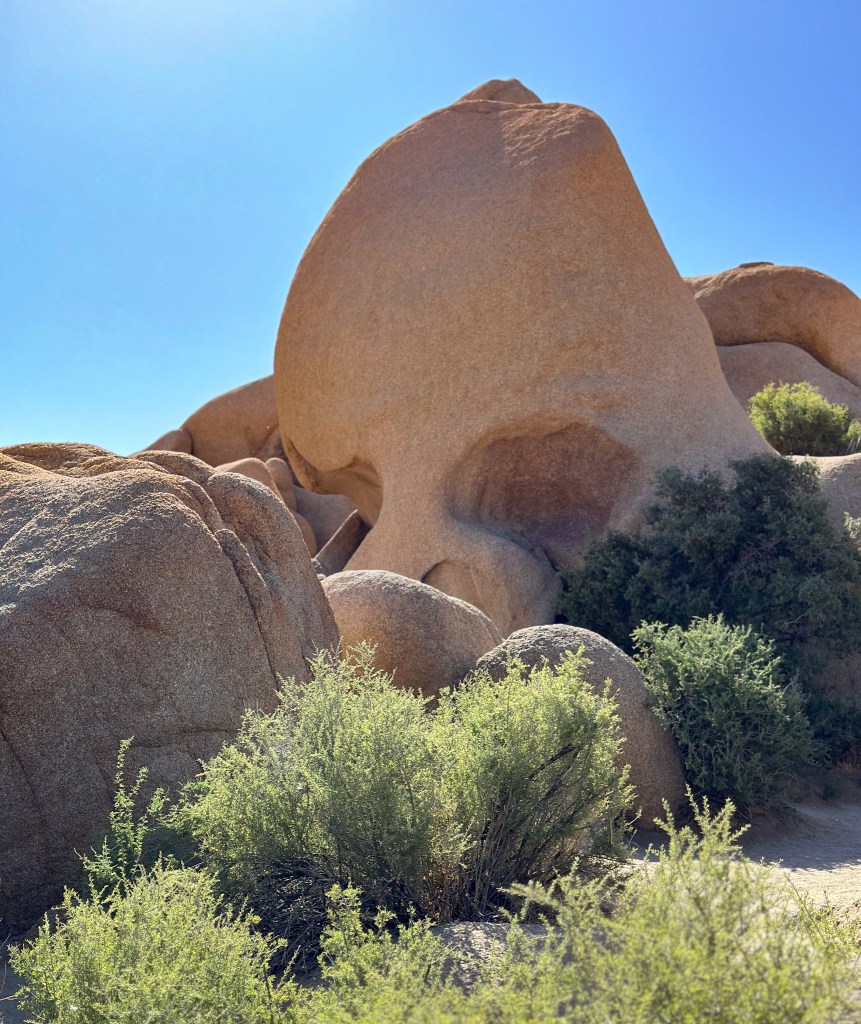

Here, the oldest rock is located on the top rather than the bottom. These 1.7 billion yr-old metamorphic rocks (called Gneiss, pronounced ‘nice’) experienced pressures and temperatures typical of what lies 25 miles below the Earth’s surface. Tectonic plate movements pushed these rocks upward. Gneiss is continually being pushed by the younger granite rock and continually under the influence of erosion. All of this creates a wonderous rock land that invites even the least playful among us to climb and explore.

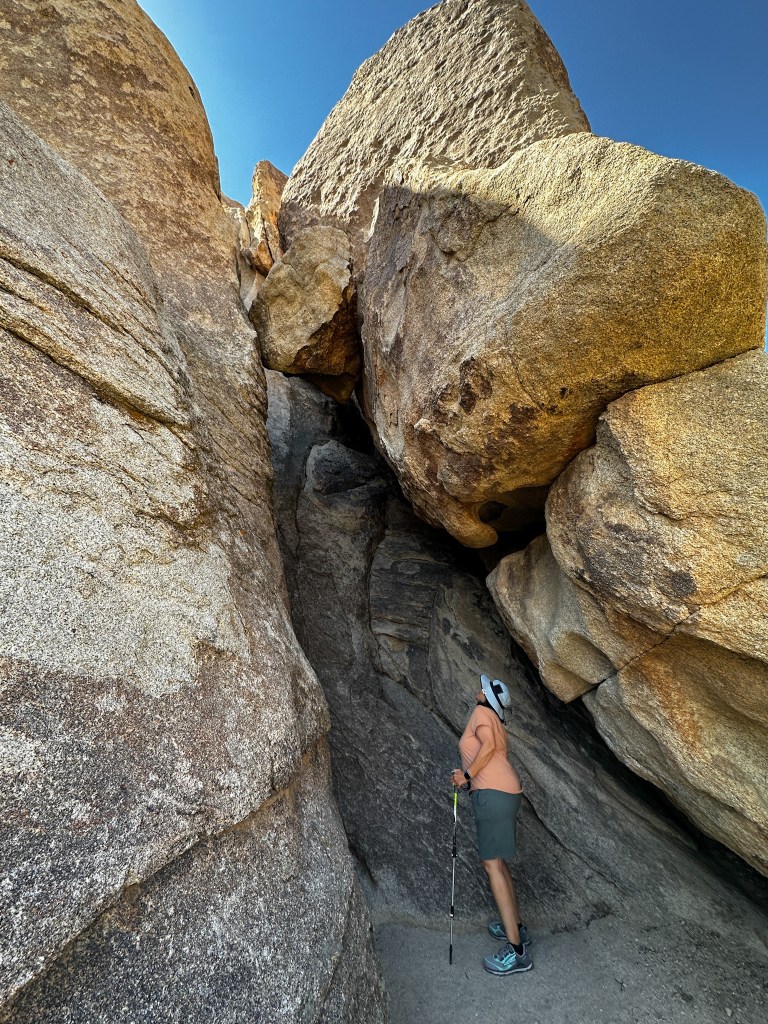
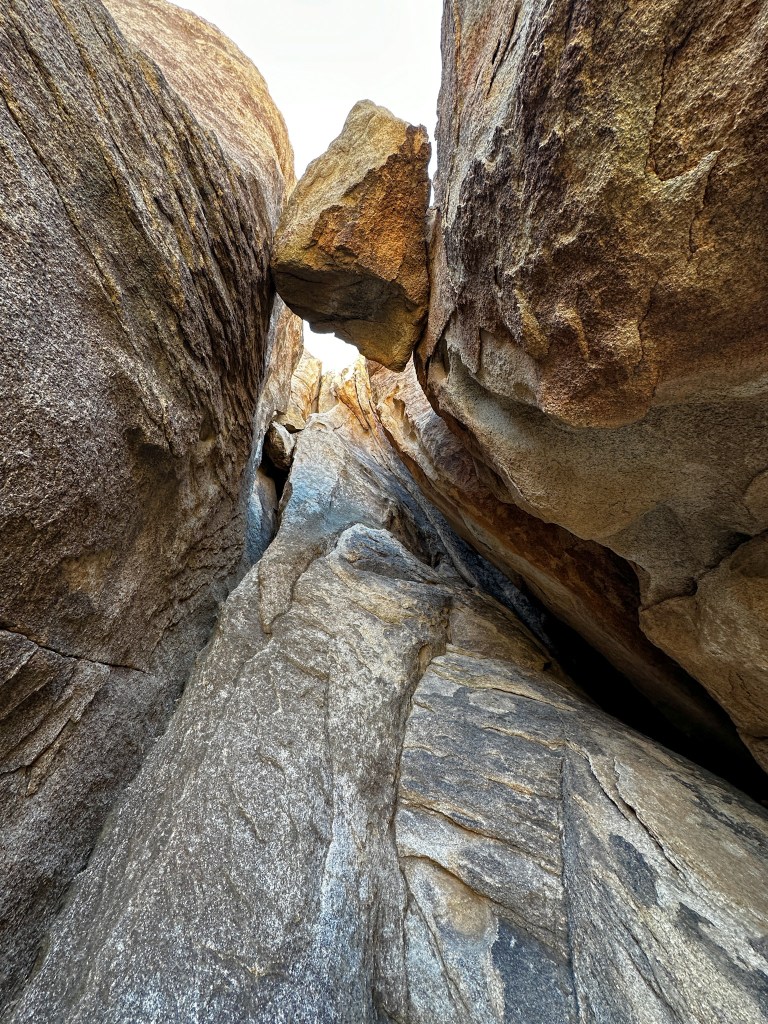


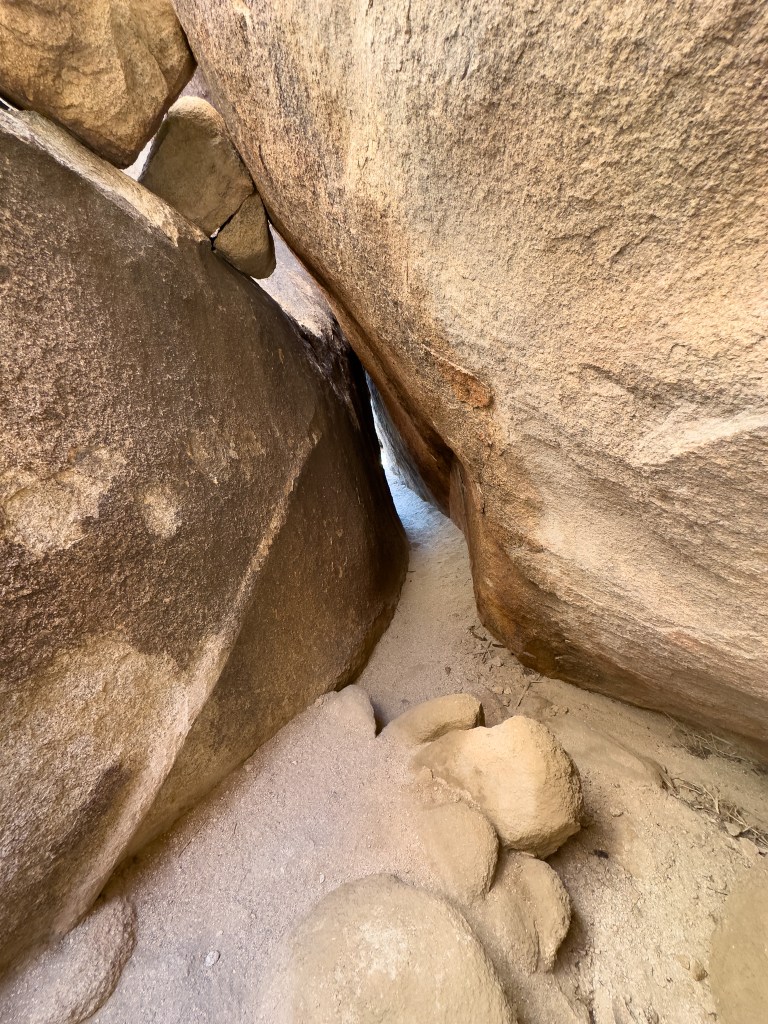
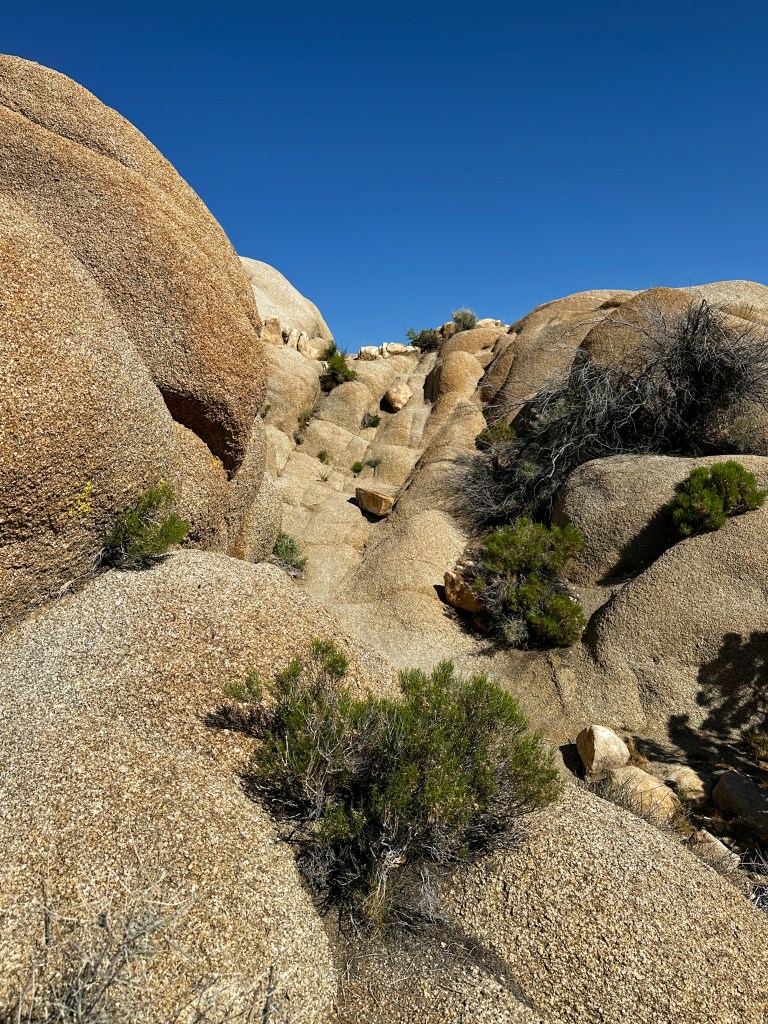
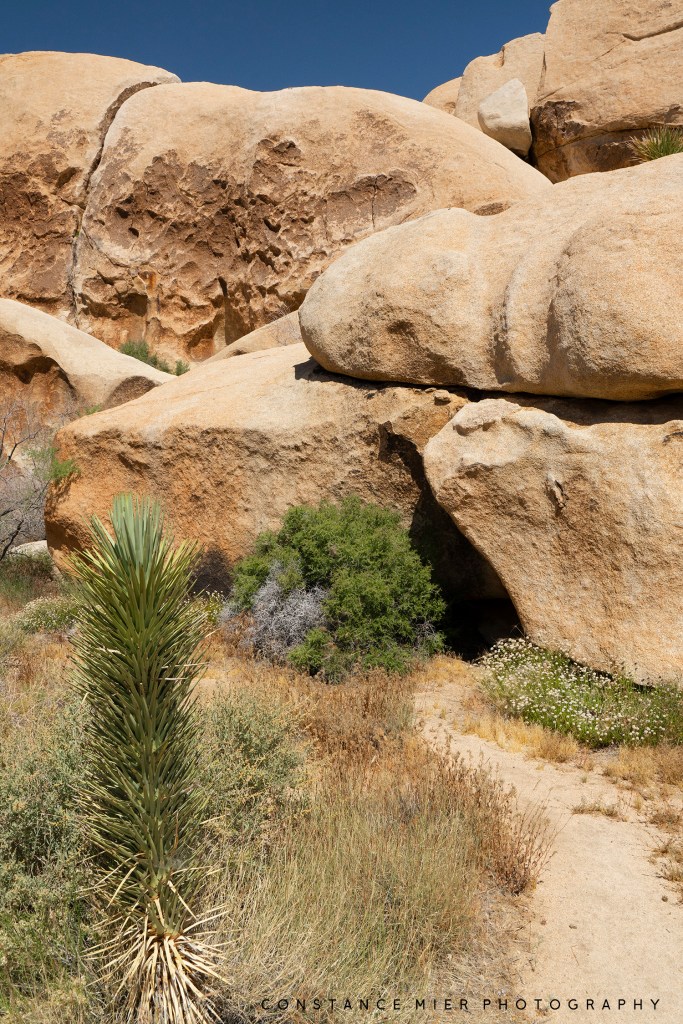

Before traveling in an RV, it was difficult to think of the desert more than one way. But we’ve encountered several of them so that we have the privilege of discussing them in terms of their wide diversity along with sharing a visual memory of each one that is so different from the others. A landscape filled with miniature gneiss cities and adventurous agave plants are what made Joshua Tree National Park so special to us as to remain vivid in our travel memories. This, despite the fact we have since encountered the largest trees on Earth, a valley that “looks like an immense hall or temple lighted from above” and the two deepest lakes in the United States. Stayed tuned as we go north through California and beyond!
RV TIP
I am responsible for the dark side of the RV, meaning, I am responsible for anything to do with water and sewer hookups and dumping the gray and black tanks. Somebody’s got to do it! I’ve learned a lot of things the hard way including how I cannot do without the Valterra twist on waste valve:

Twist this onto your rig’s waste tube opening and connect the sewer hose to its open side. The best reason for this device is often you think you’ve drained out all the water from the waste tube until you remove the cover and ugh, out it comes! To avoid that mishap, attach this device and close the valve when you are disconnected to sewer. When you arrive at your next campsite, remove the cover and simply attach the sewer hose with the Valterra valve closed. No muss, no fuss.


 Changing Views From Our RV
Another great post! I love your synopsis of the desert environments – you see them for the complex systems that they are. They are resilient, adaptable and beautiful- which many people miss. And you always capture the best in your photos.
LikeLike
The little Joshua Trees in the National Park are so cute! Certainly not cuddly.
LikeLike