It was a meager 75 miles of towing to our next destination, 4 Lakes Campground near the old city of St Augustine.
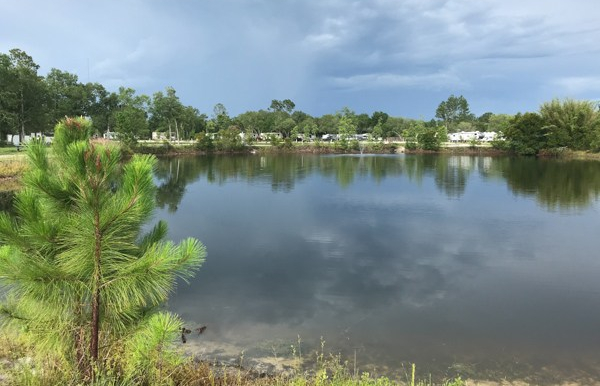
St Augustine, lots of history here. And if you are a fan of the Standard Oil baron Henry Flagler, this is the place to be because his influence is seen at every turn. While we visited, temperatures reached the mid-90s and typical afternoon storms blew in thwarting much of our sightseeing plans. We signed on for a one-day trolley tour, which was plenty of time to hear the city’s history from the well-informed drivers, all of whom have a gift for storytelling. But ask me if I remember anything from that oral tour of St Augustine? Not a thing, it’s a vague memory of dozens of facts and mini-stories rattled off one after the other as the trolley passed by several points of interest. After hearing the driver introduce himself as “Robert, the dread pirate” in a fake menacing drawl a dozen times to those boarding the trolley, we were ready to get off.

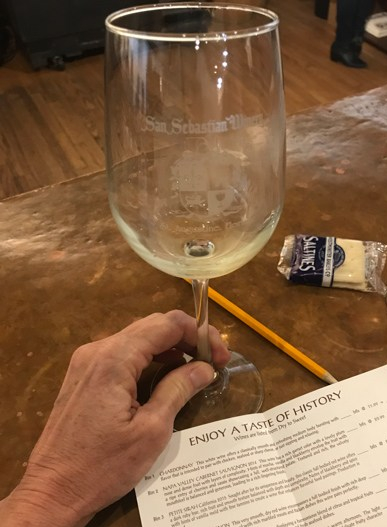
Of course, we wanted to take part in the free tasting at the St Augustine Distillery which comes with the tour. We exited the trolley in pouring rain and went inside the distillery lobby to get our tickets for the next tour. More people poured in as the rain worsened outside and loud thunder surrounded us. And then we lost power. Long story short, after an hour of waiting in the dark, we left the distillery in want of a drink and promptly boarded the trolley for its next stop, the San Sebastian Winery. Lucky for us, the storm blew over, the winery had power, we got our free tasting.
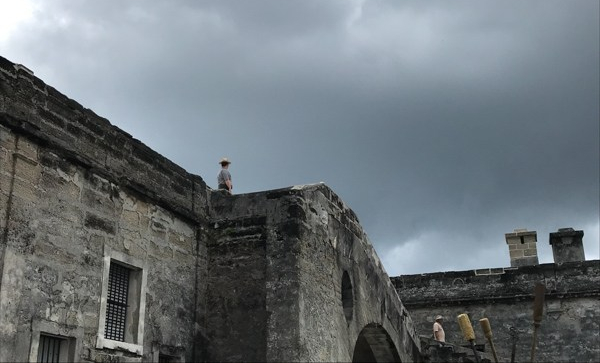
The next day, we visited the Castillo de San Marcos, a national monument and where America began. Almost 350 years old, the fort is the oldest in the United States and looks pretty good for its age. It was built by the Spanish and taken over by the British a couple times. Pretty much done with Florida by this time, the Spanish handed the fort over to United States in 1821. After that, its walls served as a prison during the Seminole wars and one of the most famous prisoners was Osceola, a Seminole leader captured while attending peace talks under a white flag of truce.
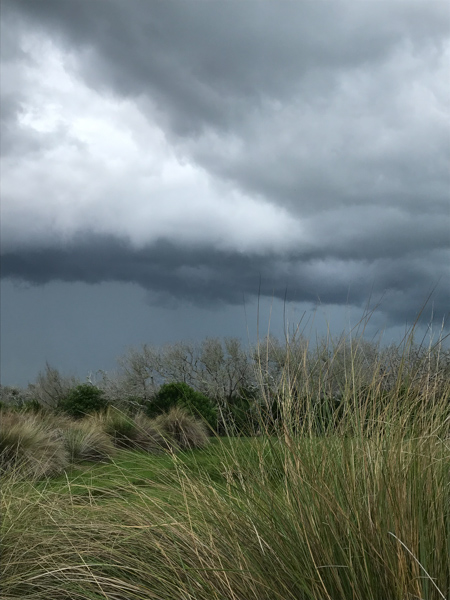
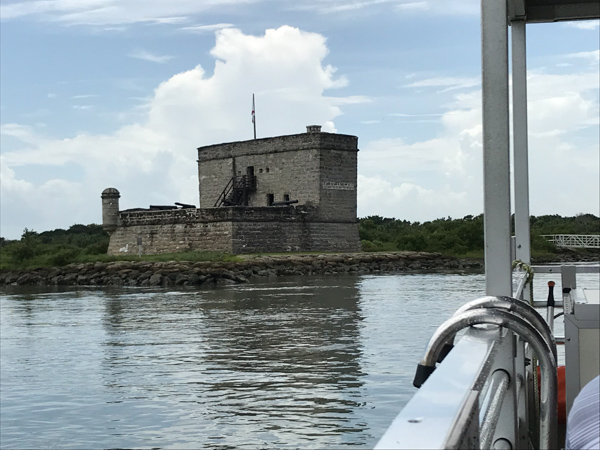
Storms come and go quickly down here this time of year, so with a short reprieve between them we enjoyed a beautiful view from a roadside park along A1A south of St. Augustine. There, we struck up a conversation with a local fellow who pointed toward a strange looking building off in the distance. He said that was Fort Mantanzas and he highly recommended we visit it, so we did.
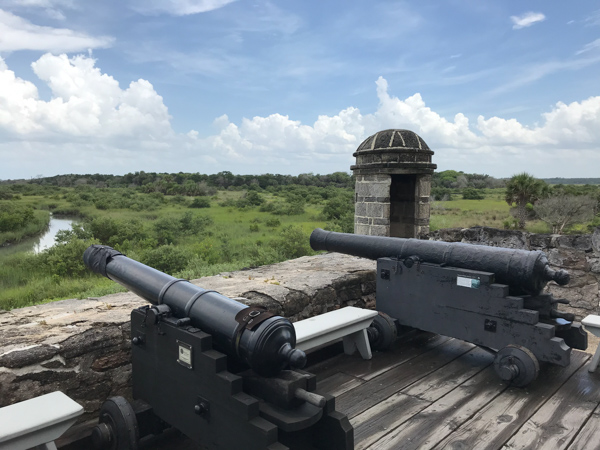
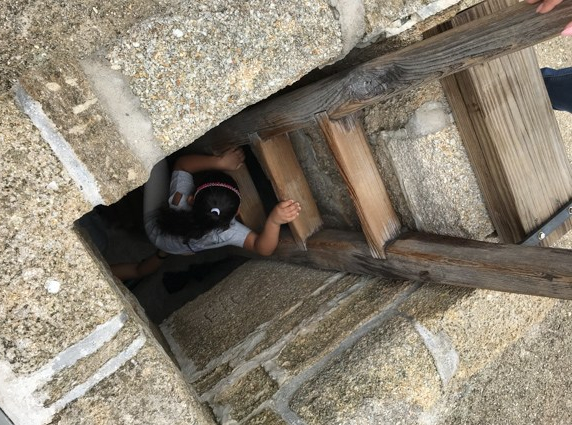
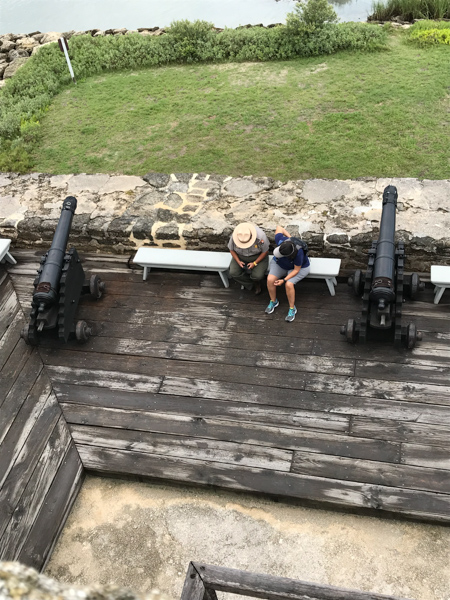
Fort Mantanzas is a national monument and free. Compared to Castillo de San Marcos, it is extremely unassuming. A ferry takes you a short distance to an island where the fort stands. The round trip ferry ride and self-guided tour of the small fort takes less than one hour. The part I enjoyed most other than the view, was the rickety wooden ladder that leads through a narrow opening to the top of the fort. I was so delighted to see a young girl climb up and down that ladder with only a simple encouragement from mom. No coddling allowed in this fort!

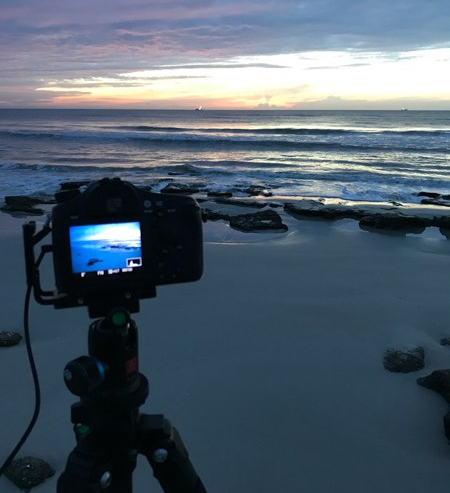
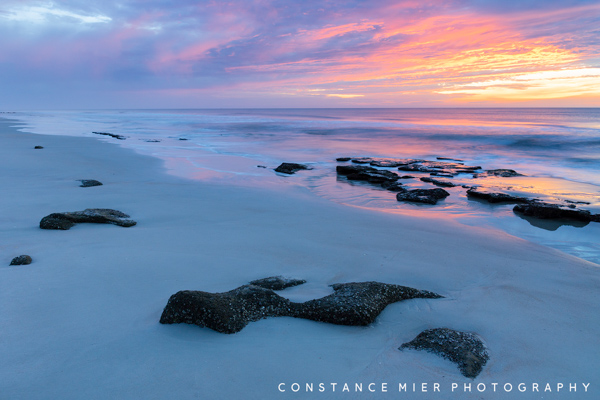
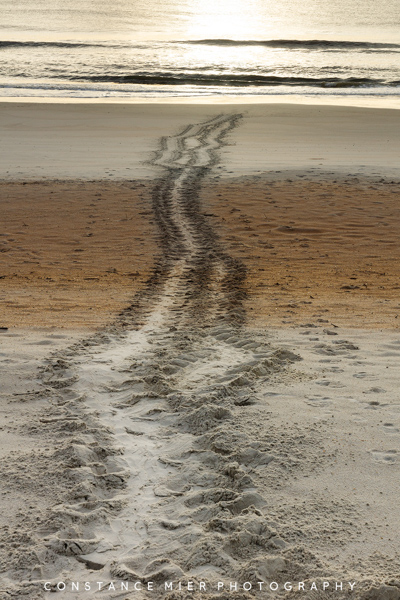
The forts and old St Augustine were the primary attractions for us, but the coquina rock coastline was the highlight for me. I left the RV one morning at 5:00 am and drove 45 minutes to the beach near Marineland. There, the beach is littered with large coquina (shellstone) rock and consequently among the most photographed beaches in Florida. Coquina is also the material used to build Castillo de San Marco and Fort Mantanzas. In the dark, I looked for rock and beach scenes to capture and waited for the sunlight to appear over the horizon. An hour later as I walked back to the truck, I realized I had walked past several fresh turtle nests in the dark.
Founded by Spanish explorers in 1565, St. Augustine is claimed to be the oldest U.S. city. But there is a more recent and interesting piece of history to it. St Augustine was a hotbed of racial violence soon after Brown vs Board of Education decision in 1963. KKK as well as police violence gave St Augustine national attention and created an upheaval of sympathy for those at the receiving end of the violence and deep disgust for those invoking the violence. Long story short, the events in St Augustine (including the arrest of Martin Luther King, Jr) were key in the passing of the Civil Rights Act of 1964.
At the end of our two days in St Augustine, we were ready to leave Florida.

 Changing Views From Our RV